Web Exclusive
Don’t be fooled this April 1
TU’s Kat Ahlrichs talks April Fools’ Day history and hoaxes.
It’s no April Fools’ joke that TU assistant professor and director of the Baltimore Community Archaeology Lab Kat Ahlrichs, Ph.D., appreciates a good hoax. She even teaches about them in her Archaeological Method in Theory course.
In this Q&A she talks about how April Fools’ Day got started, why it caught on and some of her favorite pranks.
How did April Fools’ Day get started?
Nobody really knows how April Fools’ Day started. The main possibilities that historians focus on go back to 1582, which is when France switched from the Julian calendar to the Gregorian calendar. In the Julian calendar, the new year began on April 1. The thought is the folks that did not get the memo and kept celebrating New Year's on April 1 were called April Fools. There were pranks played on these people, and that's where that interpretation comes from.
But historically, there's never just one place that a tradition comes from. There's the Festival of Hilaria in ancient Rome, which was also celebrated at the end of March. It involved people dressing in disguises and mocking other people. We start to see April Fools in Britain first in the 18th century. It was called hunting the gowk—a word for a cuckoo bird—which is a symbol for a fool. Naïve people were sent on errands looking for things that didn’t exist.
Why do you think the idea stuck?
It's fun, right? Looking at the three different April Fools' Day origins here, particularly in ancient Rome, people have thought it was pretty funny to play practical jokes on people for a really long time. So having an excuse to do that, I think people are going take it.
What are some of the best April Fools’ Day jokes you’ve heard?
My favorite one is when Joseph Boskin, a history professor at Boston University, was interviewed by Associated Press writer Fred Bayles about the history and meaning of April Fools’ Day.
Boskin said April Fools’ Day originated during the Roman Empire when a group of fools and jesters boasted to Emperor Constantine that any one of them could rule the kingdom as well as or better than the emperor himself. Amused, Constantine gave them a chance to prove this boast by appointing Kugel, the King of the Fools, emperor for a day. Kugel immediately decreed that only the absurd would be allowed in the kingdom on that day. The custom stuck, and therefore the tradition of April Fools was born.
Bayles' interview with Boskin appeared in newspapers throughout the country. But what Bayles hadn't realized was that the story about the origin of April Fools’ Day wasn't true; Boskin had just made it up.
In terms of archaeological jokes, I did my graduate work at University of Wisconsin, and one of the earliest archaeologists there was W.C. McKern. He's very famous, and his crew thought it would be funny to bury a whole horse skeleton in the area where he was working, which was at a pre-European Native American site when there would have been no horses in the Americas. He was pretty perplexed and then pretty mad. It's generally a bad rule of thumb to do that on archaeological investigations.
Personally, my mom put toothpaste in my Oreos on April Fools’ Day one time when I was a kid, which I did not think was very funny at the time, but she did get me good.
What tips do you have to debunk potential hoaxes this year?
No. 1, look for multiple sources. You should never just believe something from one person. If you read something and you're like, “Wow, that's really crazy,” the first thing you should do is see how many people you can find that have said it.
No. 2 is look at the reputation of the source. Find out what they stand to gain from the claim that they're making. Do they have a particular reason for wanting you to believe that? Do they benefit in some way from you believing that?
Third, make sure you don't have a preconceived reason for wanting to believe this idea. Examine your own biases and how they affect how you evaluate these claims.
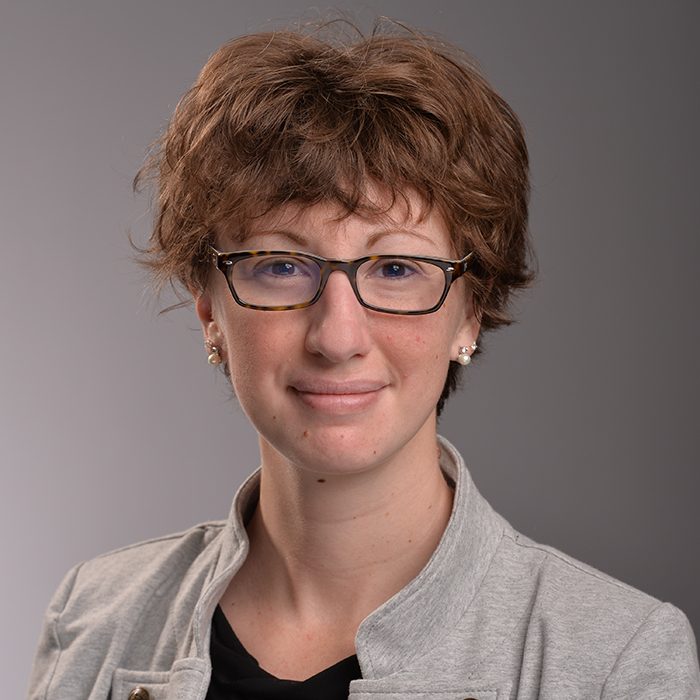
Kat Ahlrichs, Ph.D., is an assistant professor in the Deptartment of Sociology, Anthropology and Criminal Justice. She received her B.A. in Anthropology at Penn State University iand completed her M.S. Ph.D. in Anthropology from University of Wisconsin-Milwaukee. Currently, she is an anthropological archaeologist studying community organization and stone tool manufacture and use among pre-contact Native American groups in the Eastern Woodlands of North America