How students brought the joy of a South Asian wedding to TU
With My Big Fat Desi Wedding, students brought the dancing, music, food and festivity of a South Asian cultural celebration to a sold-out crowd of Tigers from all backgrounds
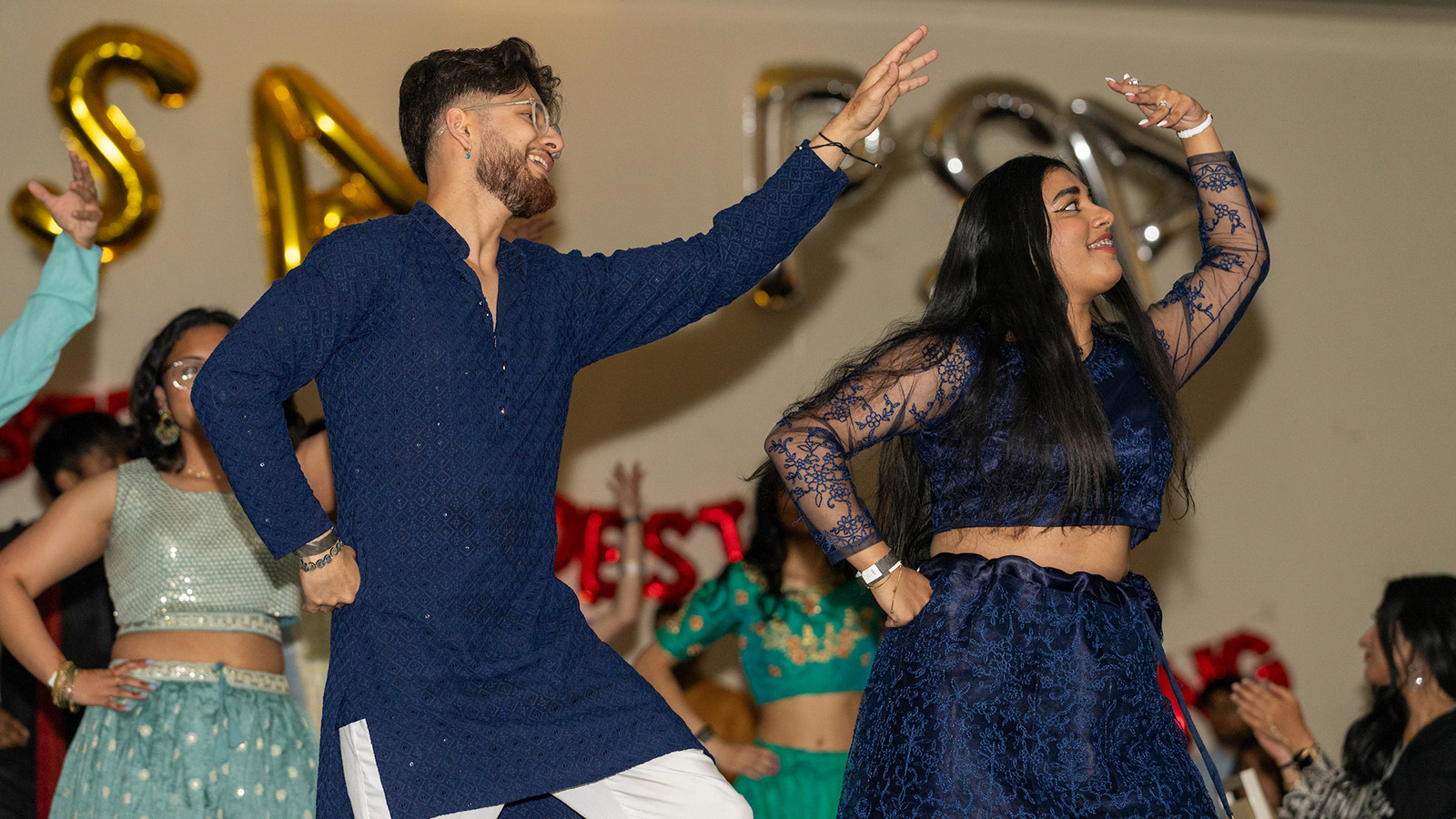
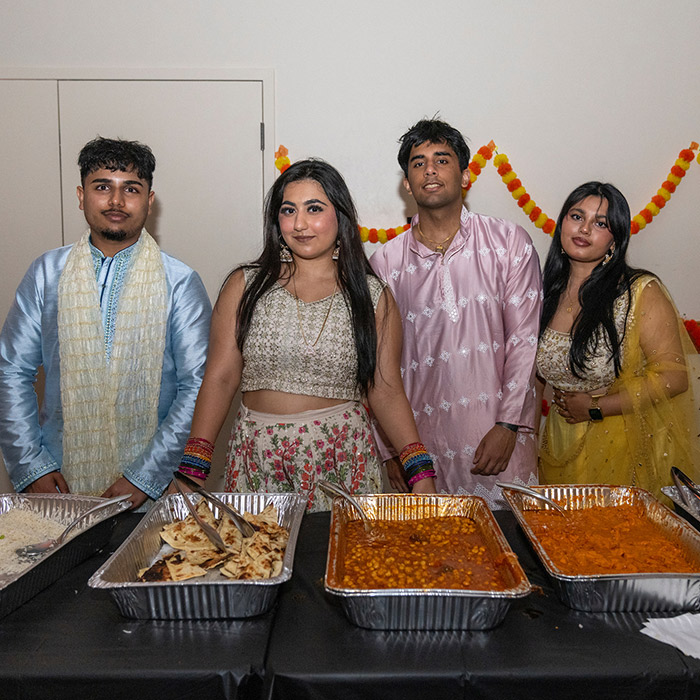
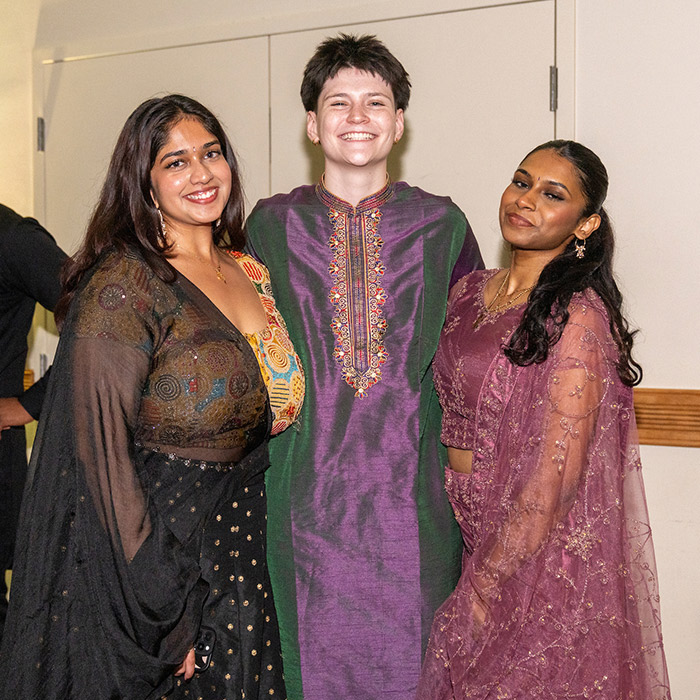
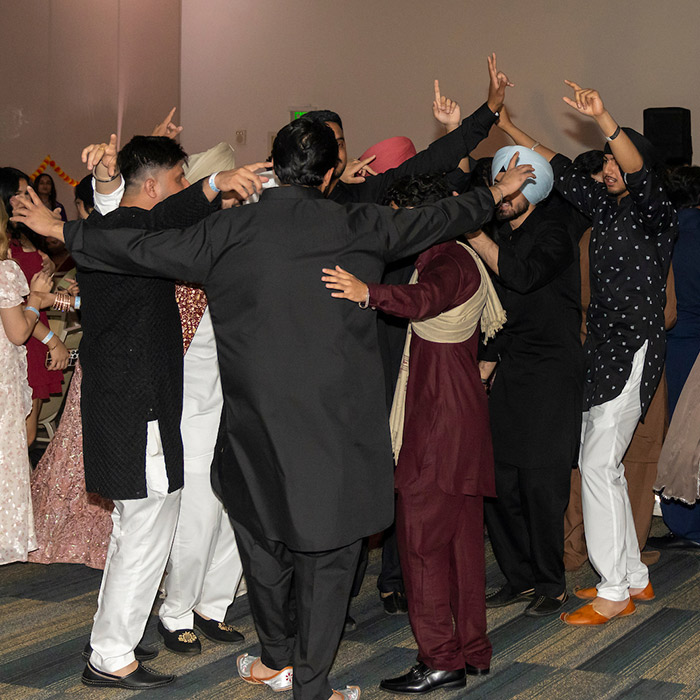
It’s Friday night, and the West Village Commons ballrooms are a blur of color as students in brightly colored saris dance to the beat of Bollywood hits. The flash of a photobooth lights up a section of the room. The aromas of butter chicken, chana masala, samosas and naan fill the air. There’s a bride and groom amongst the crowd, but the only commitment being made is to a night of celebration.
This is the energy of My Big Fat Desi Wedding, an annual mock shaadi that brings all the revelry of a night of nuptials minus the boring parts (like the ceremony). It’s the signature event for the South Asian Student Association (SASA), but it’s open to all, and for many students it’s become their favorite night of the year. Below, SASA president Harekrushna Das ’27 and vice president Sheryl Joe ’28 give us the details on what goes down at a mock shaadi, how they pull off the sold-out event and how all Tigers can get in on the fun.
What South Asian wedding traditions happen at the mock shaadi?
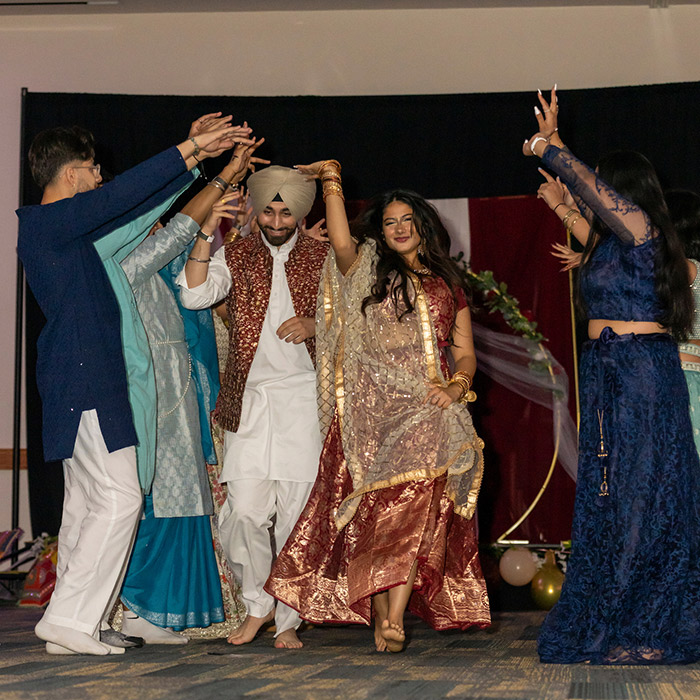
You can expect good food, good music and lots of dancing at a South Asian wedding—and the mock wedding is no different. Instead of demurely entering the ceremony, the bride and groom burst into the ballrooms with a choreographed dance, culminating an evening of performances by the Pakistani Student Association (PSA), Punjabi Heritage Student Association (PHSA), South Asian fusion dance team Chalak and a flash mob of nearly two dozen SASA and PSA members. That kicks off an open dance floor where guests show off their best moves while dressed to impress, many with jewelry and henna. Outfits are flaunted, games are played and photos are taken to commemorate a night of celebration.
One thing that differentiates a South Asian wedding is the guests really bring it with their look. We’re here to feel good, enjoy the moment and celebrate our cultures.
Harekrushna Das ’27, SASA president
What’s the purpose of a mock wedding?
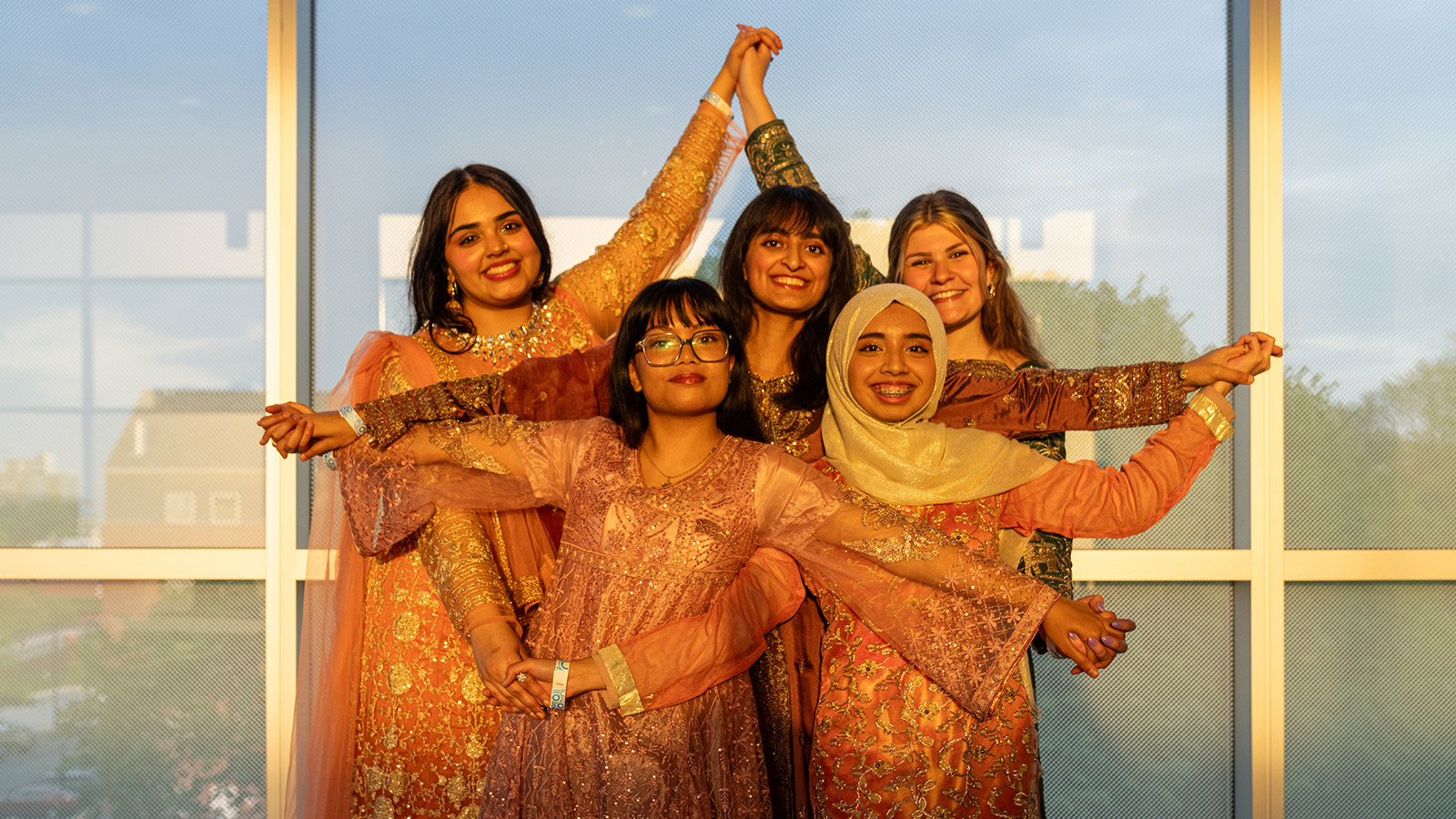
Just like a prom brings together a class of students for a shared experience, a mock wedding is a fun way for students to build community and celebrate cultural traditions. All Tigers are welcome to attend, showcase their cultures through clothing and dance, indulge in traditional wedding foods and vibe to the soundtracks of Bollywood hits like “Kabhi Khushi Kabhie Gham,” which was this year’s event theme. While many students wear traditional attire like salwar kameez and saris, others don gowns or other contemporary clothes. All cultures are celebrated.
Weddings bring people together. When the dance floor opens everyone is out there, having great experiences and being part of a shared community.
Sheryl Joe ’28, SASA vice president
How does SASA pull off the mock shaadi?
Just like a real wedding, planning a mock shaadi takes a village. SASA makes it happen by partnering with fellow cultural organizations like the PSA, PHSA and Nepalese Student Association. Das says bringing together a range of students to plan the event strengthens connections and expands cultural understanding, which is what their organization—and event—are all about. Even the group’s fundraisers have turned into community building events: Their tables selling iced chai and mango lassi attract crowds who hang around to chat and enjoy a piece of South Asian culture on campus. Tigers can get a taste of both drinks at SASA’s next fundraiser from 2–5 p.m. May 12 in the University Union.
Follow SASA on Instagram to learn about future drink sales and get details on next year’s mock shaadi.