Class Notes
A market of stories
TU MFA grad Megan Lovely ’22 swapped muffins for stories at a Baltimore farmers market—and turned the experience into a published book.
When Megan Lovely moved to the Baltimore area to pursue her MFA in theatre arts at TU, she was eager to sink her teeth into the hidden gems of her new town. Her hunger to learn took her to the 32nd Street Farmers Market in Waverly, where she started spending nearly every Saturday morning.
It was her thesis adviser who suggested that she focus on the market for her project. Lovely immediately recognized the natural connection.
“I started to see the market as not only a place where I was working and shopping but a place where I could research the process of an artist becoming part of a community,” she says. “I baked muffins with ingredients from local farms, and I put up a sign that said, ‘Swap a story for a muffin.’”
People ate up her offer. They told her why, in some cases, they drove from neighboring counties to come to the market. It provided them with a sense of community. They felt they were making a difference by buying from local merchants as opposed to big corporations.
“We come back to the grocery store and fill a whole trash bag with all the packaging from our food,” she says. “So I think people like to have that personal connection with where our food is coming from. They like to be able to talk with the people growing their food. It makes them feel more connected to it.”
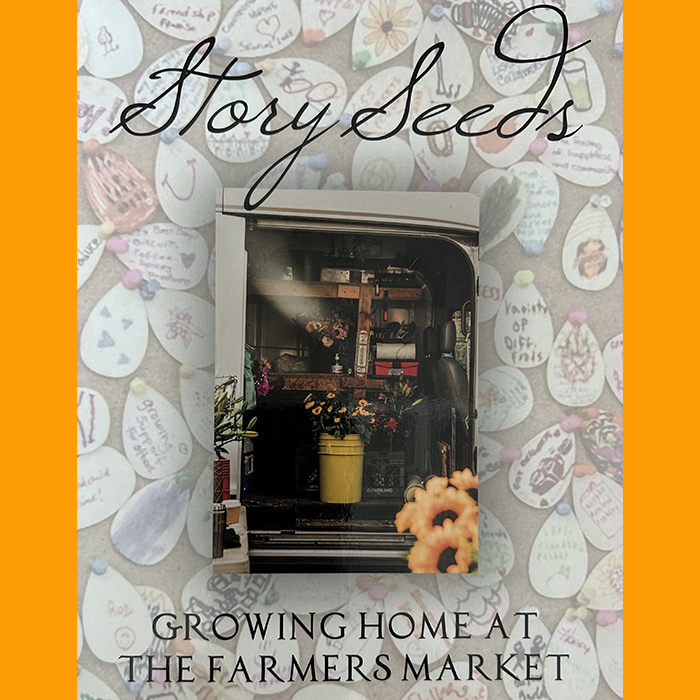
Lovely, who now works as an instructor and program manager at the Center for Community Engagement at the University of Rochester in New York, compiled her project into a book, “Story Seeds: Growing Home at the Farmers Market.” It was published last year.
She misses the market, but is warmed by the thought that it, and others like it, will endure.
“People come because it provides a sense of consistency and normalcy,” she says. “We all come from different places, but in that moment, home is at the market.”