Research
How financial curiosity led to cryptocurrency research
TU finance professor Jian Huang teaches the realities of finance while learning about its future
Towson University finance professor Jian Huang has one practical goal for every student he teaches: financial independence.
That idea started at a young age. Growing up in a working-class family, he would sit at the dinner table and listen as his parents had conversations about prices, risks and opportunities.
As a child, he found those discussions fascinating—sparking his interest in finance.
Preparing College Students for Financial Independence
Now, in an environment shaped by inflation and economic volatility, he’s helping the next generation of finance professionals learn about financial freedom—even if it sounds like an abstract idea.
“The traditional American dream of building long-term security through W-2 incomes has become increasingly difficult for working-class families,” Huang says. “As a result, business ownership, investing and financial decision-making play a much larger role.
“For me, finance is ultimately about independence,” he adds. “And teaching finance allows me to share with students the tools, risks and trade-offs involved in building that independence responsibly.”
For me, finance is ultimately about independence. And teaching finance allows me to share with students the tools, risks and trade-offs involved in building that independence responsibly.
Jian Huang
Understanding Crypto Returns
And while he's teaching in TU's College of Business and Economics, Huang is also learning about the next wave of business innovation—cryptocurrency.
Curious about this growing form of currency, Huang decided to study how universal holidays — or holidays celebrated by a multitude of people—can effect cryptocurrency returns.
“Cryptocurrency markets differ fundamentally from traditional markets: They are decentralized, global and operate continuously without time or geographic constraints,” he says. “That raised an interesting question—would familiar market patterns, such as holiday effects, still appear in such a different environment?
“Exploring this helps us understand which aspects of investor behavior are universal and which depend on market structure.”
Exploring Crypto Patterns
In his research, Huang used the Chinese financial market to investigate this behavior but found the pattern appears in other parts of the world as well.
He also found that when investor sentiment is positive, it can moderate these holiday effects. Compared with traditional stocks, crypto is more sentiment-driven and volatile.
“Put simply, crypto is ‘crazier,’ and our research helps explain why these extreme movements occur and when they are more likely,” Huang says. “For the average household, this means timing and psychology are key. Understanding these patterns can help people approach crypto (and any investment) with more awareness.”
As he continues his research and observes how the cryptocurrency market evolves, he admits that many things have yet to settle. But over time, clearer rules, better infrastructure and learning-by-doing will likely bring more market stability.
In practice, understanding something halfway is often enough to begin—real learning happens through doing. Progress is like a pawn in chess—slow, one step at a time but capable of becoming powerful if it keeps moving forward.
Jian Huang
However, Huang says that once everything calms, some opportunities naturally diminish—a tension typical of emerging markets.
Teaching Crypto Risk Management
When asked how his research will translate to his class, he wants to be clear that he’s not able to teach students how to invest in cryptocurrency but hopes his perspective can help.
However, he wants students to know they should be willing to learn. And if they’re interested in cryptocurrency, they need to understand the risks.
“There’s a saying that you never earn beyond your level of understanding, which is why continuous learning is essential,” Huang says. “Risk should be managed, but waiting until you fully understand something often means missing opportunities or becoming too cautious to act.
“In practice, understanding something halfway is often enough to begin—real learning happens through doing,” he adds. “Progress is like a pawn in chess—slow, one step at a time but capable of becoming powerful if it keeps moving forward.”
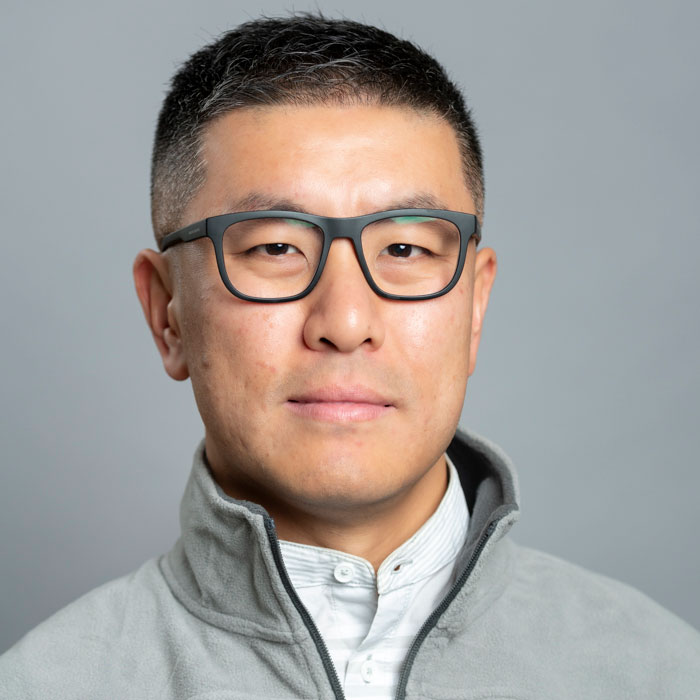
Learn more from Professor Huang
Check out TU Finance Professor Jian Huang's research: "Investor sentiment and the holiday effect in the cryptocurrency market: evidence from China"