Daniel Kawah brings the entrepreneurial energy
Learn how Kawah aims to make TU a regional hub for innovation, access, impact-driven startups
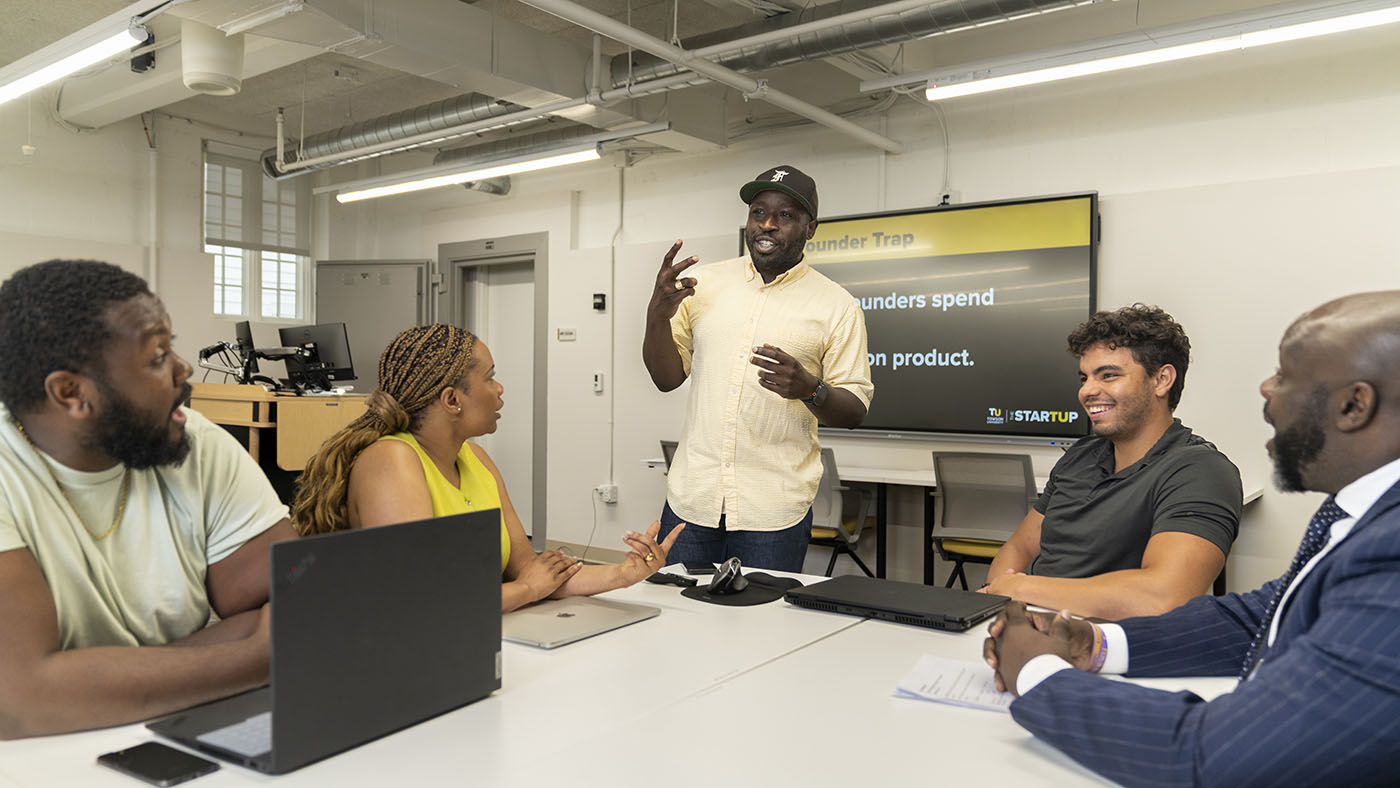
Towson University’s StarTUp at the Armory has a new entrepreneur in residence, and he’s focused on making entrepreneurship more accessible, more practical and more impactful for students, faculty and the broader community. Daniel Kawah brings years of experience building social enterprises and advising founders. At TU, he’s working to cultivate a hands-on, inclusive environment where innovation can thrive. Kawah recently spoke about his journey, the importance of mentorship and why now is the perfect time for students to explore entrepreneurship.
What drew you to Towson University and the StarTUp at the Armory?
Honestly, it was the opportunity to serve in this role at a university. I’ve done similar work at other organizations, but having the support and infrastructure of a university really stood out. I’ve also been connected to TU through friends and family over the years, and as a Morgan State University alum, I’m very familiar with the area. Being right down the street during undergrad made this feel like a natural fit.
Can you share a bit about your entrepreneurial journey and key moments that shaped your career?
I started my first company in 2008, and I’ve been fortunate to learn on the job ever since. One of the most important things early on was finding mentors and being open to coaching. I had to learn quickly that I didn’t know everything, and that building a company means wearing a lot of different hats. That willingness to learn and adapt has been key not just in building companies but now in advising founders as well.
Is social impact a driving force in your work?
Absolutely. I’ve always seen business as a vehicle for social impact. If you’re creating revenue, employing people and scaling, there’s already an inherent impact. But you can go further by intentionally building in social or environmental goals—what people call double or triple bottom lines. I think founders should be thinking about impact from day one.
What excites you most about working with TU students and emerging entrepreneurs?
Timing and access are everything. Students, especially early in their college careers, have a unique advantage: time to explore and experiment. Entrepreneurship is really about solving problems, and this is a great stage of life to start doing that. Also, the world of work is changing rapidly, especially with advances in technology and AI. Being able to create jobs, not just look for them, is incredibly valuable. I’m excited to help students build those skills and take advantage of those opportunities.
We’re also in a unique position at the university to support not just startups but also existing small businesses and organizations in adapting to a changing economy. That’s an exciting space to be in.
For students who don’t see themselves as entrepreneurs, what would you say to encourage them to get involved?
Entrepreneurship isn’t just about starting a company. It’s about being part of building something from the ground up. Startups need all kinds of skills, including communications, marketing, operations and design—not just business or technical expertise. Students can get involved, learn how startups function and even land internships or jobs just by being in the environment. And who knows—they might catch the bug and decide to start something of their own.
What are some common mistakes first-time entrepreneurs make, and how can students avoid them?
Too many assumptions. With so much information online, people sometimes think they know more than they do. They build too quickly without talking to real customers. The key is to get out and engage with people to understand how they think, what they value and how they make decisions. Don’t just rely on trends or what your algorithm is showing you.
How can students plug into the StarTUp at the Armory right now?
There are a lot of entry points. We have student programming like the College Cup, as well as regular boot camps with subject matter experts and business community supporters. I will also meet with students if they reach out and talk through ideas or even just explore where to start. My goal is to make entrepreneurship accessible to everyone at TU, including faculty and the broader community.
You mentioned faculty—how do they fit into this ecosystem?
There’s a huge opportunity to help faculty commercialize research. So many professors have ideas or innovations that could become real products or companies. We’re working toward building a more structured process to identify and support those opportunities, so we can move from theory to application more consistently.
What skills or mindsets are most important for success today?
A lot of it comes down to soft skills like communication, being concise and respecting people’s time. Being coachable is also critical. There’s so much information out there but knowing what applies to you and being able to learn from others makes a huge difference. Networking is another underrated skill. Building relationships and learning how to connect with people can open so many doors.
What’s one piece of advice you wish you had when you were starting out?
Be OK with failing fast. I was a perfectionist early on, and it slowed me down. You learn much more from failure than from success, so the sooner you embrace that, the faster you grow.
What are your overarching goals in this role at TU?
I want Towson University to become a leading hub for entrepreneurship in the Mid-Atlantic. Over the next three to five years, I’d like us to identify a few key verticals where we truly excel, so if someone wants to start or scale a company in those areas, this is the place they think of first.
What makes the Armory such a valuable space for innovation?
It’s welcoming and open. There’s great natural light, flexible meeting spaces and room for collaboration. We have startups, alumni founders and students all in one place. My goal is for it to feel like an integral part of campus life, not an extension. It should be a place where students naturally spend time, connect and build.
Is there anything else you’d like the TU community to know?
I want people to see themselves in entrepreneurship. Whether you’re starting a company or joining one, the experience teaches you so much accountability, adaptability and communication. Those skills are valuable no matter what path you take.
Meet the founders driving innovation at TU
Learn more about the current cohort in Towson University’s StarTUp Accelerator—an eight-week, cohort-based fellowship where entrepreneurs collaborate to rapidly advance their ventures. See how these changemakers are turning ideas into action.