How one TU professor is bringing music history to life
TU's director of choral activities co-edits the Oxford Book of Latin American Music
Rhythm was the first language Diana Sáez’s family introduced to her. That gift paved the way for her lifelong love affair with music–and with time, cemented her passion for music education.
Now, after years of collecting and lovingly using various annotated Oxford anthologies of choral music, Sáez will add another to her bookshelf–except this time, her name and knowledge will live within its pages as an editor.
“I remember dreaming of doing something like this,” Sáez says. “Over the years, I purchased beautiful Oxford anthologies of choral music of different topics–madrigal music from Italy, sacred music from across Europe and more. This is truly a full circle moment.”
Diversifying music history education
In her role as director of choral activities in the College of Fine Arts and Communications’ Music Department, Sáez directs the University Chorale, Women’s Choir and Choral Society.
Sáez infuses her passion for studying the historical contexts of Latin American music and rhythms into her choral teaching and collaborative projects.
“Something people assume about Latin American music is that it is all about movement and fun. But because of Spain and Portugal’s colonization of Latin America, there is also a significant influence from composers like Mozart,” she says.
Sáez's curiosity led her to co-edit the “Oxford Book of Latin American Choral Music,” with professor and co-editor José Rivera, Ph.D., of the University of North Carolina. Set to publish in February 2027, the book will illustrate Latin America's historical influence on choral music.
The project builds on Sáez's existing knowledge and evolving understanding of Latin American musical influence on a broader scale, making it accessible to musicians and educators worldwide.
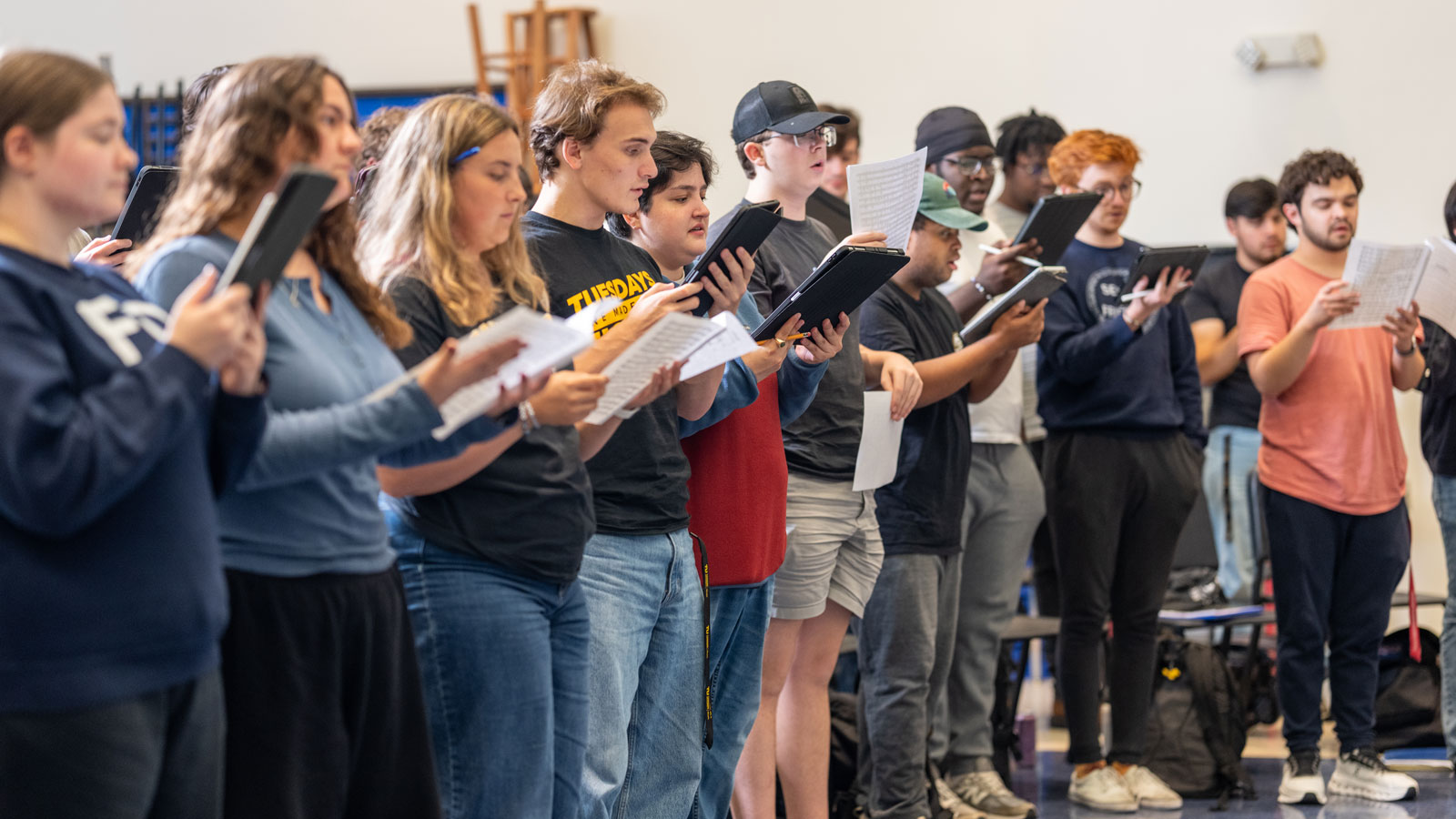
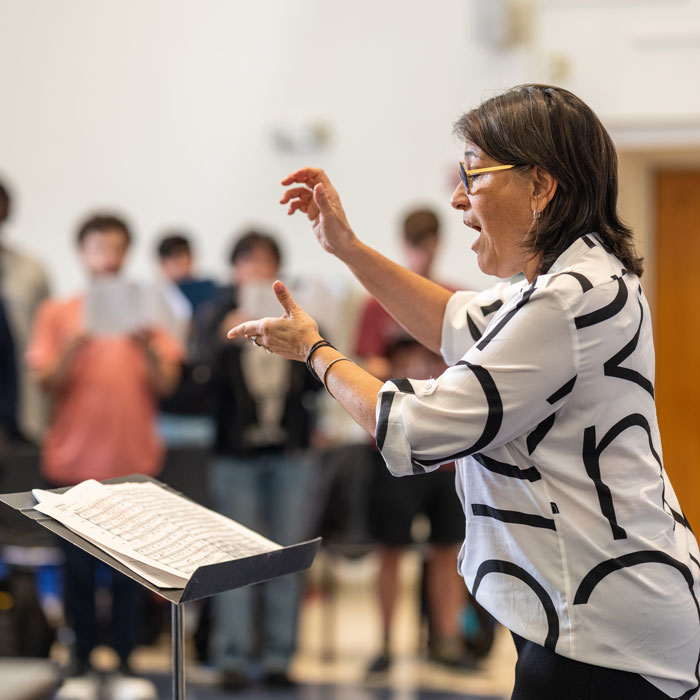
Professor Diana Sáez leads rehearsal for her students in the Ensemble: Chorale (MUSA451) course.
“Students need to be exposed to all kinds of music, from all eras and of all rhythms,” she says. “Once in a while, I bring a sacred piece by Latin American musicians into my courses. Teaching this is another way to fight stereotypes.”
In recent years, there has been greater recognition of research on the origins and influence of music and rhythm beyond Europe. Just four years ago, Oxford University Press published the anthology of Black composers–the first of its kind.
Students need to be exposed to all kinds of music, from all eras and of all rhythms.
PROFESSOR DIANA SÁEZ
That slow but steady progress paved the way for anthologies like the one Sáez is editing.
“There is an acknowledgement that we must learn about more choral music outside of European contexts.” Sáez says. “Rivera and I agreed that this anthology had to happen now–not 10 years ago. People wouldn’t have been ready for it.”
After the anthology is released, Sáez will share it with other music educators at the American Choral Directors Conference.
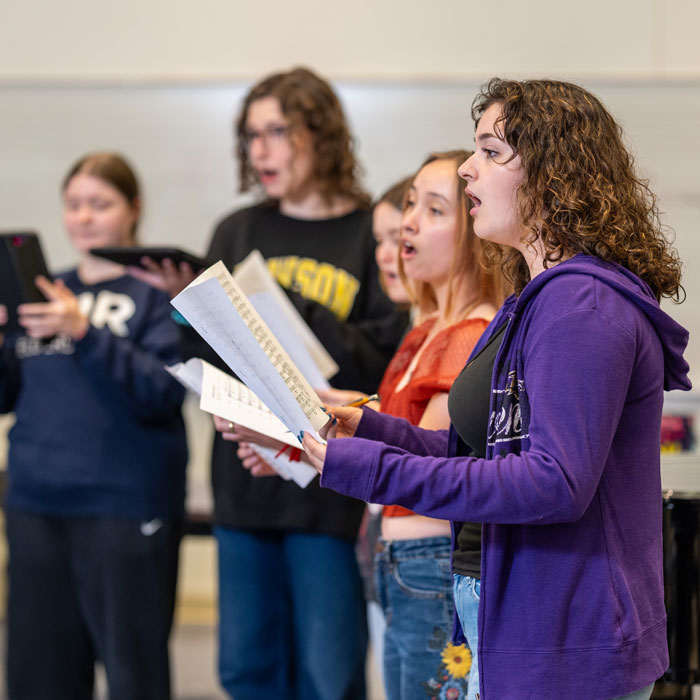
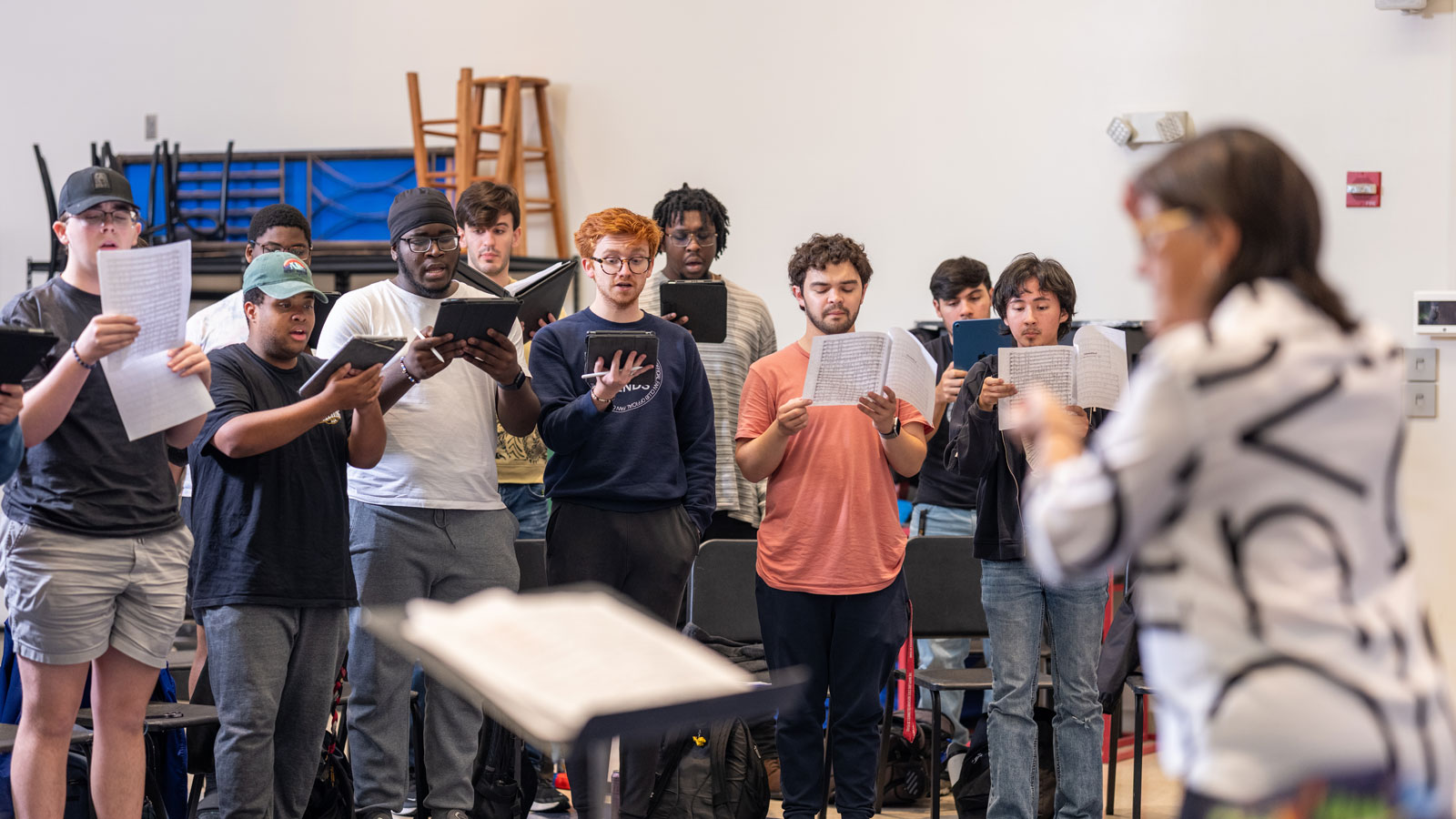
One of the most gratifying aspects of teaching her students is seeing the surprise in their eyes when they learn how various rhythms intersect with other cultures.
“I’m a big believer that everything is connected,” Sáez says. “Last semester, I taught my students about popular music and rhythms across Latin America. From Bachata, bossa nova and rumba to samba, salsa and more, I had students from Ghana and Togo who were amazed at how much Africa influenced Latin American music.”
Celebrating Latine Heritage & Culture
Explore storytelling, resources and events that are open to all as we celebrate Latine Heritage Month Sept. 15 to Oct. 15.
Learn more.