feature
Creating ‘inner harmony’
After a cancer diagnosis, Elizabeth Borowsky ’05 transformed struggle into sound.
Elizabeth Borowsky ’05 didn’t think she needed meditation. As a musician, her days were already disciplined—structured around practice, teaching and performance. She considered herself attentive, even mindful. For years, she had practiced yoga daily. But she was moving quickly from project to project, concert to concert. Stillness was not something she actively sought.
That changed on Dec. 17, 2024.
At 41, Borowsky scheduled a routine mammogram. The biopsy that followed led to a diagnosis of an aggressive form of breast cancer. The months ahead would revolve around chemotherapy, surgery and radiation—a different kind of regimen, equally structured, but no longer self-directed.
As she typed her news on Facebook a month after receiving the diagnosis, she had no way of knowing what her future would hold.
“The last few weeks have been something of a stress-dream realized,” she wrote. “I am grateful for the support received thus far… things are moving quickly.”
Roughly 2,300 miles from Borowsky’s home in Lebanon, New Hampshire, Jesika Harmon read the note with a heavy heart. The two had met 25 years earlier at a program for young women and had remained loosely connected online. Harmon, now a meditation coach, reached out.
“I was coming from a place of having just lost my father-in-law to pancreatic cancer,” Harmon says. “And as a meditation coach, I found myself wishing there was something I could do to help.”
Turns out there was. The two reconnected, and, over Zoom, Harmon began guiding Borowsky through meditation sessions. It wasn’t about avoiding fear or insisting on positivity, Borowsky says. It was about cultivating attention—learning when thought serves and when it obstructs.
Meditation offered a way to step back, observe and respond rather than be swept along by the noise.
Elizabeth Borowsky
“With a diagnosis and treatment plan to navigate, there was a constant flood of information, and it was all too easy to get caught up in Googling every possible scenario,” she says. “Meditation offered a way to step back, observe and respond rather than be swept along by the noise.”
From the start, their weekly sessions were deeply personal. Over time, a thought blossomed: What if this exchange could extend beyond the two of them? The challenges Borowsky was facing—uncertainty, fear, the flood of information and the constant need to make decisions about her body and treatment—were likely universal. What if the lessons emerging from this work could help others navigating illness, uncertainty or grief?
Creating ‘Inner Harmony’
Neither woman remembers who first proposed the plan, but between chemo treatments, Borowsky boarded a plane to Utah. Days later, in a studio in Provo, the two created what would become “Inner Harmony,” an album pairing Harmon’s guided meditations with Borowsky’s piano music, composed in real time. Both the music and meditation were born from Borowsky’s cancer experience.
Released last fall on major music streaming platforms, Borowsky is careful not to describe the project as music for meditation or meditation with background music.
“The music and the words are fully interwoven, note by note, word by word,” she says. “Each responds to the other. It’s a single, unified experience.”
Music has always structured Borowsky’s life. Her mother, Cecylia Barczyk, was a longtime cello professor at TU, and the household revolved around disciplined practice and performance. By childhood, Borowsky was already performing internationally; by 18, she had appeared in more than 30 countries.
“I don’t remember life before piano or life before music,” she says. “It’s always been part of how I understand the world.”
Borowsky excelled at TU, where, in addition to her music classes, she took acting, public speaking, sociology and political science; served as an orientation leader; studied abroad; and participated in the Honors College. Studying with renowned pianist Reynaldo Reyes, a member of the music faculty at TU for more than 50 years who passed away in 2016, gave her tools of discipline, artistry and performance that she says continue to shape her work today.
“The music department faculty are deeply committed educators who bring national and international expertise to the program,” she says. “My studies in theory, musicianship and music history laid the foundation for everything I do as a performer, teacher and composer.”
I don’t remember life before piano or life before music. It’s always been part of how I understand the world.
Elizabeth Borowsky
After graduating, Borowsky participated in the International Chopin Competition in Poland and recorded a solo album, “Chopin Recital.” She then pursued a master’s at Indiana University, spent three months as an artist-in-residence in Germany, performed at pre-Olympic celebrations in Beijing and published “100 Solos for Piano Prodigies,” among other projects.
Then came the diagnosis. Breast cancer is the most common form of the disease diagnosed among women in the United States, comprising 32% of all new cases, according to Breastcancer.org. One in eight women in the U.S. will develop it in their lifetime (the median age is 62). While traditional risk factors such as smoking or obesity are often emphasized, many people diagnosed with breast cancer have few or none of these factors. Increasingly, younger women and otherwise healthy individuals are being diagnosed, underscoring how unpredictable the disease can be.
Those are unnerving numbers, but advances in treatment have helped lead to better outcomes. The five-year relative survival rate in the U.S. for all types and stages of breast cancer combined is 92%, according to the National Breast Cancer Foundation.
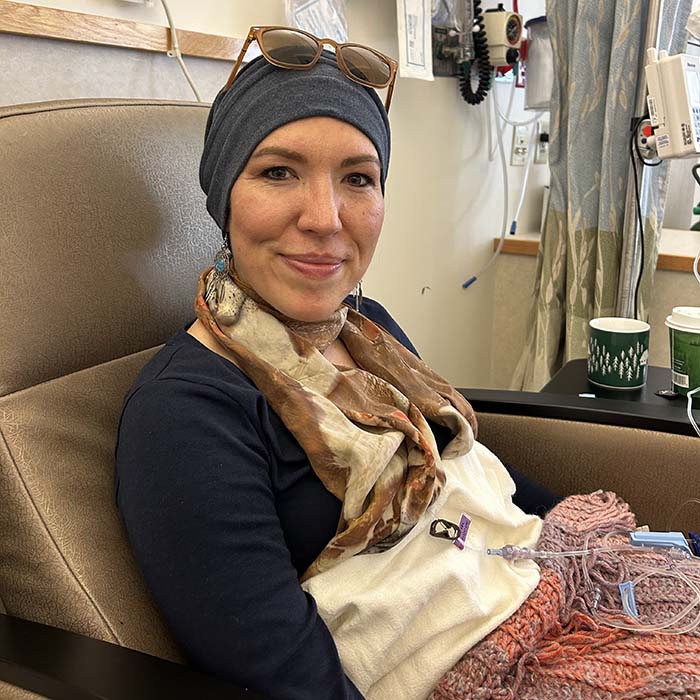
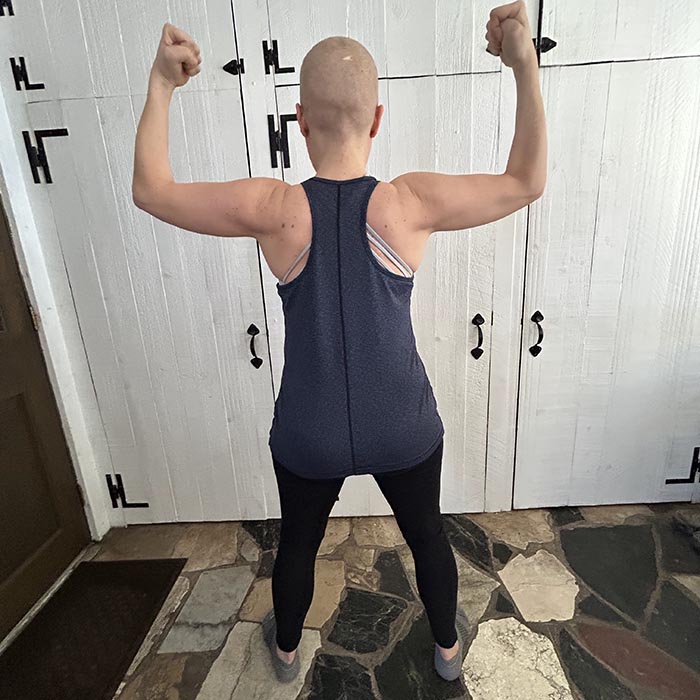
But patients are people, not statistics. In February 2025, Borowsky began five months of chemo. As a performer, her physical self was part of the image she had created and identified with—and chemotherapy was rewriting it. She had already cut her mid-back-length hair to stay ahead of the loss, but now it was time to go even shorter.
When Thom, her partner, shaved it, he went straight down the center. That’s when she realized she had forgotten to attach the guide to the clippers.
“He looked at me apologetically and said, ‘Now you have a clown cut,’” Borowsky recalls. “I had anticipated this ritual would be a tragic moment. Instead, we were laughing hysterically.”
The five-year relative survival rate in the U.S. for all types and stages of breast cancer combined is 92%.
Managing her emotional and cognitive load became as important as managing her body. The potent chemotherapy drug doxorubicin, nicknamed the “red devil” for its bright red color and harsh side effects, created an immediate feeling of inner repulsion. Borowsky could feel it and taste it. Even thinking about it between infusions made her gag. Through guided meditation, Harmon helped her reframe it, seeing the drug not as poison but as medicine targeting cancer cells.
“Each week she asked what I’d experienced, how my body felt and what was happening emotionally,” Borowsky says. “Then she would guide me through a meditation or teach me a mindfulness tool that could help, followed by an email that would be a summary of our discussion to help me practice during the week.”
These conversations ultimately gave rise to “Inner Harmony (YouTube).” Throughout the process, Borowsky and Harmon made deliberate choices. They recorded audio and video simultaneously, preserving the immediacy of each performance. Borowsky chose to appear as she was—bald from chemotherapy—in solidarity with patients past, present and future who might encounter the project on YouTube. They entered each session without a script or written score, guided only by a loose outline of intention.
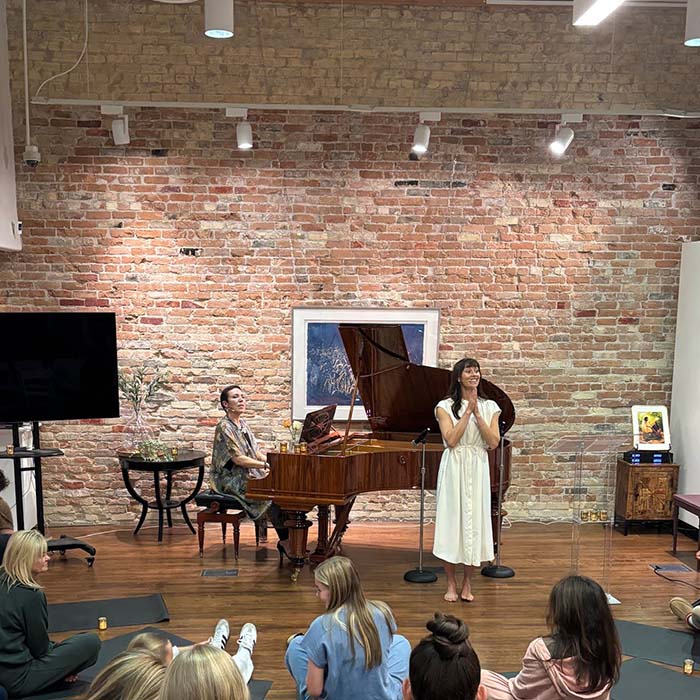
Because the spoken words, pacing and music unfolded differently each time, each take was unique and unedited, resulting in a recording that could not be pieced together from multiple takes. What emerged was not a constructed product but a lived moment. The project gave birth to a new form of meditation, Sonisah Meditation, from the Latin sonis (“sound”) and the Hebrew niysayon (“experience born of trials”).
“Musically, these are relatively simple compared with what I play and write,” Borowsky says. “But these tracks are infused with attentiveness to breath, heart rate and the message of Jesika’s words. I still draw on everything I’ve explored over decades: How do I forge a connection with my audience through sound? How do I bring them into another world? How do I make this an experience? How do I inspire them to feel deeply?”
The album and its impact
Each of the seven tracks addresses a challenge Borowsky confronted. “I am more than my body,” “I can’t do this alone, but I am not alone,” and “The only way forward is through.”
“As someone who records guided meditations, finding music that goes with it is often a challenge,” Harmon says. “Because of her musicianship and expertise, she was able to translate her own battle against cancer into music in an incredible way.”
Released in October, breast cancer awareness month, the album has resonated widely. Harmon’s neighbor, recovering from a brain aneurysm, used the meditations daily during a month-long hospital stay. The project has also been featured on podcasts, highlighted on a national breast cancer organization website, and Dartmouth-Hitchcock Medical Center, where Borowsky received treatment, plans to show the videos in cancer center waiting rooms and infusion suites.
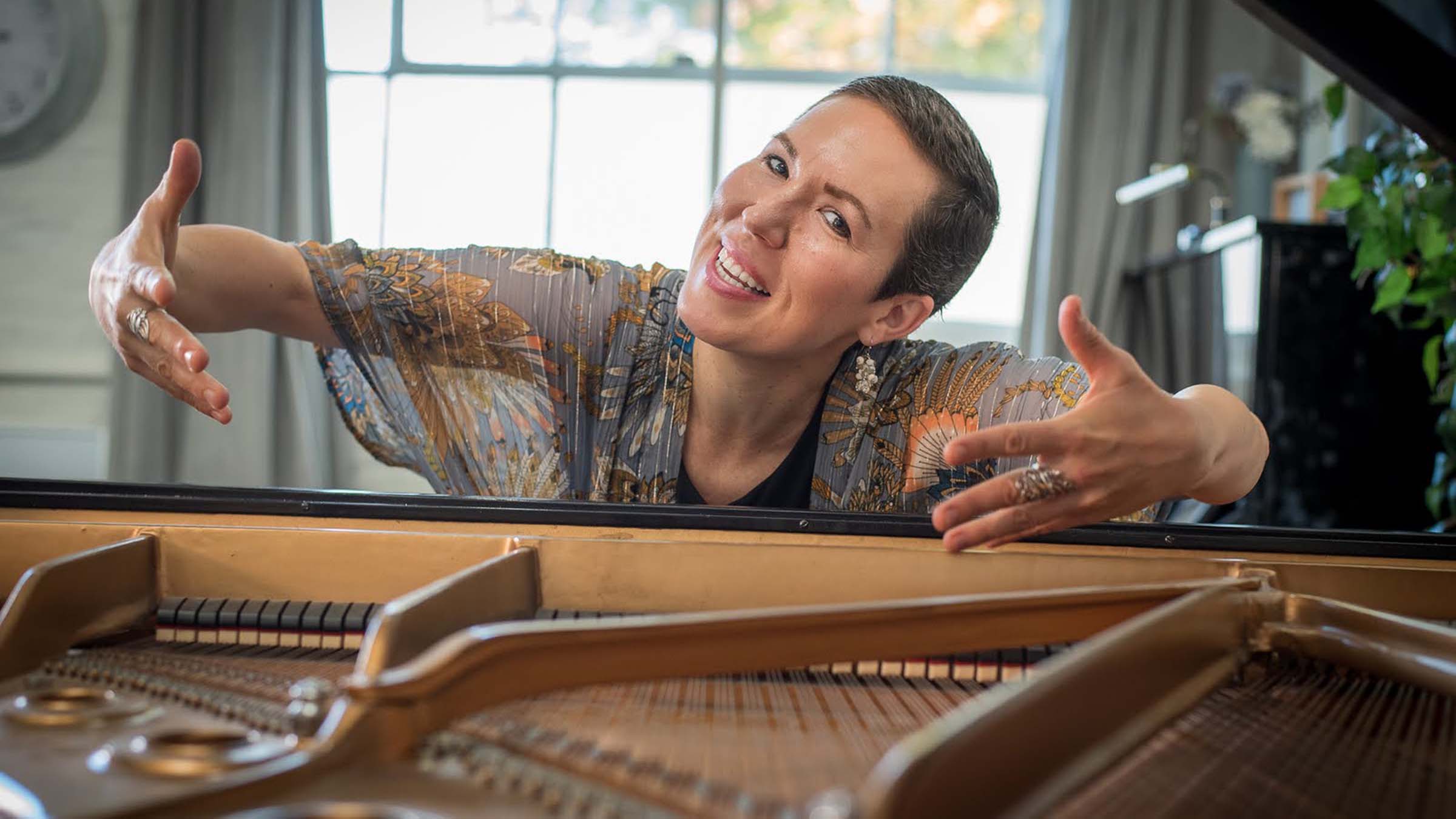
Today, Borowsky’s life is getting back to normal. A new normal. Although she currently has no evidence of disease, she’s continuing endocrine therapy to reduce the risk of recurrence. She and Harmon are sharing “Inner Harmony” with hospitals, podcasts and health care providers, hoping to help patients.
“If I knew then what I know now or if someone could have said, ‘Here, let me give you a sense of what to expect and how to make this a little easier,’ it would have been a profound gift,” Borowsky says.
A gift she and Harmon are now sharing with the world.
Photos courtesy of Elizabeth Borowsky.
Listen to Inner Harmony on Spotify