Students ‘engineer’ solutions around TU
New engineering curriculum offers design class for everyone
Fisher College of Science and Mathematics professor Pamela Lottero-Perdue created a course open to all TU students interested in creative collaboration for problem-solving. Kevin Martz teaches EPHY 155: Engineering Design for Society, which highlights the intersection of environmental issues and engineering, showing students their solutions really matter and completed its first semester in fall 2025.
For students excited or eager to pursue engineering-based courses, the physics department now offers an Applied & Engineering Physics Concentration. EPHY 155 serves as an introduction to the program and is available each semester in the fall and spring.
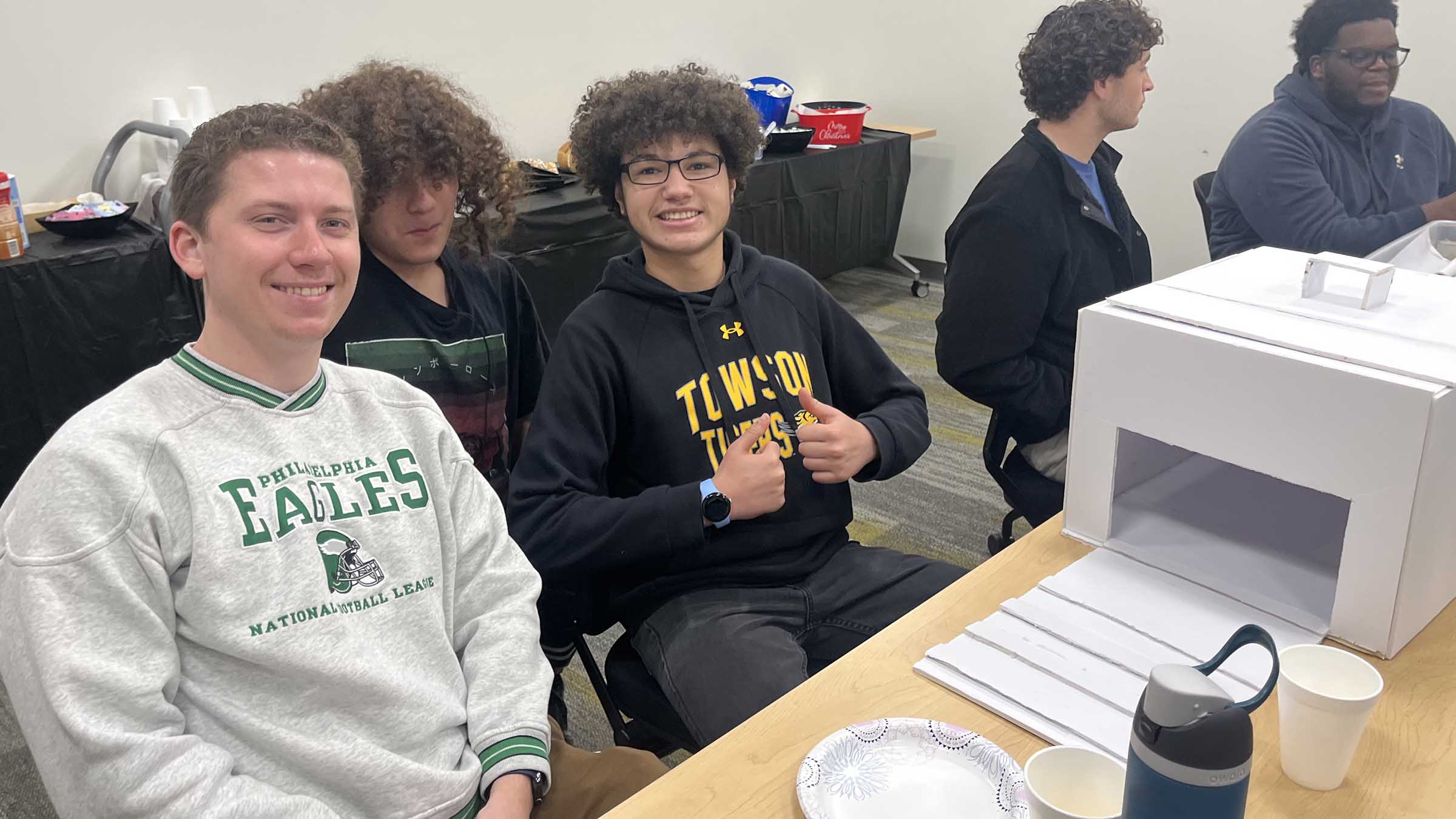
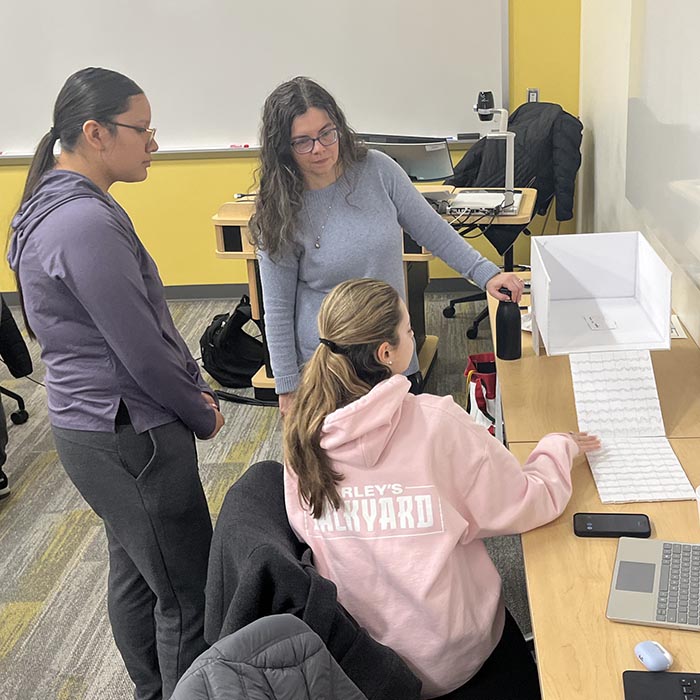
Pamela Lottero-Perdue talking with engineering students
“This is a 100-level course, and it is a Core four. It's available with other class options like sculpture or drawing,” Lottero-Perdue says. "It’s open to everyone at TU as some students would love to find a STEM way of meeting the core requirement for creativity.”
Engineering experience
Throughout the course, students fabricated a variety of projects out of paper, cardboard, pipes and 3D-printed materials.
“It's an awesome first engineering course,” Martz says. “It's not all about technical drawings and physics equations, but it's about how engineers think.”
The first unit focused on wind energy, and students use engineering concepts to design, optimize, test, construct and analyze wind turbines.
Each academic year, the class will focus on a new community project on TU’s campus. In the fall, the second unit was a group project to address an issue very close to home—at the Living Lab in the Science Complex.
Designing solutions
Martz and Lottero-Perdue saw a need on campus and created a way for students to solve it. During the class they designed new habitats for the turtles in the Living Lab, a vivarium in the Science Center used for scientific research and teaching.
Hailey Martin, a senior biology major, works as a student animal caretaker in the Living Lab.
“It was nice to have an opportunity to discuss the turtles from the Living Lab with students. We 3D-printed and tested the habitats in water with the turtles,” Martin says. “The students also came to the Living Lab to learn about the different requirements for each turtle and their personalities.”
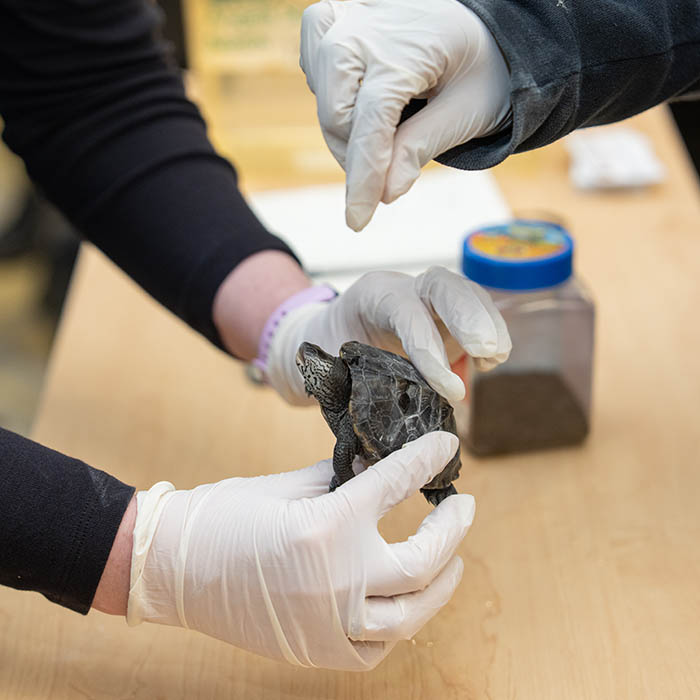
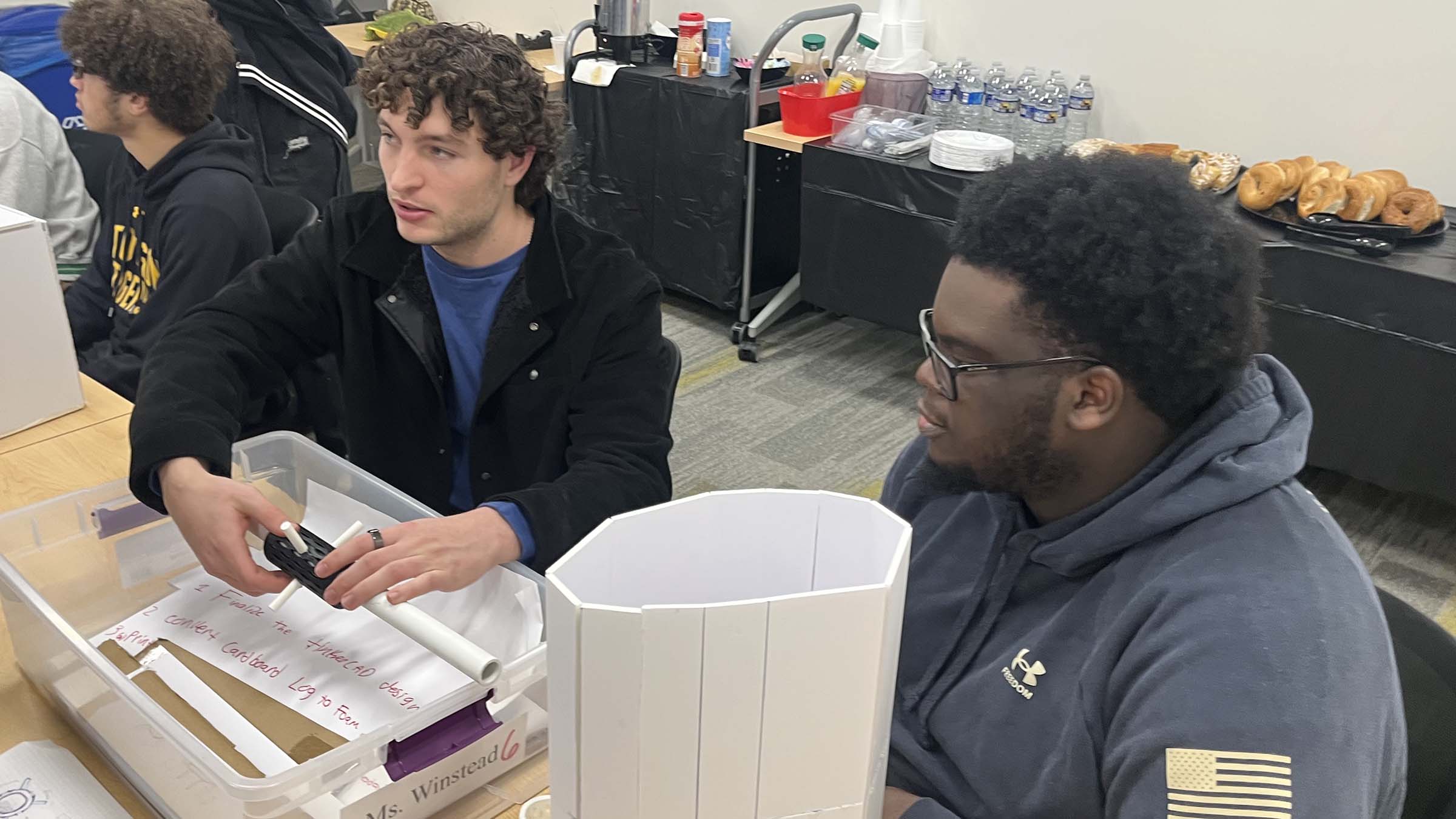
Students in Martz's class working on their turtle habitats
Student responses to the course and interactions with the turtles were overwhelmingly positive.
“You could see students were excited to talk about their projects and what they learned,” Lottero-Perdue says. “They were able to create these designs to improve the turtles' lives and do so in a responsible way, which is really cool!”
Community Connections
This class was created in collaboration with Engineering for Us All or E4USA. It’s a nonprofit organization working to expand the reach and impact of engineering education. They offer curricula, professional learning opportunities and a community of partners from high schools, universities and companies throughout the country.
“We are a community together in this,” Martz says. "I know the students get something from it because we start off with a rich problem with multiple layers. It's great to have multiple possible solutions, and you can really do deep learning.”
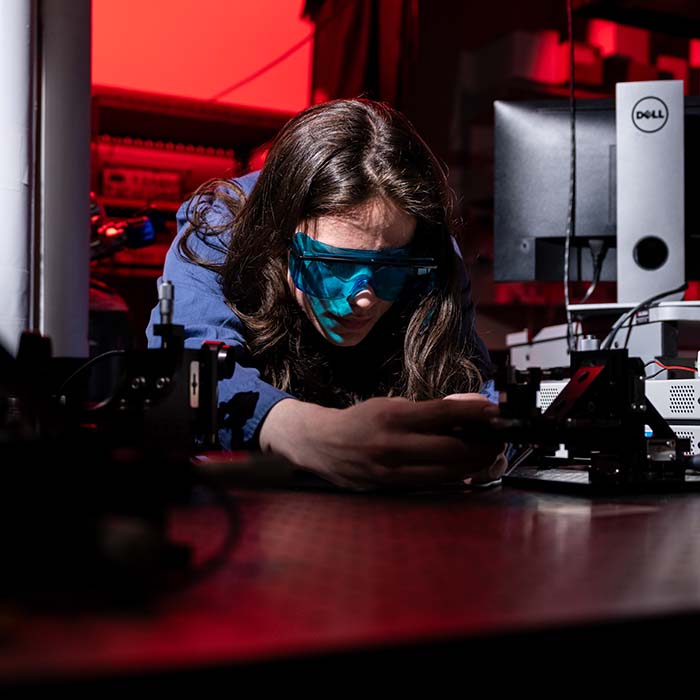
Applied and Engineering Physics Concentration
TU's Physics Departments offers a concerntration in applied and engineering physics. This concentration is for those looking to pursue applied research and development in industrial laboratories.
Learn more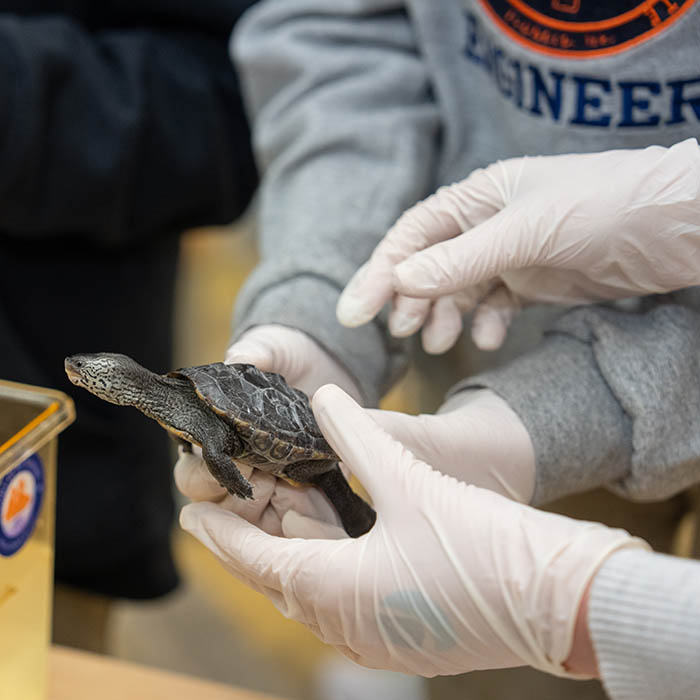
Living Lab
In the Science Complex, TU has its own vivarium used for scientific research and teaching. It is home to a variety of plants, insects, and vertebrates.