The history of Doc the Tiger
How Towson University became the Tigers — and how the mascot was named Doc
It’s safe to say that Doc the Tiger is one of the most recognizable faces at Towson University.
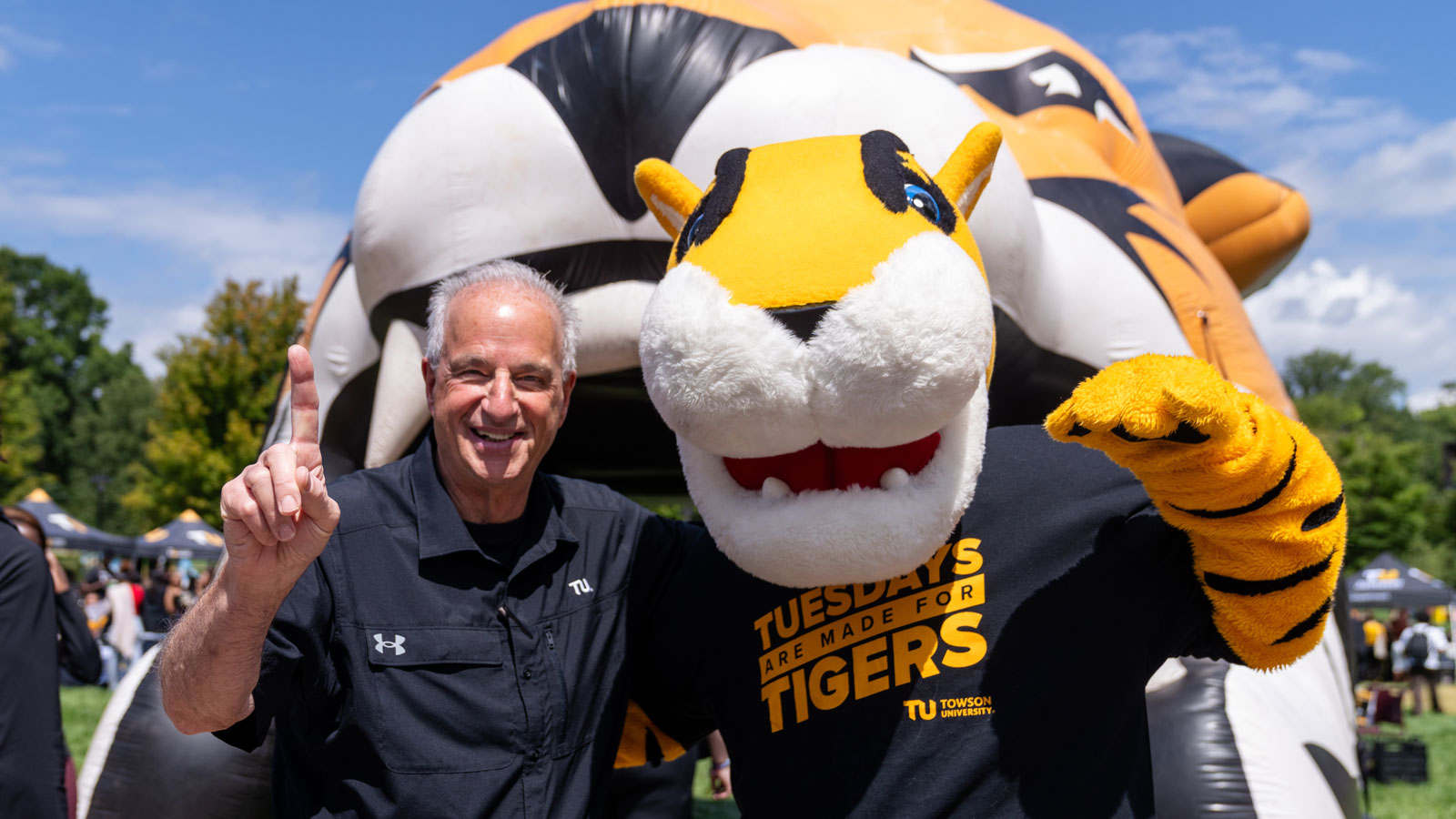
From roaming the sidelines and stands at sporting events to taking pictures with families during Move-In and celebrating graduates at Commencement, Doc is a familiar presence throughout the TU community.
But TU — and its predecessor, the Maryland State Normal School — wasn’t always known as the Tigers. The Tiger nickname didn’t arrive until nearly 100 years after the school’s founding, and the mascot went almost 40 more years before a name stuck.
The road to becoming Doc began with a student-led push to adopt “Tigers,” continued with a Homecoming parade debut and ended with a naming contest.

Royal beginnings
Imagine heading to Unitas Stadium on a Saturday afternoon to cheer for the Towson University Golden Knights or watching a star basketball player representing the Towson University Schoolmasters.
Since athletics became part of campus life in the 1930s, when the institution was known as the Maryland State Teachers College, TU teams have gone by a variety of nicknames, including the Normalites, Profs, Towsonites, Indians and even just the Gold and White.
But the nickname that gained the most traction was the Golden Knights.
It may have been inspired by campus traditions from the 1920s and 1930s, when the school held an elaborate Olde English Christmas dinner featuring medieval costumes, music and a pageant.
TU’s former annual yearbook, Tower Echoes, used Renaissance-style pictures of archers to depict athletes and campus life. Knights and medieval imagery appeared throughout campus materials, including references to the campus as Camelot, with “merry court life” representing student activities and “many tournaments” representing sports.
Roaring for a new nickname
With so many nicknames in circulation, TU students began pushing for just one. The idea of becoming the Tigers took shape among members of the soccer and baseball teams in the early 1960s.
John Schuerholz ’62, a TU soccer and baseball alumnus and National Baseball Hall of Fame inductee as a general manager, recalled when the issue of a nickname was first raised among TU’s student-athletes.
“I can remember having conversations about it with teammates while we were running up and down the field, catching our breath, asking each other—what should our nickname be; what do we really want to be called?” Schuerholz told TU Athletics.
Those conversations helped turn the Tigers into a popular choice. Schuerholz, along with teammates Dick Stack ’62 and Ed Lorenz ’61 and Tower Light sports editor Lou Winkelman, became leading advocates for the change.
They used the student newspaper to help make their case, with the first informal use appearing in the Sept. 23, 1960, edition. Schuerholz wrote a column titled A Note to the Fans:
“…. With the new decorations, and the P.A. system ready to relay the play-by-play action, the Towson Tigers are ready to top it off with some great soccer and determined effort …. Look forward to top-rate soccer this year from the Towson Tigers.”
Throughout the 1960 soccer season, Schuerholz, Stack and Lorenz continued their campaign, referring to the team as the Towson Tigers in the columns, previews and game stories they wrote for Tower Light.
The campaign culminated in an official vote. On Tues., Nov. 20, 1962, with the Student Senate in session, Winkelman moved “that Towson sportsmen be officially known as the Tigers.” The motion carried unanimously.
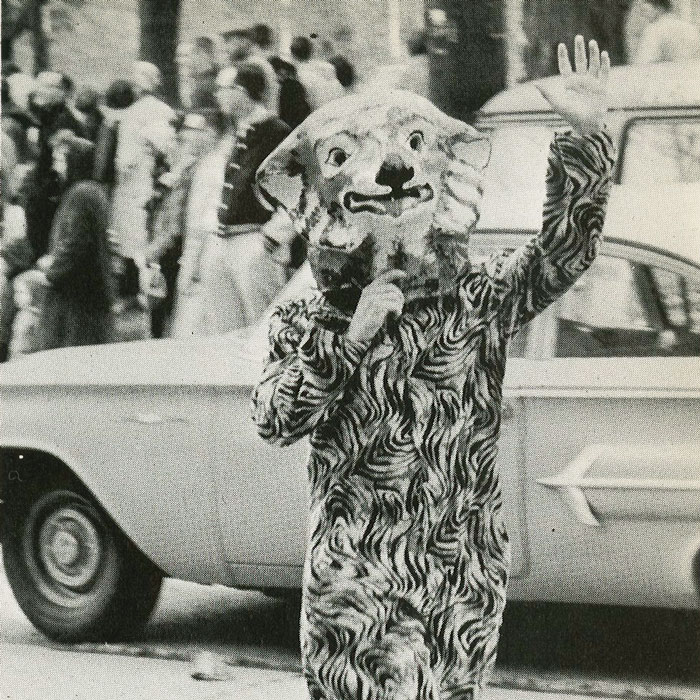
The following year, the Tiger made its debut as a costumed mascot in the 1963 Homecoming parade. Winkelman had gone to a local costume shop, rented a tiger costume and marched in the parade, bringing the nickname to life and cementing the Tiger’s place as TU’s mascot.
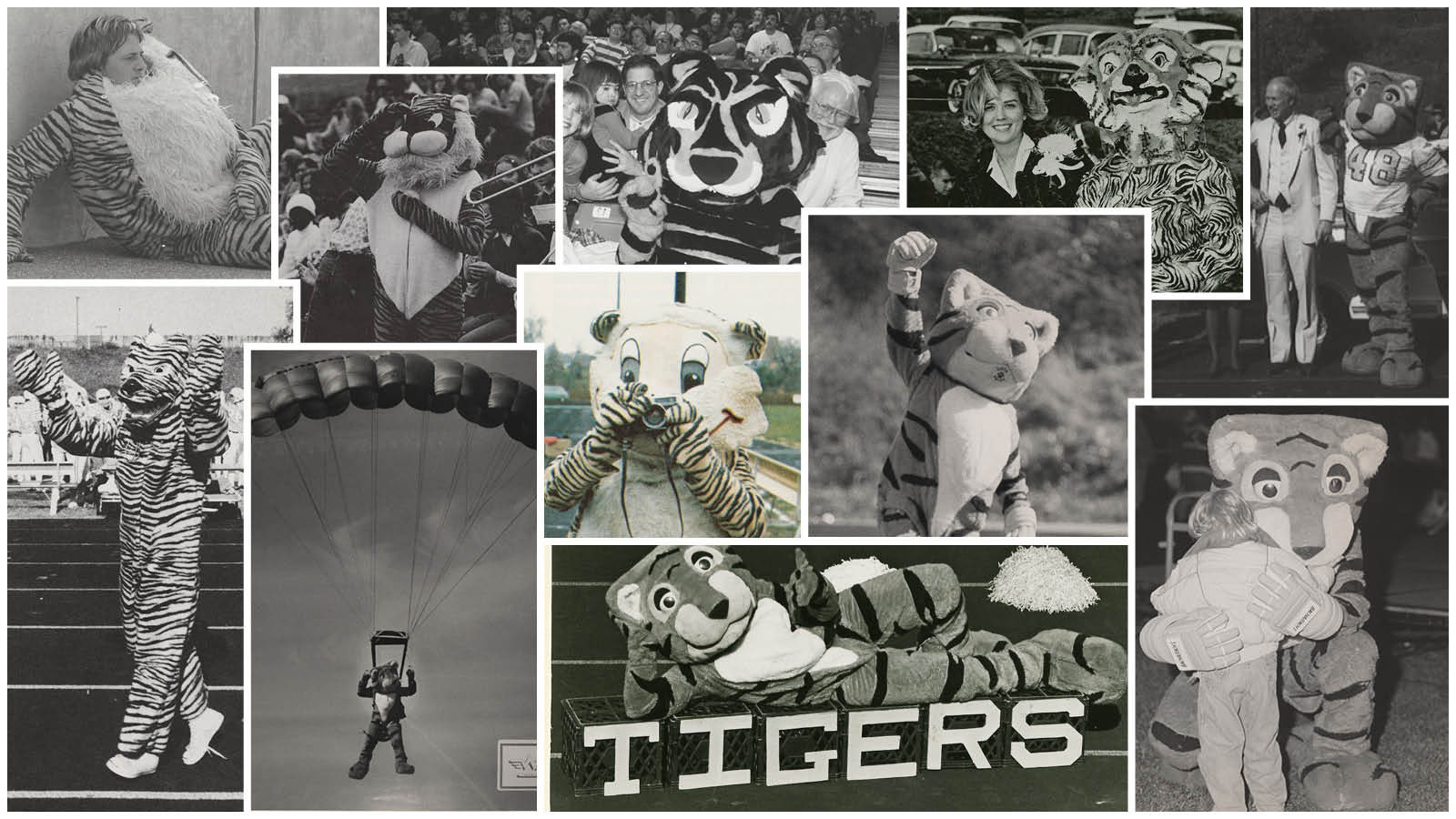
Some of the earliest photos of Towson University's Tiger mascot. The Tiger went almost 40 years without an official name before being called Doc in 2003. (Collage designed by Georgia Naden)
A name to go along with the roar
Despite settling on the Tigers and introducing a costumed mascot, the Towson Tiger went about 40 years without an official name.
A few were used over the years, including simply Towson Tiger or Mr. Tiger. In the 1980s, there was a push to give the mascot the military-themed name Sgt. Stripes.
In 2003, the Student Government Association held a naming contest.
A committee composed of SGA members, faculty and staff culled the entries before the SGA unanimously approved the moniker “Doc,” over other suggestions including Roary, Minnegan, Tony, Hoke, Tank and Stripes.
Doc made his first appearance on April 26, 2003, during halftime ceremonies at a TU men’s lacrosse game.
The name honors TU’s first athletic director, Donald “Doc” Minnegan, Ph.D.
“Doc did so much for our school, so what better way to honor him than to name our very own tiger after him?” then-SGA Vice President Jessica Machen told the student newspaper, The Towerlight, at the introduction.
Minnegan left a lasting mark on TU athletics, spending more than 50 years at the university as a teacher, coach and athletic director.
He arrived on campus in 1927 as a part-time faculty member. In 1947, after earning his doctorate from George Washington University, he was known as “Doc” by athletes, students, alumni and colleagues.
Doc retired from TU in 1977 as a full professor and athletic director emeritus. As an administrator, he was instrumental in adding several sports, including football and lacrosse, to an athletics program that today includes 19 varsity teams and hundreds of student-athletes.
From the Golden Knights of campus lore to a student-driven nickname and a mascot named in honor of a beloved athletics leader, the Tiger’s story is part of TU’s history. And thanks to Tigers past, new generations have a name to cheer for: Doc.