Uncovering the ‘Swinging Sailor of Perryman’
A Towson University professor and her students investigated a centuries-old Maryland legend
Katherine Ahlrichs has dug up a lot of different things.
The associate professor in Towson University’s College of Liberal Arts’ Department of Sociology, Anthropology and Criminal Justice also directs the Baltimore Community Archaeology Lab (BCAL).
Through her work with BCAL, Ahlrichs and her students have participated in archaeological fieldwork throughout central Maryland.
And while her hands have uncovered everything from bones to artifacts that offer glimpses into Maryland’s history, nothing could have prepared her for her latest project: helping exhume the remains of the “Swinging Sailor of Perryman.”
Who was the “Swinging Sailor of Perryman”
John Clark Monk was born near Bristol, England, in 1760 and came to America around 1786. A man passionate about the sea, he became well known in Abingdon, Maryland, where his family owned more than 300 acres, including the popular Abingdon Store.
Featured in books, news articles and even a song titled “The Swinging Sailor of Perryman,” Monk’s burial has become an urban legend in Harford County.
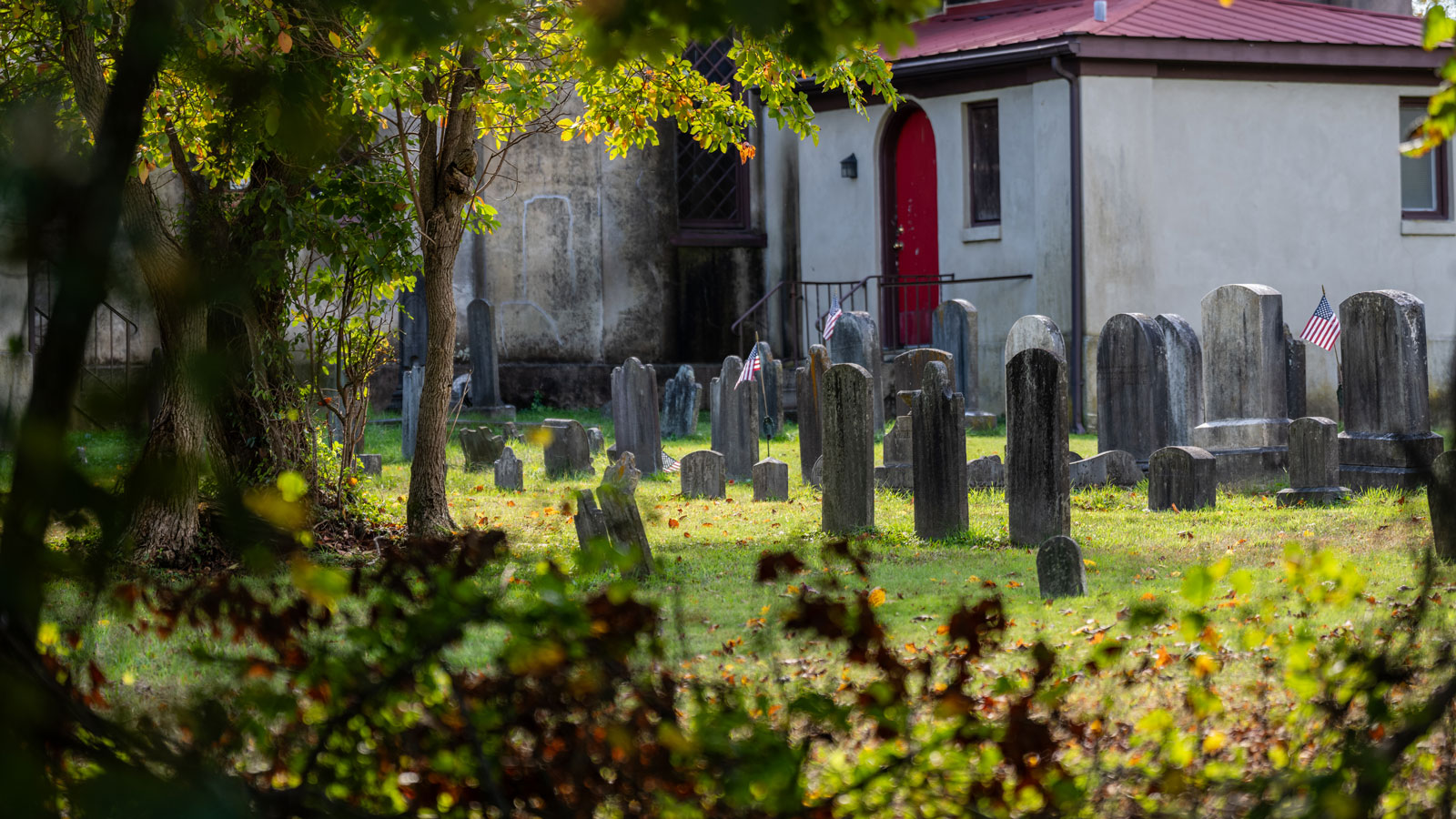
According to the legend, Monk loved the sea so much he didn’t want his body to touch dry land after his death on Dec. 9, 1827. His family and friends reportedly soaked his body in rum, wrapped it in a lead shroud and suspended it by chains inside an underground vault at Spesutia Church of St. George's Parish in Abingdon.
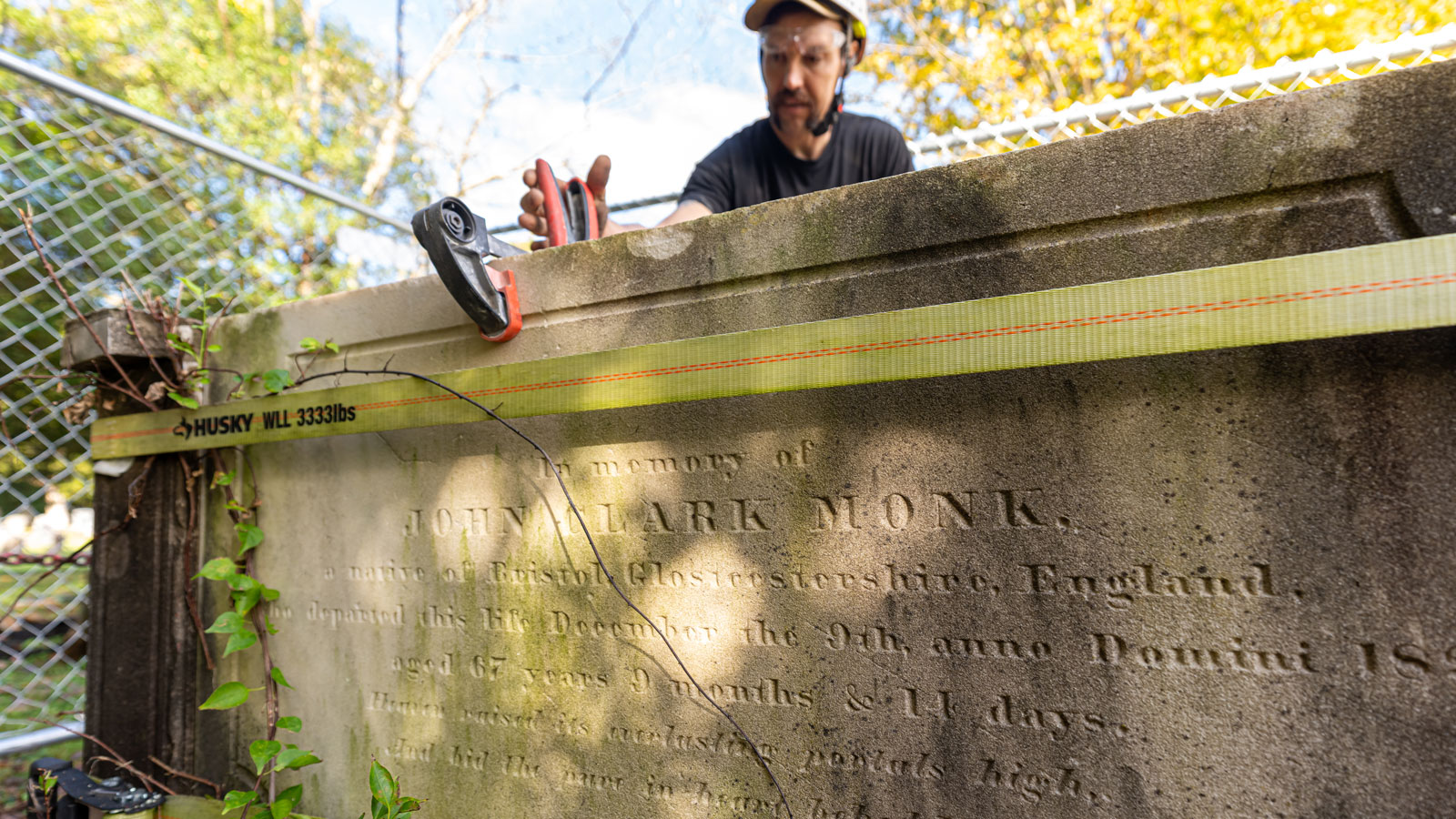
The tomb of John Clark Monk, who is infamously known in Maryland as the "Swinging Sailor of Perryman."
The burial site was also said to contain the remains of two women believed to be his wives: Mary Monk and Sarah Rebecca Lewis.
For Ahlrichs, the project was exciting not only because of the tale but also because it offered an opportunity to learn more about the people in it — including the women whose lives have largely been overshadowed by the legend.
“It’s almost never what you expect, and I love changing the story that we know,” Ahlrichs says. “I was very much drawn to this project because we kept referring to them in project meetings as Capt. Monk and his wives.
“The wives are people too,” Ahlrichs added. “We don't know about their story, and it's all really revolving around this legend of Capt. Monk. I think that was one of the things that really excited me about this project. It was the opportunity to add some depth and data to the stories, because as far as I can tell, I don't have any evidence that he was a ship captain either at this point.”
Restoring the sailor’s final vessel
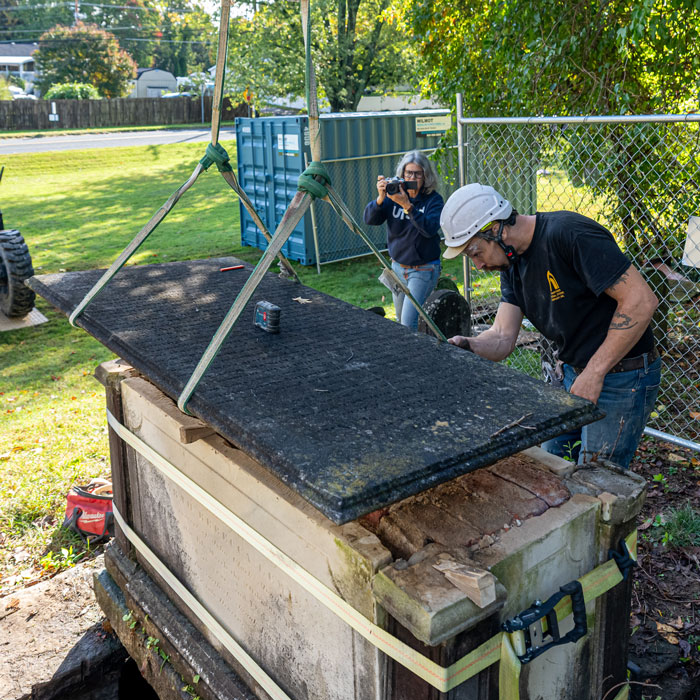
After the grave fell into disrepair, the Episcopal Diocese of Maryland contacted A.R. Marani Builders and Contractors to repair the burial site.
Andrew Marani, one of the principal owners of the company, said he had never heard of Monk before being contacted about the project. But the more he learned about the legend, the more interested he became in the unusual opportunity.
“Honestly, it was fun,” Marani says. “This wasn’t anything I ever anticipated our company doing, but it was a great experience. Since we started working there, I’ve discovered two [employees] who played in that cemetery as kids.
“Henry Spinner, one of our superintendents, remembers looking into the grave of Capt. Monk through gaps in the stones when he was a kid. And, Scott, the mason that rebuilt the brick walls, was telling me about him and some friends getting chased out of the cemetery by the father of the current caretaker.”
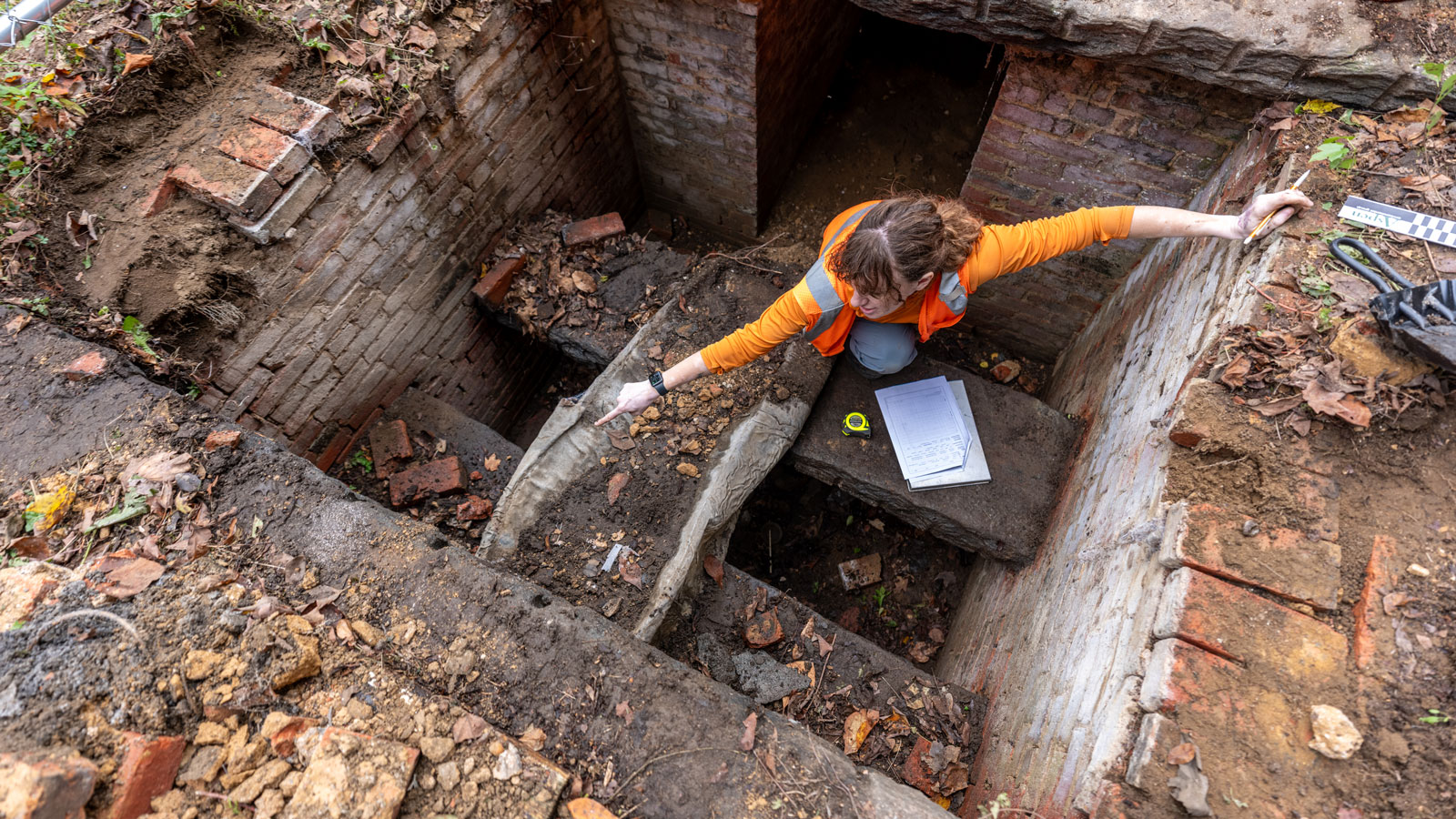
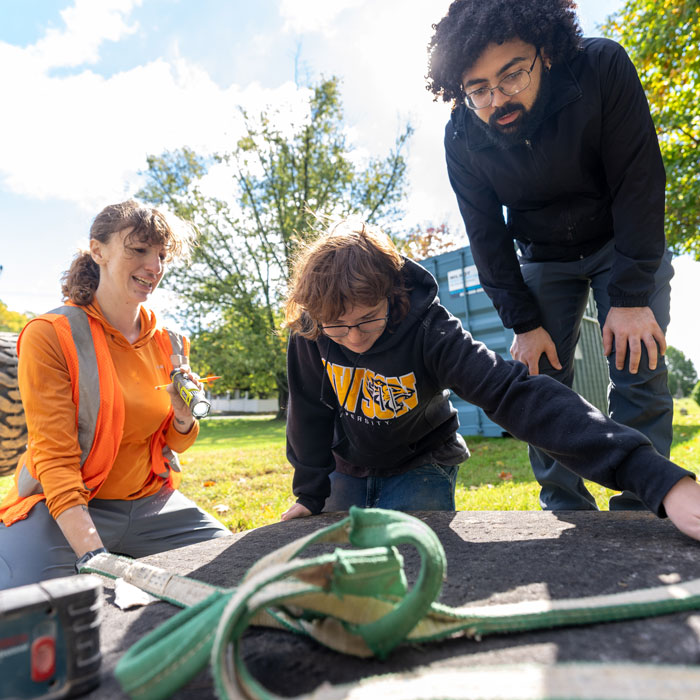
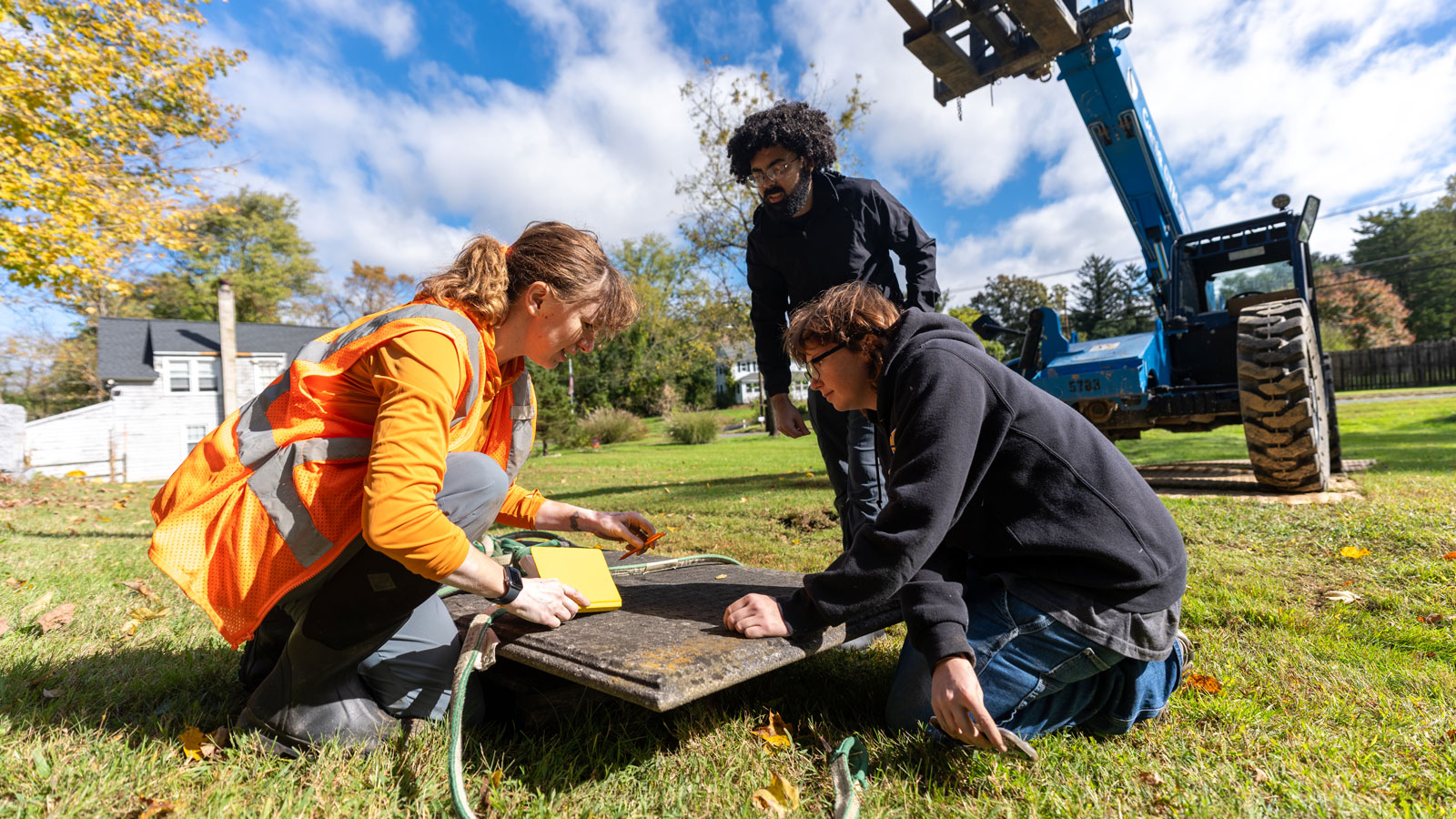
After Monk’s remains were removed and secured — taking care not to let them touch the ground— Ahlrichs and the TU team examined each exposed area of the tomb for archaeologically significant materials. They also screened the silt at the bottom of the crypt. The team sorted the human remains it found, placed them in containers and secured them in a locked storage container until they can be returned to the crypt. Later this fall, the remains and the artifacts will be returned to the grave.
What BCAL discovered
While the restoration work helped preserve Monk's final resting place, the excavation gave Ahlrichs and her students an opportunity to look beyond the legend and uncover what was inside the tomb.
The archaeological work revealed that Monk was not suspended by chains, as the legend suggests. Instead, his remains had been placed on two stone supports above the ground. The team did, however, find evidence that he had been wrapped in a lead shroud.
It was the opportunity to add some depth and data to the stories, because as far as I can tell, I don't have any evidence that he was a ship captain either at this point.
Katherine Ahlrichs
But the engraved inscriptions on top of the tomb provided some backstory of Monk. Like, while many refer to him as a captain, the text did not refer to him as a captain at all.
And according to the inscriptions on the crypt, it didn't contain Monk's two wives, but his second wife, Sarah Rebecca Lewis, her daughter, Mary Minerva Monk, and Mary Minerva's infant son, William Young. Monk's first wife, Mary Taylor, is buried in a different area of the cemetery.
“We might need to add a verse to the song,” Ahlrichs says. “But it’s a privilege to reassociate an individual’s remains and ensure they are treated respectfully and equally. Human remains should not be disturbed unless necessary; in this case, the work was needed for preservation and had the Episcopal diocese’s support.”
The project also gave TU students a rare opportunity. Ahlrichs and her team often conduct ground-penetrating radar work in cemeteries, but exhumations are uncommon.
“Working with interested students is a rewarding part of the work,” she adds. “Students bring varied skills, questions and time, and their involvement also helps the archaeologist learn from them. [My] goal is to provide practical experiences that support students’ future plans.”