Podcast
On the Mark: Joseph Clark and Suat Cubukcu
Dr. Joseph Clark and Dr. Suat Cubukcu discuss the changing nature of national and homeland security with President Ginsberg.
Mark Ginsberg: Welcome to On the Mark, where we have candid conversations about meaningful and consequential work happening here at Towson University. I'm Mark Ginsberg. It's my honor to serve as president of Towson University, located, of course, in Towson, Maryland. And on this podcast, we're introducing you to members of our university community who are engaged in high impact teaching, research, and student success practices. Today, the question is, what does homeland security mean in 2026? Is it border security, cyber defense, disaster preparedness, counterterrorism, pandemic response? Well, the answer is all of these and more, and today we'll be talking about these issues with two eminent scholars whose work sits at the intersection of national security, international relations, and foreign policy.
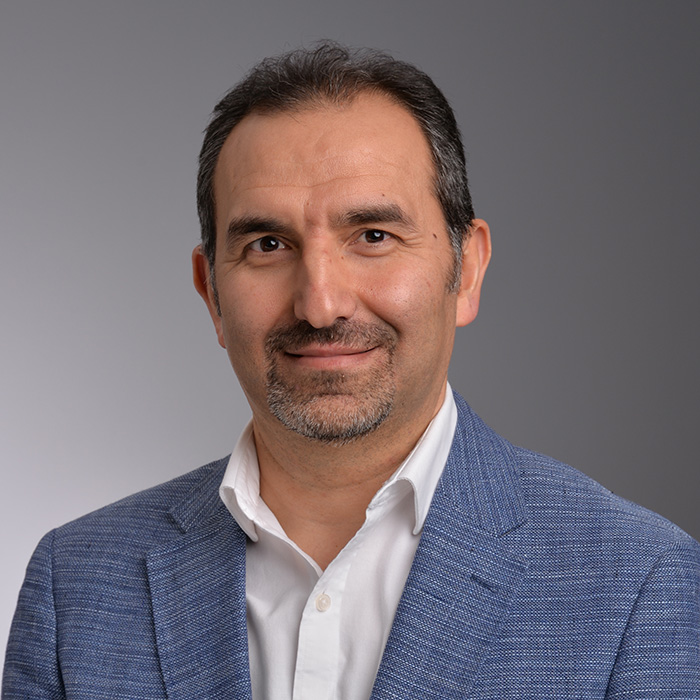
First, I'm pleased to introduce Dr. Suat Cubukcu, an Assistant Professor of Criminal Justice and the Director of TU's Integrated Homeland Security Management Master's program. He served as a consultant and brings firsthand experience to his teaching from his previous career in law enforcement and United Nations peacekeeping missions. Dr. Cubukcu holds an MS in Sociology from the University of North Texas and a doctoral degree in Criminology from American University.
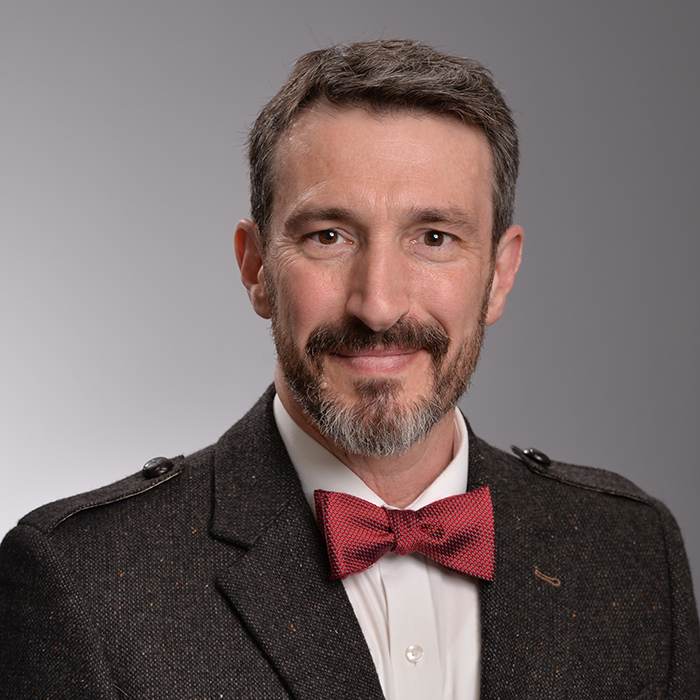
And also joining me is Dr. Joseph Clark, Associate Professor and Assistant Chair in the Department of Political Science here at TU. Dr. Clark's scholarship examines issues related to organizational learning, strategy, and the political dynamics that connect the military and non-military aspects of conflict. He holds a master's degree in Political Science from the University of Arkansas and a doctoral degree in Political Science from the George Washington University, in between which he served as a psychological operations specialist in the United States Army, completing tours with the 4th Infantry and the 1st Armored Division and the 37th Special Forces Group.
Suat and Joe, thank you for joining me and look forward to a fascinating conversation about just a wide range of issues having to do with national security and homeland security. And maybe that's a great place to start is to talk a little bit with me and to share your perspective on the differences between national security on the one hand and homeland security as we've begun talking about it in this country really post 9/11 and even before.
The Differences Between National Security and Homeland Security
Dr. Joseph Clark: That's an excellent question and a good place to begin. Homeland security as a concept really didn't emerge until 9/11 and then moved forward after Hurricane Katrina, and it really has been historically a sort of reactive, almost backward-looking concept in some regards. But it's also not completely new. We have had a history of national security, which is really about protecting the political interest and the sovereignty of the United States. Homeland defense, which is about protecting the people in the territory of the United States. And in the 20th century, spoke a lot in terms of civil defense, sort of protecting communities.
So, when we started thinking about homeland security here at Towson University, the first thing we did was like most people think in terms of, okay, how do we respond to major exogenous shocks, whether they're terror attacks, natural disasters, things along those lines? As we thought about the concept moving forward, we tried to move from thinking about policy outputs – the things that were being done – and policy outcomes and thinking about what makes homeland security unique. And what we arrived at was a definition that sort of encapsulates homeland security as the protection of the physical, political, economic, and ideational wellbeing of individuals and communities and the infrastructure that supports them.
Mark Ginsberg: Pretty complex. Lots of concepts in there.
Dr. Joseph Clark: A lot of moving parts. The great thing is that concept allows us to be very dynamic and to respond to changes in the homeland security environment.
Mark Ginsberg: In a variety of domains.
Dr. Joseph Clark: In a variety of domains. So, we can talk about climate change and how climate change is leading to greater intensity and frequency of tornadoes in Maryland. We can talk about drug trafficking organizations. We can talk about generational poverty, as well as terrorism, whether it's domestic terrorism or foreign-sponsored or foreign-based terrorism. It really allows us to sort of think about what are the core competencies that you would need to address a range of threats, whether they're occurring in one particular location or among one particular population or a greater number of Marylanders or even Americans writ large.
Core Skills for Homeland Security Professionals
Mark Ginsberg: So, understanding those core competencies, what are the knowledge, skills, and abilities that people need to work in this space, has been kind of the underlying dynamic, I suspect, in creating your master's program. What are those key things?
Dr. Joseph Clark: At the very core, we think about risk assessment. How do you observe the situation, wherever the situation is?
Mark Ginsberg: Right. Right.
Dr. Joseph Clark: How do you start to identify the threats and risks faced? How do you start to identify the resiliencies and the opportunities and the resources that you have available to you? How do you start to think about not only systems, but systems of systems that will allow you to respond very quickly when that exogenous shock, that sort of bolt out of the blue occurs? So, threat assessment, risk assessments, communications, emergency communications. How do you speak to people?
Mark Ginsberg: All part of that.
Dr. Joseph Clark: All a part of that.
Mark Ginsberg: Interesting. So, your work has been somewhat more in the homeland security space, I suspect, and working in counterterrorism places, and I understand that you've had a large grant from the Department of Homeland Security to look at some of these things. Tell us a little bit about the nature of your work.
DHS-Funded Terrorist Drone Threat Research at TU
Dr. Suat Cubukcu: Yeah. In 2024, we actually gained a grant from DHS, and it is Excellence Center, NCITE, to work on terrorist use of drones, and we brought about 20 subject matter experts to Towson University. We have a whole day in-person focus group study, and then we published our proceedings. And now we are working on how, especially FTO-designated cartels, which recently, actually in 2025 and 2026, now we have about 10 Mexican/Colombian cartels that are designated as terrorist organization. So, we are looking for how these groups are using this technology, what are their supply chain, and what kind of drones they use, and what kind of policies and practices we can bring to be able to mitigate this threat.
Mark Ginsberg: So, when you think about the risks and threats that we have, the technology underlying these threats that exist here in the homeland and exist around the world are becoming really quite sophisticated.
Dr. Suat Cubukcu: Yeah. I mean, recently, White House actually released two executive order about the drones. One is expanding our drone capacity, and the other one is countering drone threats, especially before the World Cup that's coming this year, and also other special events. So, this is a priority by the government, and they are looking for experts that understand the threat, especially, as Joseph eloquently mentioned, about the dynamic complex field of homeland security. So, we don't just rely on technology, but also intelligence, law enforcement. So, it is like a Swiss cheese model. So, there are so much holes in the policy. You need to bring different levels to be able to mitigate potential risks.
Mark Ginsberg: That's a good metaphor, and understanding where those holes are, where the gaps are, become critical. How has homeland security and the concept evolved? I mean, the first that many of us heard about the concept was around 9/11, shortly after, for sure.
Dr. Suat Cubukcu: Yeah.
Mark Ginsberg: How has the concept evolved and some of the thinking about homeland security since that time?
Dr. Suat Cubukcu: So, it came to our attention with the 9/11, with the terrorist attack, but terrorism is nothing new.
Mark Ginsberg: It was here before then.
Dr. Suat Cubukcu: Yeah.
Mark Ginsberg: Yeah.
Dr. Suat Cubukcu: Terrorism is not a new phenomenon. It goes back to ancient times.
Mark Ginsberg: Right.
Dr. Suat Cubukcu: However, 9/11...
Mark Ginsberg: It's a good point.
Dr. Suat Cubukcu: ...it has become a gamechanger.
Mark Ginsberg: It's nothing new, but it's evolved in a particular way.
Dr. Suat Cubukcu: Yeah, it's a [Inaudible 00:08:08] one. We relied previously on military, and we initiated war in Afghanistan, in Iraq, and then it leads to some insurgencies. When we look at the last five, six years, now we are pretty much concerned about domestic extremism, violent extremism.
Mark Ginsberg: But the international threat hasn't really lessened during that time.
Dr. Suat Cubukcu: Oh, actually not. Al-Qaeda was less effective when we look at early 2010, when Bin Laden was killed, and then we had ISIS threat, like starting 2013, 14, and ISIS, one of the most successful organizations that were able to control a territory in the size of UK, but we had a global coalition against ISIS, and it was really effective. So, we were able to defeat ISIS territorially, but now it became a global motivation.
Mark Ginsberg: Yeah, I wanted to ask, actually, as we look historically, what are some of the contemporary most, maybe some of the current critical homeland security threats that are either on the horizon or here before us now? You mentioned some of the things going back 10, 15 years, but this field, the understanding we have about homeland security aspect has evolved, but so has the bad actors who are out there.
Dr. Suat Cubukcu: Yeah, today, I think we are more concerned about lone actors, especially...
Mark Ginsberg: Lone actors.
Dr. Suat Cubukcu: Yes, so they are pretty much inspired by extremist ideologies. It can be like an ISIS, like Salafi jihadist ideology, or it can be a far right or far left ideology.
Mark Ginsberg: And we've seen that with a lot of the attacks, individual attacks on individuals or organizations here in the States.
Dr. Suat Cubukcu: Yeah. So, they can recruit through social media, they can be self-radicalized, and it's difficult for law enforcement and intelligence to identify those people because they don't have kind of communication with other people. There's no command and control chain. So, it is really challenging. And now, another concern, I think, technology, as Joseph mentioned about the cyber threats, that social media can be used for recruitment. On the other side, the technology can be used as a force multiplier in terrorist planning. For example, drones. It's very useful and it's very accessible.
Mark Ginsberg: Yeah. Without giving away any national secrets, talk a little bit about some of those technologies, both on the counterterrorism side, but also on the side of those who want to do damage to our country.
Dr. Suat Cubukcu: Yeah. Of course.
Mark Ginsberg: How are you seeing that?
AI, Cyber Threats and Domestic Extremism
Dr. Joseph Clark: One of the things that we're seeing in terms of technology is an increasing role for artificial intelligence and artificial intelligence constructs. By some estimates, there are about 40,000 different AI constructs available on the internet. A great number of those are created by foreign powers that are adversarial to the United States and aimed at us on purpose to do things like increase social cleavages, to resurrect sort of traditional hate groups in the United States, to try to encourage them to carry out attacks. We've seen the number of hate crimes increase radically over the last 10 years. We've seen the number of hate groups grow radically over the last 10 years. Some of that is organic. These are unfortunately elements that are present in our society to begin with, but technology is allowing foreign actors to sort of cross the border, even if it's a cyber border, and to deploy these tools against us in our own backyards.
Mark Ginsberg: It's interesting that in reading in preparation for this, I read a group from the Department of Homeland Security recently said that cyber attacks remain the most persistent and asymmetric threat to the U.S. critical infrastructure. So, kind of what you're saying that the cyber threat is real and it's growing and it's profound.
Dr. Joseph Clark: It is, and it can be directed at infrastructure, but it can also be directed at our population. We have had in this...
Mark Ginsberg: Yeah.
Dr. Joseph Clark: Well, Maryland and Baltimore County are the first locations where we had AI used in a successful prosecution of the use of AI to carry out crime.
Mark Ginsberg: Ransomware, things like that?
Dr. Joseph Clark: Things like that. We have had AI bots aimed at middle school children in this county and tried to encourage them to carry out mass casualty attacks on their schools, and these are being done by foreign actors. We've had local law enforcement refer to a deep need on the part of this country to have essentially a cyber customs and border patrol, which we don't have, and we're not equipped to in the short term, but it speaks to the threat that they're seeing.
Mark Ginsberg: Interesting. So, these are real and they're profound and they're very dangerous.
Dr. Suat Cubukcu: Yeah. And also to add, the border security can be effective for physical attacks, but not for cyber, right? So, there are external actors that not able to kind of stop through these physical measures.
Mark Ginsberg: So, it's really interconnected. How do you prepare people to work and counter this profound and very complex web of threats that we face? You're training the next generation of professionals to work in the space, and you yourself have worked in the space. It's got to be very challenging.
Dr. Joseph Clark: I think part of addressing that challenge is again to work backwards and shifting our approach to homeland security from policy outputs to policy outcomes, I think is critically important. We have to work backwards. What are we trying to protect? What resources do we have available to us? What resources do we need? And to work backwards from that rather than thinking about, okay, well, this is what we do. Because in a dynamic environment, doing what you did may not necessarily lead to success. The environment is changing. We have to be able to respond to the environment. So, we have to work backwards. Otherwise, you run the risk of being Kodak film. The world changes and you're still making film.
Dr. Suat Cubukcu: Yeah. And also to add, we really also focus on improving soft skills with our students, how to actually get strategic communication skills, how to bring different parts of homeland security enterprise together. So, work as a kind of looking at the security policies, information assurance, and health preparedness together because if you miss one of these parts, probably you're going to miss the whole picture. And also our students have a chance to work one-on-one with our professors. And also, we have so many adjunct professors that actually have law enforcement experience, intelligence experience that actually connect our students with the outside, especially with these agencies. For example, in summer, we have two students, we'll be working with Baltimore Police Department. So, they're going to help the department to establish their drone first responders program. So, we have this kind of one-on-one relationship with the local and state agencies.
Mark Ginsberg: You mentioned also cyber, and cyber's evolved. We have a large cybersecurity program here at TU, but the cyber risk, potentially, I suspect on things like critical infrastructure, but there are other risks. How big is the cyber risk and where is the attack point for that? Or are they attack points perhaps?
Dr. Joseph Clark: That's a wonderful question. And I don't know that anybody can an... It's one of those questions, how big is the universe?
Mark Ginsberg: Yeah. Good point.
Dr. Joseph Clark: Big and getting bigger.
Mark Ginsberg: Big and getting bigger. Getting bigger, yeah.
Dr. Joseph Clark: And so, that's a huge challenge. Now, again, we've got a very good sort of interdisciplinary set of relationships, both within the university and beyond the university, and one of the things that we do in our program is try to help students then also think about, okay, you've got to make some really difficult decisions. Part of our name is Integrated Homeland Security Management, and that management's what I'll come back to for a moment because there's no limit to the number of challenges we face. But if you focus too much on that, it can result in paralysis, and it can result in a feeling of sort of self-defeat.
Mark Ginsberg: Yeah.
Dr. Joseph Clark: You throw up your hands.
Mark Ginsberg: Right, right.
Dr. Joseph Clark: What can I do about this problem? It's so large.
Mark Ginsberg: Learned helplessness, yeah.
Dr. Joseph Clark: And so, part of the core competencies we try to help students develop is decision making. Okay, what do I have to focus on now? Bad analogy, but a way to think about it is you got to feed the closest crocodile. And we still worry about terrorism. We still worry about foreign-sponsored terrorism. Is that the critical issue today? Or do we step back and say, okay, in this moment, right now it's cyber. We still have to think about it, and we still have to have some slack to think about foreign-sponsored terrorism, but we have to be able to assess the operational environment we're in and think about, okay, what do we really focus on today? What's the risk that is most critical, most high impact? And how do we marshal the resources to address it? So, it's judgment. That's the other aspect that we're really trying to help students develop and think about is the judgment for where do we allocate resources? Where do we make a difference in the operational environment?
Security Risks from Climate Disasters
Mark Ginsberg: You mentioned earlier, I want to come back to also that some of the work in homeland security is focused on bad actors, on terrorism, on the threats that we face. But others are threats by non-actors, by things like natural disasters, by you mentioned climate change earlier, disease and illness, the pandemic that we came through. How does that fit to this whole panoply of issues that you think about in the homeland security space?
Dr. Joseph Clark: It's difficult, and that's where you start thinking about the core competency. So, the homeland security practitioners went from being sort of responsive to specific threats to an all-hazards approach to what they now refer to as sort of agnostic. And this idea is that whether it's a threat from propulsive action on the part of humans or simply a change in the environment, we start to think about, okay, how does that threat manifest itself and what can we do to mitigate it? So, pandemics. We cannot control necessarily how a virus or bacteria or some sort of biological threat might evolve, mutate, emerge.
Mark Ginsberg: Sure. Sure.
Dr. Joseph Clark: But we can think about, okay, what skill sets would we need a population to have to be able to respond? We need to be able to identify the nature of the threat. We need to be able to identify how does it spread so that we can start thinking about contagion and how do we stop contagion, these types of things. So, that's really what it comes back to is there are a whole host of threats and probably the long-term threats are less likely to be directly man-caused, but we still have to think about how do we gain the efficacies necessary to respond to them.
Mark Ginsberg: Talk about climate change a little bit. Climate change is something that's in the news all the time. Certainly here in Maryland, we've just had a deep freeze. It's had real impact on the community. Where does climate change fit into this and how are communities best to respond to things like climate change, which are obviously having an impact? I guess acknowledging that it's real is one thing too.
Dr. Joseph Clark: Acknowledging that it's real, perhaps thinking in terms of, again, how does climate change manifest itself as a threat in different regions? And so, we could think about climate change and what heavy snowfall icing may mean in an urban environment. What does it mean in Baltimore City for the safety of people to be able to get to school, to get home? What happens if the power goes off? We can think in those terms. We can think in longer-term issues. How does climate change affect soybean production in the state of Maryland?
Mark Ginsberg: Mm-hmm.
Dr. Joseph Clark: These types of things. How does rainfall rates and changes in rainfall rates affect that?
Mark Ginsberg: Different levels of impact.
Dr. Joseph Clark: I'll go back to one of our colleagues, Michael Allen in the Geography Department, spending a lot of time looking at climate change and the severity of storms. What can Maryland learn from Oklahoma and Missouri and Kansas about construction protocols or standards for public use buildings? We in Maryland haven't thought about building elementary schools to withstand EF3 and EF4 tornadoes because we haven't had to. Climate change suggests we may need to start thinking in those terms, and that's something that will affect us at the state level and the local level. If you're building a new school in Washington County or Baltimore County, Cecil County, 25 years from now, or you expect it to be in operation 25 years from now, you need to factor in climate change to the design of that building so that you can protect the pupils inside.
Mark Ginsberg: Yeah.
Dr. Suat Cubukcu: Yeah. So, I just want to add some external examples, just pretty much tangible. If you look at sub-Saharan Africa with the increased heat, extreme heat, and then the droughts that moved so many people for migration, and this actually is so much tension among the countries that they are moving to. It may lead to far right kind of tendencies and then the perceptions, and then it pretty much initiates some conflicts. So, this is a real example. And in the US, we don't have at this level yet, but there are some examples out there.
Drones, Border Security and Future Threats
Mark Ginsberg: Yeah. An issue that's very contemporary at the moment is issues of immigration, issues of border security. From a homeland security perspective, without getting into the politics of it, how big of a threat is that and what are some of the issues with border security? Because I thought of what you just said, so the juxtaposition of what you just mentioned and the border issues.
Dr. Joseph Clark: Border security can manifest itself in several different ways in terms of homeland security challenges. There is the literal, you want to protect from bad actors, harmful substances coming across the border.
Mark Ginsberg: Yes.
Dr. Joseph Clark: The idea that we want to make sure that things that we don't want to pass into our country don't have the ability to pass into our country, and that can be everything from thinking about the safety of toys that are imported, how much lead content are there in toys? How safe are foods that we import from foreign countries? There's that aspect of border security, making sure that maligned actors don't try to sneak in radiological devices, biological weapons, those types of things. There is border security in that regard. There's also border security in the ability of enterprise to move across the border efficiently. If we completely secure the border, that would be devastating to our trade relationships. There's that aspect as well. And then there's this, we've sort of alluded to already, this idea of sort of the cyber border. How do we engage in control for the information that flows across our border? All these are challenges.
Mark Ginsberg: Without a border, but a new kind of border.
Dr. Joseph Clark: Exactly.
Dr. Suat Cubukcu: And also, I want to add the roles of drones here because almost every year there are tens of thousands of drone sightings on the border. They are mostly used for intelligence, surveillance, and reconnaissance that are used by cartels or other kind of human traffickers, just to kind of see where the law enforcement is, where's the enforcement. So, they look at what are the vulnerable places. And also, they are used for smuggling. They can carry high payloads, especially if you are looking at agricultural level drones. So, these are commercially available drones. You don't need to kind of steal from somewhere or military or government. You can easily buy from Amazon or eBay or any retail stores like DJI drones, for example, Chinese made. And also now there is a huge trend that these groups pretty much weaponizing drones. So, we see some activities in the border, and also even they are giving some signal that they may attack the U.S. border security personnel.
Mark Ginsberg: That's scary stuff. As we think about the future too, I'm wondering about the threats that you see on the horizon. That's kind of what you were just suggesting. What are some of those security threats that we should prepare for now, perhaps that we're not seeing, but likely we may see in the future?
Dr. Suat Cubukcu: As I start now, so I mentioned drones.
Mark Ginsberg: Yeah, that's why I thought of it.
Dr. Suat Cubukcu: This is a new...
Mark Ginsberg: And that's an evolving field, the drone field.
Dr. Suat Cubukcu: Yeah, this is a new puzzle because we mostly use drones...I mean counter drone for military, you know, overseas to be able to stop drones that comes from Houthis or Hezbollah, any kind of attacks to military installations, and it was traditionally used for military purposes by states. Like for example, if you look at Russia and Ukraine, it's a gamechanger, not at the periphery of the conflict. So, we are not ready, especially in the homeland. So, who's responsible for counter drones, for example, if you want to mitigate a drone threat? If you're going to actually jam a drone, local and state law enforcement cannot do that. Only federal government can do this because it's based on the, you know, you cannot cut the communication. That's not the kind of authority given to law enforcement. So, there are some authority that's not clear who's responsible. There are some efforts to clarify those.
And also, counter drone is much more expensive than the threat. So, if you go back to the kind of overseas, the Iranians were using like 30,000-40,000 drone, the $1,000 drone, and you need to use a $2 million missile to be able to stop this. So, there is a imbalance between...
Mark Ginsberg: Yeah, say that again. That's kind of staggering to me.
Dr. Suat Cubukcu: The Iranian-backed sources, groups like Houthis and Hezbollah, they were using drones like Qasef or Shahed that cost around $30,000-$40,000.
Mark Ginsberg: And the counter efforts are costing several million.
Dr. Suat Cubukcu: Yeah, I mean, you need a kind of around $2 million system to be able to stop these drones. So, there is an economic imbalance. Even the drones were not successful to reach their targets, they're pretty much damaging economically the enemy. So, this is where actually the government should provide so much resources and to be able to protect especially critical infrastructure. As Joseph mentioned, we are more vulnerable now than before. When we think about our energy grid, when we look at our transportation grid, and then the maritime, the airports, so we have so many places to be able to protect. And also, we should be considering that it's not only malign use of drones, but it is clueless or careless use of drones. So, people just get drones just for fun, but they don't know the rules, they don't know where to fly these drones, what are the restrictions. So, they may actually a threat, let's say, the airspace, especially the major concern is the airspace safety, especially the passenger planes. So, we need to prioritize those. So, just $200 drones can actually give millions of dollars of damage and harm to the economy, even without any malign intent.
Mark Ginsberg: So, the risks are great, and the risks are increasing, and the risks are becoming more pervasive, it seems like.
Dr. Suat Cubukcu: Yeah. This is kind of what people in academia and in the field that try to kind of make this case that we should be prepared, and also, we should educate people how to use this kind of technology, be responsible about what we are using. Because it's very valuable. It's not only used for malign purposes, it's good for agriculture, it's good for inspection of like the power grid and infrastructure. So, we need to use this for civilian good purposes, but also, we should be aware what our risks are.
Mark Ginsberg: Right, right. if you think about homeland security generally, post 9/11, there was a unanimity of perspective in the country about its importance and about those who work in the field. The former Homeland Security Secretary recently was quoted as saying that public trust is essential for homeland security, public trust, and that within it, no system can be successful. In today's environment, where there are such political ramifications about anything that takes place, how is it that we can engender the kind of trust that's needed? And Secretary Mayorka's right, that public trust is so important to your field, to have confidence, not only in the work that you're doing, but for the public to have confidence that the work you're doing is both important, productive, and successful.
Dr. Joseph Clark: I think public trust is critically important, and it is one of the things that historically has been a force multiplier. It's been very beneficial to the United States in a range of areas.
Mark Ginsberg: Yes.
Dr. Joseph Clark: I think one of the ways we protect and even sort of support and grow public trust is to get back to policy debates and discernment, and I tell students all the time, we should get out of the habit of debating and discussing personality and get back into the habit of debating and discussing policy. And I think that's really an important sort of step to take, is what are we trying to achieve? Where is there agreement? Where is there disagreement? And we will have disagreement. That's a healthy part of any society. But disagreement based on policy and policy objectives, not personalities.
Mark Ginsberg: Yes. It's good advice.
Dr. Joseph Clark: I think one of the things we want to do is get everyone to step back from the personality discussion.
Mark Ginsberg: Yeah, yeah. Important advice, actually.
Dr. Joseph Clark: Talk about the policy.
Mark Ginsberg: Yeah. Yeah.
Dr. Suat Cubukcu: So, it's a legitimacy question, especially when we think about crime, why people stop committing crime.
Mark Ginsberg: Of course. Right.
Dr. Suat Cubukcu: We must look at what's the punishment, what's the deterrence, but also, it's legitimacy. When people think this is a just and legitimate action, a law, that people are more willing to obey the law, right? So, it also applies to here, when the institutions become much more trustworthy and then have a kind of strategic communication that builds this trust and legitimacy, so you may expect less problems.
Advice for Aspiring Security Professionals
Mark Ginsberg: Right. You're working not only in the field as scholars studying this work and creating systems and approaches and mechanisms in the homeland security space, but you're also training the next generation of homeland security professionals. Let me add one more issue to ask you about. If you were to give advice to students, young professionals who want to enter this field, how would you advise them? And we obviously have a great program, we'd love them to come here, but what advice would you give for the next generation of people coming into this field about how it is that they can best prepare for a successful career?
Dr. Joseph Clark: Oddly enough, I would say the first thing you want to learn to do is connect to people. Learn how to listen and learn how to speak and make connection. I tend to encourage students all the time, whether it's in homeland security or it's in political science, to spend some time looking at the fine arts, to spend some time thinking about the skills of actors. Alan Alda, the famous actor, has a Center for Communicating Science at Stony Brook University that he really focuses on medical sciences and the natural sciences, but I think it works for the social sciences, and I think it works very well in terms of homeland security. And he teaches students or gets students to think about the skills of improv. And the reason for that is he says it helps build connections. And so, let me give you an example that hopefully will bring this back to homeland security. Since the 1960s, we've known that climate change was occurring, that it was being driven primarily by human activity, and that it posed a threat to our well-being. The difficulty is climate scientists spoke in terms of, well, the planet's getting warm by two degrees.
Mark Ginsberg: Yes.
Dr. Joseph Clark: The average person hears two degrees and says, "Okay. Well, I'll put on a sweater," or "I'll take off a sweater," something along those lines.
Mark Ginsberg: Yes. Yes.
Dr. Joseph Clark: They didn't learn how to connect. If you had spoken to people that climate change would result in trillions of dollars of economic damage to the United States and other countries, to the deaths of tens of thousands of humans, to widespread displacement, as Suat mentioned, if you talk to them about mass extinction, that would have communicated more effectively the threat and the risk that was being posed.
Mark Ginsberg: Great point. Great point.
Dr. Joseph Clark: Those primary skills or how do you speak to and communicate with other humans?
Mark Ginsberg: Yeah. Great, great points.
Dr. Suat Cubukcu: So, in addition to what Joseph said about having this soft skill of communication, I think being open-minded to open to new ideas because this is a field that evolves every day. So, if you just rely on what you learned before, probably you're going to be missing the big picture. And also to be specialized on one specific niche topic, right? To have a kind of general understanding on and then include something very specific. For example, nowadays, we are providing courses on drones, right?
Mark Ginsberg: Yes.
Dr. Suat Cubukcu: This is very unique to Towson. So, I think they can get a good niche in the market when they go outside and look for a future career.
Mark Ginsberg: Well, thank you so much for joining me today. As we wrap up, one thing's been clear to me from our conversation, that homeland security's no longer just about preventing attacks. It's about building trust, building resilience, building knowledge, skills, and abilities in the next generation, and preparing for, as you both told me, uncertainty. Uncertainty that's increasing in an increasingly complex world in which we live. So, from cyber threats and climate risk to public health emergencies, to evolving extremism, the challenges are, as you've suggested today, both interconnected and constantly changing. And so, I'm really pleased that you work in that space, and I really thank you on behalf of all Americans for training the next generation of professionals working in the homeland security field and coming into your master's program in Homeland Security Management here at Towson University. So, thank you, Joseph. Thank you so much for joining me. Thank you for listening. Another episode of On the Mark, an opportunity to learn from Towson University faculty doing important work for the public good here at our university.
About the series

The On the Mark podcast series presents a forum for candid conversations about meaningful and consequential work happening here at Towson University.
On the Mark is available here and on:
About Joseph Clark
Dr. Joseph Clark is an associate professor and assistant chair in the Department of Political Science whose scholarship examines issues related to organization learning, strategy, and the political dynamics that connect the military and non-military aspects of conflict. He holds an M.A. in Political Science from the University of Arkansas and a Ph.D. in Political Science from The George Washington University—in between which, he served as a psychological operations specialist in the US Army, completing tours with the 4th Infantry Division, 1st Armored Division, and 3/7th Special Forces Group.
About Suat Cubukcu
Dr. Suat Cubukcu is an assistant professor of criminal justice and the director of TU’s Integrated Homeland Security Management master’s program. His research focuses on terrorism, police accountability, and the criminal and terrorist use of drones. Dr. Cubukcu has served as a consultant on U.S. State Department and Department of Homeland Security funded projects addressing terrorism, transnational criminal networks, unmanned systems. He holds an M.S. in Sociology from the University of North Texas and a Ph.D. in Criminology from American University.