Podcast
On the Mark: Mary Stapleton and Kara Berger
Dr. Mary Stapleton and Kara Berger from the Center for STEM Excellence discuss how TU is helping shape the future of STEM education across Maryland.
Mark Ginsberg: Welcome to On the Mark, where we have candid conversations about the meaningful and consequential work happening here at Towson University. I'm Mark Ginsberg, it's my honor to serve as president of TU, and on this podcast, we'll introduce you to members of our university community who are engaged in high-impact teaching, research, as well as student success initiatives, STEM education, fields that are among the fastest growing in our global workforce. At Towson University, we're proud to play an important role in advancing STEM education across the entire state of Maryland through innovative partnerships with schools, educators, and community organizations through our TU Center for STEM Excellence.
And today, I'm joined by two of the center's leaders. First, we have Dr. Mary Stapleton. Mary is director of the Towson University Center for STEM Excellence. Her work supports thousands of educators and students across Maryland through programs in areas such as cybersecurity education, climate and environmental literacy, and justice-centered STEM learning. Mary holds a PhD in biology from Queen's University. And also pleased to be joined by Kara Berger. Kara is the education and outreach specialist for the Center for STEM Excellence, and she works closely with K-12 educators to design engaging and equitable STEM learning experiences. Kara's work includes professional development for teachers, curriculum design, and robotics education, as well as authentic scientific research experiences and the management of the Maryland Loaner Lab Program, which provides ready-to-use science kits to schools across the entire state. She's a two-time graduate of Towson University and also a holder of a master's in education. Mary and Kara, thank you for joining us.
Mary Stapleton: Happy to be here.
Mark Ginsberg: Great to have you with us. Kara, thank you for joining us.
Kara Berger: Yeah, thank you for having us.
Mark Ginsberg: So, let's start with an easy question, and I know a little bit about the TU Center for STEM Excellence, but I'd like to learn more. So, tell us a little bit about it and tell us particularly how and why it was created.
What is the TU Center for STEM Excellence?
Mary Stapleton: We're a K-12 STEM outreach organization and we serve the entire state of Maryland, and so the center's work is fundamentally about planting seeds. And so I know that's something that we've been talking about as a TU campus community.
Mark Ginsberg: Right.
Mary Stapleton: We want to plant the seeds that will support teachers, students, and other partnerships in ways that create lasting impacts. And so our goal is to educate, and we want to start with the state's youngest learners.
Mark Ginsberg: Ah-hah, young children.
Mary Stapleton: Yeah. So, we see students as early as grade 3 all the way up through grade 12.
Mark Ginsberg: So, it really does start early.
Mary Stapleton: It does, it does.
Mark Ginsberg: Giving children a kind of an acculturated experience about the importance of science and learning through, I suspect we talked earlier in the introduction, there must be a lot of hands-on learning through doing.
Mary Stapleton: Absolutely. And I wonder, can you think back? Do you remember what maybe your experience was with STEM education back in your early learning years?
Mark Ginsberg: Yeah, that's a great question. I think I probably learned most – now, this may be a softball question because I think I know where you're going with it – but when I was in college, and in college, before college and even elementary school, there was a lot of memorization. And I remember being very intimidated by having to remember things. I remembered enjoying doing things. And I think I probably learned more by doing than by trying to remember. And ironically, I think I remembered more by doing.
The three pillars
Mary Stapleton: Exactly. And I think Kara can talk a little bit about our goals of what we want students to come out of an experience with the Center for STEM Excellence.
Kara Berger: It's really interesting that you use the word intimidated because I think a lot of students feel that way when it comes to science. We really focus on having students feel capable and confident after experiences with us. A lot of times, students have experiences with STEM that feel like memorization or they don't get to do the hands-on stuff. And we feel really fortunate that we can give students those experiences to do lots of hands-on stuff.
Mark Ginsberg: So that takes away that intimidation, it seems like. It creates a sense of comfort and probably a sense of engagement.
Kara Berger: Yeah. Yes, and room to fail. Students get to try things with us and sometimes it works out on the first time and sometimes it doesn't. And that's okay, that's part of the learning process, that's part of doing science is trying things and seeing what works and what doesn't.
Mark Ginsberg: Yeah, yeah. How typical is that? I mean, when you think about schools generally, you work with a lot of teachers, and you work with a lot of schools. How typical is it that that's the kind of learning and the kind of teaching that we're seeing in Maryland schools? And how important is it for you to be able to model that within the school setting?
Kara Berger: Yeah, classroom teachers face a lot of constraints. The ones that we hear from teachers a lot are time and resources, and those are two things that we feel like we have the luxury of at the Center for STEM Excellence. So, for example, if a student group comes to us to our SciTech student learning lab program, which is our field trip program.
Mark Ginsberg: Mm-hmm.
Kara Berger: And just recently we had students in the lab, we were doing a field trip on bioluminescent bacteria, focusing on the Chesapeake Bay and indicator species.
Mark Ginsberg: Uh-huh, that must have been fun for the kids.
Kara Berger: It was very fun. And a couple of groups of students made a mistake with their protocol. So, they put the wrong amount of the bacteria in the test tube and they felt so guilty. They felt like they did something wrong and they didn't know what to do. And we have the luxury of being like, "It's okay, we have more time, we have more equipment, we can replace that, we can move forward." Whereas in a classroom, you could see that going really differently. Like you have one class period to finish an investigation. We don't have money for more materials, whereas we do generally have those resources.
Mark Ginsberg: So you not only have time and resources, but you have the opportunity that that offers, it seems like.
Kara Berger: Yeah, and I think us being able to say like, "It's okay, we can redo this," really helps students feel like they can do this. Like it's okay to make mistakes and that they can learn, be a part of like...see themselves in a STEM career or position or even just in school.
Mark Ginsberg: Let me go back a paragraph or two because you're talking about working directly with students and I know that you do, but I also understand that you also work with teachers and schools and promoting the importance of science education and successful science teaching. Talk a little bit about the duality of role of the center.
Mary Stapleton: You can think of the work that we do as sort of three main pillars. We do direct-to-student programming, and so that is a field trip experience where they come to our facility.
Mark Ginsberg: I see.
Mary Stapleton: And then we also have...
Mark Ginsberg: And the facility's in Downtown Baltimore, as I understand.
Mary Stapleton: It is in Downtown Baltimore. So, we're right in the heart of the Inner Harbor.
Mark Ginsberg: Right at the Inner Harbor.
Mary Stapleton: And we have a really strong relationship with Baltimore City, although we do serve students all over the state. And so, yeah, we have that direct-to-student programming, but we also realize that field trips can be difficult. So we have an extensive equipment loan program where we can send stuff out for teachers.
Mark Ginsberg: Fabulous.
Mary Stapleton: Yes. So, that's really powerful, and we get a lot of impact from that. That program is free. Teachers go through training, so they know how to use everything. It's really efficient too because student teachers don't need to keep all this fancy equipment in their classrooms.
Mark Ginsberg: Yeah, what kinds of things do you have online?
Mary Stapleton: Yeah, so we have a variety of programs. We have a lot of kits that are centered around gel electrophoresis. So, we have a forensics unit where students have to determine whether DNA is from a confiscated shark fin...
Mark Ginsberg: Oh, my.
Mary Stapleton: ...and whether that shark is a protected species or not. We also have environmental programs. So, we have a rain garden engineering lab where students have to create a rain garden and try to filter the water and see who can come out with the cleanest water.
Mark Ginsberg: That sounds like fun.
Mary Stapleton: It's great, yeah.
Mark Ginsberg: That sounds like fun. And lots of learning for students when they engage in those activities.
Mary Stapleton: So much. Sort of the picture I have in my mind when I think about the student learning lab is before the students go in, they put on these little white lab coats, and they put on goggles, and they put on their gloves. And I've repeatedly heard students, just as they're putting this on, talking to their friends and they say, "I feel like a scientist."
Mark Ginsberg: I was just trying to say that, that it must make them not only engage but feel very much a part of it.
Mary Stapleton: Exactly, yeah.
Mark Ginsberg: Yeah, yeah, yeah.
Mary Stapleton: And so we think that this direct-to-student programming is really important...
Mark Ginsberg: That's great.
Mary Stapleton: ...but we also feel like we can have a really big impact with our teacher professional learning programs. And so, we all know that Towson is one of the largest producers of teachers in Maryland.
Mark Ginsberg: The largest.
Mary Stapleton: The largest. But we also think it's really important to work with teachers who are already in the classroom.
Mark Ginsberg: Sure.
Mary Stapleton: So, maybe they've been teaching for 30 years. And so, we do a lot of really intensive professional learning with in-service teachers, and that's where I think a lot of our sort of systemic impact can come from.
The center's evolution
Mark Ginsberg: Yeah. How has the center evolved over time?
Kara Berger: That's a really good question. Yeah, so we, like Mary said, we have the three pillars that we really focus on.
Mark Ginsberg: Right.
Kara Berger: So, the field trips, professional learning, and equipment loans. And over the last several years, we've gotten different grants that we've partnered with through different... And we've partnered with different faculty members here at Towson to focus on different things. So basically to help us learn things that are not necessarily within our wheelhouse. So, a good example is we do a lot on cybersecurity now. I think if you had told us, like Mary and I...
Mark Ginsberg: Yeah, five years ago.
Kara Berger: ...five years ago, I'm not sure...
Mark Ginsberg: That would have never been an issue, yeah.
Kara Berger: Yeah, robotics has become a really big thing that we do now. So, we've gotten funding for several years to do teacher professional development on robotics.
Mark Ginsberg: Yes, yes.
Kara Berger: That's another thing that 5, 10 years ago, I'm not sure that either of us would have guessed that.
Mark Ginsberg: So the areas have evolved, yeah.
Kara Berger: Yeah, and I think what really makes like the Center for STEM Excellence special is that we feel like we've kind of really honed in on the structure of student and teacher programming that works really well, and because of that, we now feel like we can partner with experts in different areas to kind of create a very cohesive program while utilizing other people's expertise and then learning ourselves along the way.
Mark Ginsberg: So you're not only helping kids to understand STEM, you're helping them to engage and experience STEM. I would imagine, and it's kind of a general question, but you're also helping them to prepare perhaps for a career in STEM. Is that one of the goals of the center as well?
Mary Stapleton: Absolutely. A lot of the activities that we engage in students with or that we work with teachers on often have a career focus...
Mark Ginsberg: Interesting.
Mary Stapleton: ...or they're answering and solving a real-world problem to help students make those connections between classroom learning and what is happening out in the real world.
Kara Berger: And I think on a very basic level, if students don't have good experiences with STEM when they're in their K-12 years, they're unlikely to then choose a science major when they get to college, if they go to college. So, we feel like we're really building the foundation of like you are capable, you can be confident in doing STEM activities, and I think that ultimately often leads to a pathway in STEM careers.
Mark Ginsberg: Right, right. And that becomes a barrier, it seems like. If a young child is not having an enjoyable, successful, engaging, even using another word, an inspiring experience with STEM, they're likely to be turned off about it. I used the word intimidated earlier.
Kara Berger: Mm-hmm.
Mark Ginsberg: Some kids are probably intimidated by some of this, right?
Kara Berger: Absolutely.
Barriers to quality STEM education
Mark Ginsberg: That's interesting. What are some of the barriers? You think about it, and you go into a school and you work with students, you work with teachers, what do you find is some of the barriers to students having the kind of experience that you're now helping them to have?
Kara Berger: I was just teaching a class of middle schoolers earlier this week and their teacher said this is the first time they've ever done a lab, which is wild to get that far in your K-12 career never feeling like you have done a quote/unquote "lab." So, I think time and resources are a real barrier. When you break it down further, thinking about elementary, middle, and high school teachers, I think they all face different barriers, and we try to address that in our program. So, for example, a lot of elementary teachers are not trained in science. They may have taken a few science classes in their undergrad careers, but then they are tasked with teaching their students science. So they need help with that. When you get to middle and high school teachers, sometimes you have teachers who have been assigned a subject that is not their expertise. They need to learn how to teach that. And then just more generally, teachers can stay in their career for 30-plus years, and a lot of things change in that time.
Mark Ginsberg: Yeah, I was thinking the same thing. Particularly in the STEM fields.
Kara Berger: Exactly. We had a teacher the other day talking about the technologies that were around when she first started teaching and then what it's like now. So, when she first started, she was like, "Think about film strips, overhead projectors, and those are things that are not used anymore."
Mark Ginsberg: Wow. I can't even find them.
Kara Berger: Right, but she needed some way to learn about what are new technologies, how do I adapt my teaching? And some people are really self-motivated and are able to do that completely on their own, but a lot of teachers and people just generally need support and direction, and I feel like our programs provide that.
Mary Stapleton: And what really impresses me about the teachers that we work with in Maryland is they are busy people. They have a lot of demands on their time.
Mark Ginsberg: Yeah, they sure do. They sure do.
Mary Stapleton: But the enthusiasm and the motivation that they bring to the professional learning programs we offer is incredible. And so, we'll develop a workshop and we'll advertise it to teachers, and we can get 100 applications for one of our programs, right? And these are all teachers that are taking their own time to come and learn about a new subject area. And they get so excited. One of the unique aspects...
Mark Ginsberg: Lots of interest then, Mary.
Mary Stapleton: So much, yeah. And we bring teachers together from all 24 school districts in Maryland. And so, teachers don't often get a chance to interact with teachers outside of their classroom, much less their school or across the state. So watching these teachers bring the rich experience that they already have with teaching and applying it to some of the new ideas we might be bringing to them is really rewarding.
Mark Ginsberg: Now, it kind of interesting, you talked earlier about some of the newer fields that you're engaged in. Cybersecurity, for example. It seems to me like there's an opportunity for cross-disciplinary collaboration; that it might be different than it was years ago. A biology teacher teaching biology, now a STEM teacher engaged in a lot of different fields. How does that interdisciplinarity play out and work within the work of the center?
Mary Stapleton: Well, that's really interesting because specifically with our cybersecurity programs that we started about five years ago now, this is one of the programs where we have not focused exclusively on STEM teachers. We have widened it to be any secondary teacher in Maryland. So, we have teachers who come and teach world languages, we have librarians, we have English teachers, and bringing them all together to talk about cybersecurity and how it might fit into their curriculum has been really interesting to watch the dynamic between all these teachers.
Emerging fields shaping STEM education
Mark Ginsberg: What are some of the new emerging areas that excite you and you think are going to be embedded before too long in your work? Given what's happening, the field is changing so fast, right?
Mary Stapleton: I mean, I think the obvious one is AI. AI has...
Mark Ginsberg: Ah, that's a good one.
Mary Stapleton: Yeah. Really dramatically impacting all aspects of our lives. And I think we don't know how it will impact K-12 teaching and learning, but this is the time to be there for the school districts and to provide opportunities and bring people to the table to just talk about what's going on. So, one of the workshops we're doing this summer is cyber AI focused.
Mark Ginsberg: Interesting.
Mary Stapleton: And we have a couple of pending grant applications out there that is focusing on how to use AI in different ways in K-12 STEM teaching and learning.
Mark Ginsberg: Interesting. And Kara, what are some of your thoughts about the emerging fields?
Kara Berger: Something that's really piqued my interest in recent years is robotics and coding.
Mark Ginsberg: Robotics.
Kara Berger: I've loved working on our... Our program is called B'More Codes, and it works with now elementary and secondary teachers on coding robots. Not quite as broad of a reach in terms of different disciplines as Mary was referring to, but we do see teachers from different subjects and, like I said, different grades. And it's just been really fun to feel like a kid again, getting to play with these toys that can do all these wild things that you tell it to. Yeah, so it's just been really fun to learn something new, and I think it's been really rewarding to watch teachers also feel really inspired and like this is something that their students could get really into as well.
Mark Ginsberg: Yeah, I was reading recently, the National Science Foundation talked about the importance of STEM education, both at the elementary and the secondary level as being the foundation, if you will, for entry into STEM careers. But in this article I read, they also talked about STEM education being foundational to some of the 21st century skills that people talk about. Skills like critical thinking and collaboration and perseverance and adaptability. Those are elements, I would imagine, that are also part of your curricula as well.
Mary Stapleton: Absolutely. We talk about getting students interested in STEM careers, but we cannot have a society where everybody is in a STEM career, and I think we all need to be STEM literate. So, our activities are hopefully reaching all students whether or not that's their primary focus. And sort of to build a little bit on what Kara was saying with the robotics, what was really interesting to me is the same robots that we send out to middle school classrooms, we lent them to one of the professors here on campus the other day, or this semester, so that his students in his robotics class could use them for their projects. And so the same tools that these students are using block-based coding on, his students are using the more advanced computer languages to code them. And so the results look the same, but the way they got there is very different.
Mark Ginsberg: Yeah, fascinating. A former colleague of mine used to talk about with STEM in particular, one of the things you're teaching kids is how to wonder, how to wonder about things that they don't know about. Albert Einstein was once quoted as saying, "The important thing is to never stop questioning." Important skill probably you're teaching your students as well.
Kara Berger: We're really interested in having students find something that they are interested in.
Mark Ginsberg: Finding their passion.
Kara Berger: Right. And STEM is such a broad field, there's something that all students can find interesting or find that they want to learn more about. And something that I think the Center for STEM Excellence does really well is we offer such a wide breadth of activities and experiences for students and teachers. We don't want students and teachers to feel like if they're not interested in this specific aspect or content area of STEM that STEM is not for them because that's just not true.
Mark Ginsberg: How important it is. You think about the work that you're engaging in, and you think about what's next when you work with these students. You're preparing them for lifelong learning and you're doing that in ways that inspire their imagination today. How do you see that progression with kids? You're working with young kids to older kids. I'm kind of curious about the pathway they're on and some of the things that you've experienced with these youngsters.
Mary Stapleton: So, in our program, we typically see students one time. So, we don't get to see them over...
Mark Ginsberg: Oh, you don't see them over time in that way.
Mary Stapleton: Exactly, but we get snapshots.
Mark Ginsberg: Yeah, you hear about them.
Mary Stapleton: Yeah.
Mark Ginsberg: Yeah.
Mary Stapleton: And I think going back to what we said earlier, if we have them to be confident and creative and just interested in STEM, that's what I hope to see, is that students are letting their passions, their interests, their personalities shape maybe the questions that they choose to research as they go forward or ask questions about.
The future of STEM education
Mark Ginsberg: So much about STEM education has changed over the last decade. Where do you see it going? What's STEM education going to look like in 2036?
Mary Stapleton: That is a great question. Kara?
Mark Ginsberg: She's going to pass that on, Kara, give it to you.
Kara Berger: Yeah, I mean, I think there are things that we know and things that we don't know. So, we know that education is constantly changing. If you had asked us this question 10 years ago, we would have said, "Well, the state of Maryland just adopted these new science standards and we're focused on that." Right now, like Mary said, we're focused on things like AI. So it's hard to predict exactly where things will go. I mean, we know that teachers will always need to just constantly – students are only getting younger, teachers are getting older – they'll need to continue to learn and adapt so they can serve their students year after year. In terms of the broader landscape of teaching, I mean, you hear a lot in the news about teacher shortages, teacher burnouts.
Mark Ginsberg: Yes, yes.
Kara Berger: And I think that's all very real stuff. We try to support teachers and students where we can, but I think there needs to be a lot of systemic change for those bigger issues to really begin to be solved.
Mark Ginsberg: And over 10 years, let's hope that that happens. I'm going to ask you more of a personal question. You're kind of in the business of inspiring others, inspiring these youngsters, and inspiring teachers, by the way, to be engaged in and participatory about STEM education. What's inspired you and what's inspired you to enter the field?
Kara Berger: I know for me, I love the variety at the Center for STEM Excellence. So, I wouldn't even say I was always interested in science or STEM, that kind of came later for me when I was in college. And I started in environmental science, which is still, I think, the one that piques my interest the most. But I really like getting the chance to constantly learn new things. I think that's pretty rare. In a lot of fields, you kind of choose your expertise and then you stay in that lane. And I think we are more generalists. Like I've been mentioning, things like robotics and cybersecurity. It's fun to learn new things, and I think that's what kind of like keeps me inspired is that nothing feels stale because I'm not doing the same thing day in and day out.
Mark Ginsberg: Always something new.
Kara Berger: Yeah, and it's great to have the chance to work with students of different age ranges and also teachers from different areas and different content areas. I feel like it's really helped us kind of learn so much about the student and teacher experience in a relative short amount of time because we get to see just such a wide variety of people.
Mark Ginsberg: Right. Yeah, you see the wide swath.
Kara Berger: Mm-hmm.
Mark Ginsberg: How about you, Mary? What's inspired you to enter the STEM education world?
Mary Stapleton: Well, I don't know this is what inspired me to enter it, but what keeps me in it is I feel...
Mark Ginsberg: Just as important.
Mary Stapleton: Yeah, I'm really excited by sort of I see my position at the Center for STEM Excellence as sort of bridging the gap between the education researchers and the science content researchers and the practitioners. So we want to make sure that what's happening at the university level, it isn't the ivory tower, that this information doesn't stay there. And then I can help take what we're learning at the university level and bring it to the teachers, and importantly, take what the teachers are doing and what they're figuring out and help get that up to the university level. So, bridging this gap and really bringing research and practitioners together.
Mark Ginsberg: And this partnership between the university and schools, the partnership between the university and students, seems to be fundamental to helping make that happen.
Mary Stapleton: Absolutely.
Partnering with Maryland school districts
Mark Ginsberg: So talk a little bit about the value of and maybe a little bit about your experiences with this sense of partnership.
Mary Stapleton: I think one of the big partnerships that is sort of forefront in my mind right now is we've been working very closely with the Prince George's County Public School System.
Mark Ginsberg: Yes, yes.
Mary Stapleton: And so with some funding from the NSF, we're able to work with a cohort of 15 teachers over a period of five years, and so it's truly a partnership because we are working within this one county, and because we work so closely with the teachers, we're figuring out what their needs are, they're figuring out what resources we have to bring to the table. So without these partnerships, I feel like there can be silos, even in the world of education, between these different cultures. I think there's a very different culture in a K-12 school system than there is at the university level. So programs like the Center for Excellence are really important in helping these universities really reach into communities and work together.
Mark Ginsberg: Yeah. Yeah, that sense of connection and connectivity.
Mary Stapleton: Mm-hmm.
Mark Ginsberg: Yeah, and that partnership sounds like it's really not only vibrant, but it's been very opportunistic.
Mary Stapleton: Absolutely.
Mark Ginsberg: It's created new opportunities. What are some of the things that teachers seem to need most?
Mary Stapleton: Time.
TU's role in Maryland's STEM pipeline
Mark Ginsberg: Time. Well, that's a good thing. Teachers need time. But you're providing them not just with time, you're providing them with support. What role can universities like Towson or what role should Towson play in strengthening Maryland's STEM workforce pipeline? Because fundamentally, that's partly what you're doing. What role do we play and what role can we play in the future?
Kara Berger: I think when I hear quotes like that, it makes me think of the importance of asking questions about the world around you, like being able to evaluate data. Like is this real? Is this not? And so, I think what we try and do is help students feel literate in STEM fields, and I think that has an impact on where students go. So if they have had not many experiences in STEM or not very robust experiences in STEM before they get to somewhere like TU, it'll probably be a difficult transition for them. So when students are here at Towson, I think what TU as a university wants to do is just continue to nurture that sense of inquiry, that sense of confidence and being capable in engaging in science.
Mark Ginsberg: Great answer, great answer. What do you think, Mary?
Mary Stapleton: I agree. [Laughter] I think this is making me think of... So, I've done some work recently with some colleagues and we have recently written a book.
Mark Ginsberg: Yes, that's right. I meant to mention it to you. Tell us about the book.
Mary Stapleton: Yeah, well, and what Kara just said made me think of it. So, the book is called Making Climate Justice Count: Teaching with Data Stories for Action. And I think one of the fundamental points of the book is that data are not neutral, right? And so, I think encouraging students to really understand what data is and where it comes from and what we call humanizing the data for the students. So making them see connections between numbers and their lived experiences and what's going on in their lives. I think if we instill this ability to really interrogate data sort of with a lens to questioning it, where did it come from? Whose voices are being heard through this data? Whose voices are being silenced? I think that that is going to go a long way to serving our future because students will hopefully not just take everything at face value, and they'll understand that their experiences are important and their perspectives are just as important as anyone else's when evaluating really important big topics like climate change.
Why STEM literacy matters for everyone
Mark Ginsberg: Well, your work's very rewarding, making a difference, it's consequential, and it's of high impact. Let me ask you one more question; we're beginning to run out of time. If you could leave our listeners at the end of our broadcast here one message about the importance of science education and the opportunity, the opportunities associated with science education, a message for our listeners about those issues, what would you want that message to be? You inspire so many people by your work. I know our listeners will be inspired by your thoughts as well.
Kara Berger: I think what I would say is even if you don't choose to go into a STEM career, STEM is all around you. We are all consuming news stories about climate change or like a cybersecurity breach. So, we all need to be literate in a way that we can understand and interrogate and evaluate these things that are happening in our world around us, whether it's the field you've chosen to be in or not. And so, I think I would say that we want people to feel like they are capable of at least engaging with a topic, even if it's not something that they see a future career in, it's still important and a valuable thing to learn.
Mary Stapleton: Yeah, and I think I'd like to build on that, I think.
Mark Ginsberg: Sure.
Mary Stapleton: I want people to think that science is for them and about them. I want them to feel connected to science. I don't want them to think that it's something that happens elsewhere and is done to them.
Mark Ginsberg: It's all around them and it's for them.
Mary Stapleton: Exactly.
Mark Ginsberg: Not just to them, it's for them.
Mary Stapleton: Yeah.
Mark Ginsberg: Well, thank you very much, Mary Stapleton and Kara Berger. Thank you for joining me today on On the Mark. This has been a great, great conversation and your work is so important. It's of high impact, it's of big, big consequence., and it's making a difference in Maryland schools each and every day. So thank you for all you do, for the work you do and for our children of the state, just great, great work. From artificial intelligence to climate studies and healthcare innovation, together we see that science, technology, and mathematics are shaping how we live, how we work, how we solve some of society's most pressing challenges. And I'm so proud of Towson University and your work at the center that you work with, the TU Center for STEM Excellence, for what you do in helping support Maryland's K-12 teachers and this important work. I'm Mark Ginsberg. Thank you for joining us for On the Mark. We look forward to you joining us again for a future episode of On the Mark, a podcast of Towson University. Thanks very much.
About the series

The On the Mark podcast series presents a forum for candid conversations about meaningful and consequential work happening here at Towson University.
On the Mark is available here and on:

About Mary Stapleton
Dr. Mary Stapleton serves as Director of the Towson University Center for STEM Excellence, leading statewide initiatives focused on expanding access to high-quality STEM teaching and learning. Her work supports thousands of educators and students across Maryland through programs in areas such as cybersecurity education, climate and environmental literacy, and justice-centered STEM learning. She received her Ph.D. in Biology from Queen’s University.
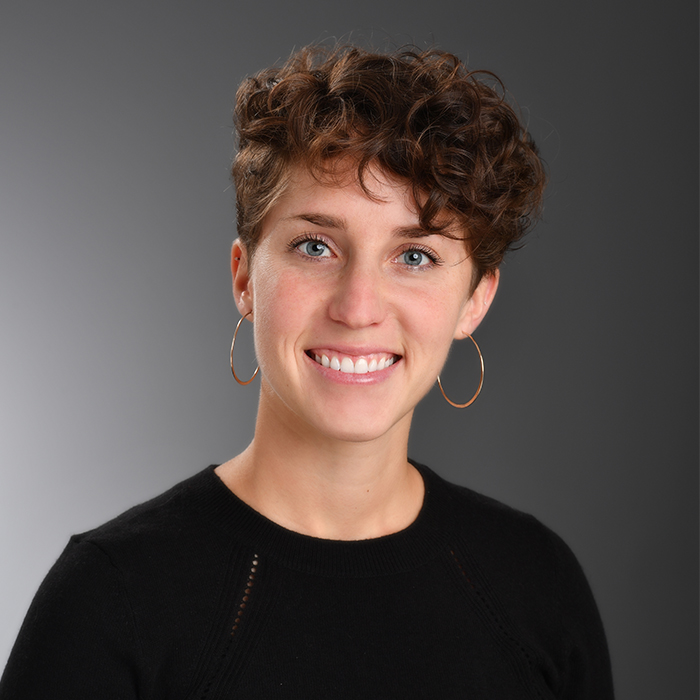
About Kara Berger
Kara Berger is the Education and Outreach Specialist for TU's Center for STEM Excellence. She works closely with K–12 educators to design engaging and equitable STEM learning experiences. Her work includes professional development for teachers, curriculum design, robotics education, authentic scientific research experiences and management of the Maryland Loaner Lab program, which provides ready-to-use science kits to schools across the state. She is a two-time TU graduate and holds a Master of Education.