Research
How TU research could help save Chesapeake Bay striped bass
Towson University researchers are studying how water temperature and low oxygen affect juvenile striped bass
Maryland’s official state fish, the striped bass—commonly called rockfish in the Chesapeake Bay—is facing a population challenge.
For the past six years, juvenile striped bass have experienced poor survival rates, contributing to fewer adult fish for Maryland anglers and raising concerns about the future of the Chesapeake Bay population.
Maryland’s Department of Natural Resources (DNR) suspects this summer’s high temperatures to be at least part of the reason for the decline and has prohibited fishing for striped bass this August to protect the population.
Concurrently, Krista Kraskura, assistant professor in TU's Department of Biological Sciences, and her students have spent the summer studying how heat influences striped bass and whether it could be contributing to increased mortality rates.
The popular rockfish plays an important role in the state's economy and ecosystem, so dwindling populations could have a broad, significant impact.
“Striped bass are the biggest recreational fishery in the Chesapeake Bay and Maryland,” Kraskura says. “If we put additional stressors on these fish, they might not survive. And we want to protect our stocks, so we are trying to identify some of these physiological limitations that affect the population.”
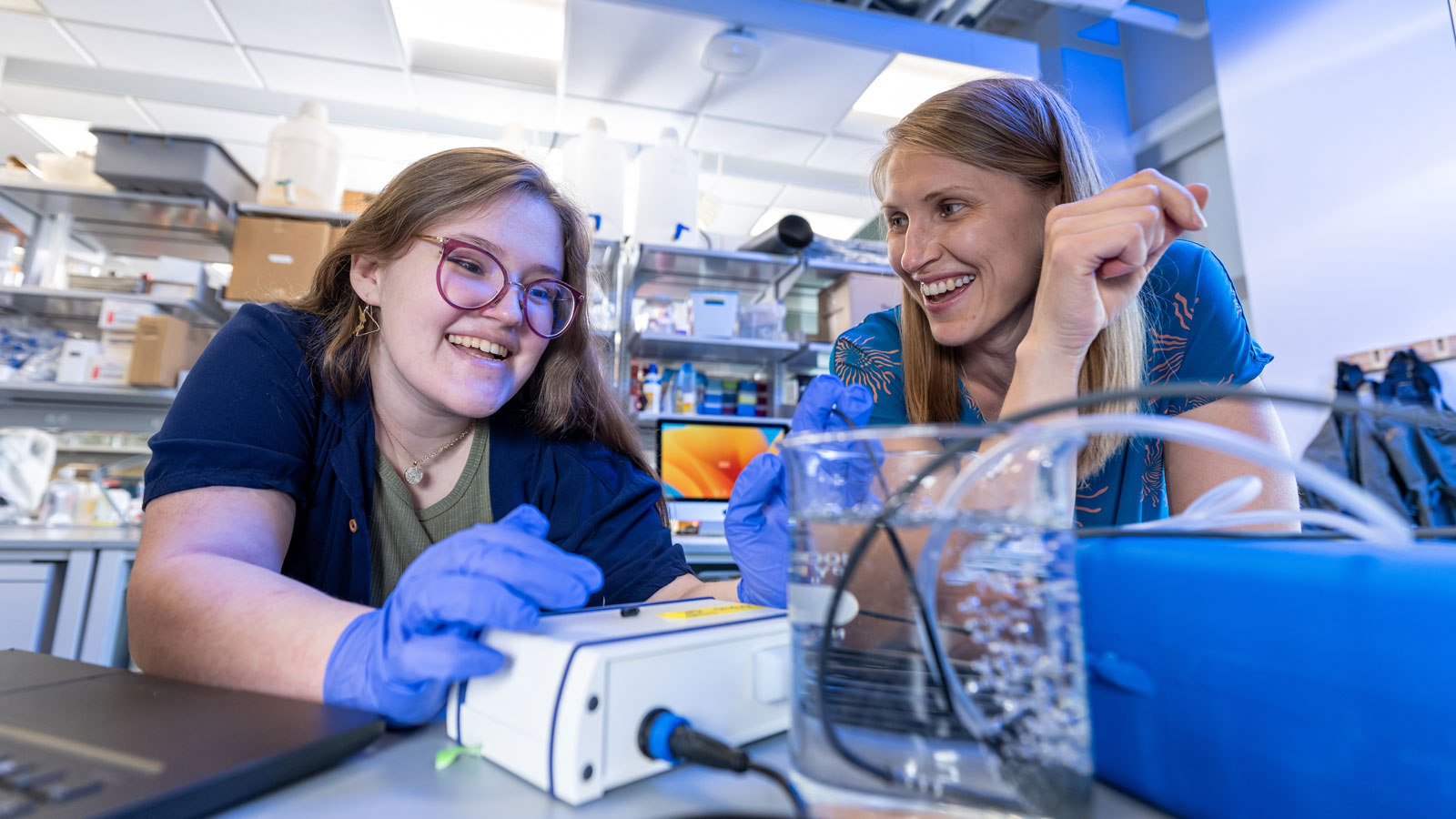
Just keep swimming
Throughout the summer, students monitored fish in carefully controlled tanks where water temperature and oxygen levels were adjusted to mirror conditions in the Chesapeake Bay.
This formed the basis of two studies examining how summer conditions affect juvenile striped bass.
The first is a thermal acclimation study in which students expose fish to elevated temperatures before testing their swimming performance and energy use. The goal is to determine whether thermally stressed fish can sustain the energy demands of swimming, which is critical for striped bass survival.
In the second study, fish are subjected to weekly periods of low oxygen, simulating real conditions in the Chesapeake Bay, where oxygen-depleted bottom water can rise, exposing fish to dangerously low oxygen levels.
Kraskura has also been working closely with the Maryland DNR to better understand what is driving the decline in juvenile striped bass populations.
“This research is tailored to improving our ability to make better management decisions,” Kraskura says. “The information we discover can be used by managers and those who put policies in place to protect these fish. And the work we’re doing can be transferable to other species.”
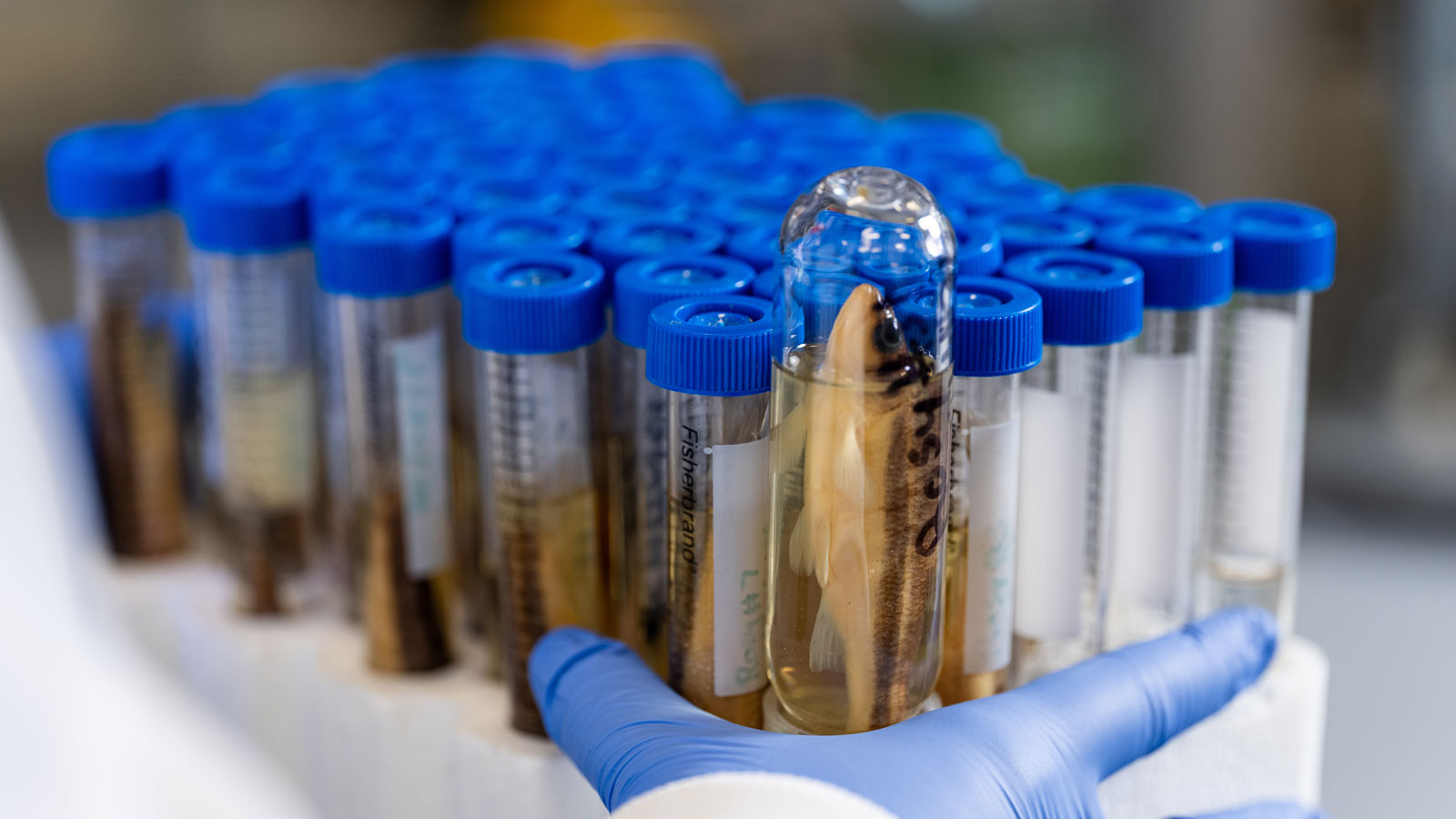
An aquatic life
Although she grew up about an hour from the Baltic Sea, Kraskura’s professional passion began with an internship in Baltimore studying crabs, which sparked her interest in studying and caring for sea creatures.
“Fish are very diverse,” Kraskura explains. “Fish are in every kind of water across the world. From Antarctica to Death Valley, from the hottest to the coldest places, from deep in the ocean to shallow ponds, there are fish.
“And they’re just very charismatic and really loved by people. They connect our environment and the intersections of our lives in so many ways.”
If we put additional stressors on these fish, they might not survive. And we want to protect our stocks, so we are trying to identify some of these physiological limitations that affect the population.
Krista Kraskura
Her passion for studying fish led to another: teaching.
While earning her master’s degree from Towson University, Kraskura worked as a teacher’s assistant every semester. She also helped teach students while earning her doctorate at the University of California, Santa Barbara.
Those experiences inspired an academic career centered on mentoring the next generation of scientists.
“I want to engage with students and provide them opportunities for research that has real-world implications,” Kraskura says. “I have former students who email me and tell me about where they’re at in their professional world. I have a folder in my email for all of them called my ‘grateful folder.’
“That folder reminds me why I’m doing this and why I’m in higher education.”
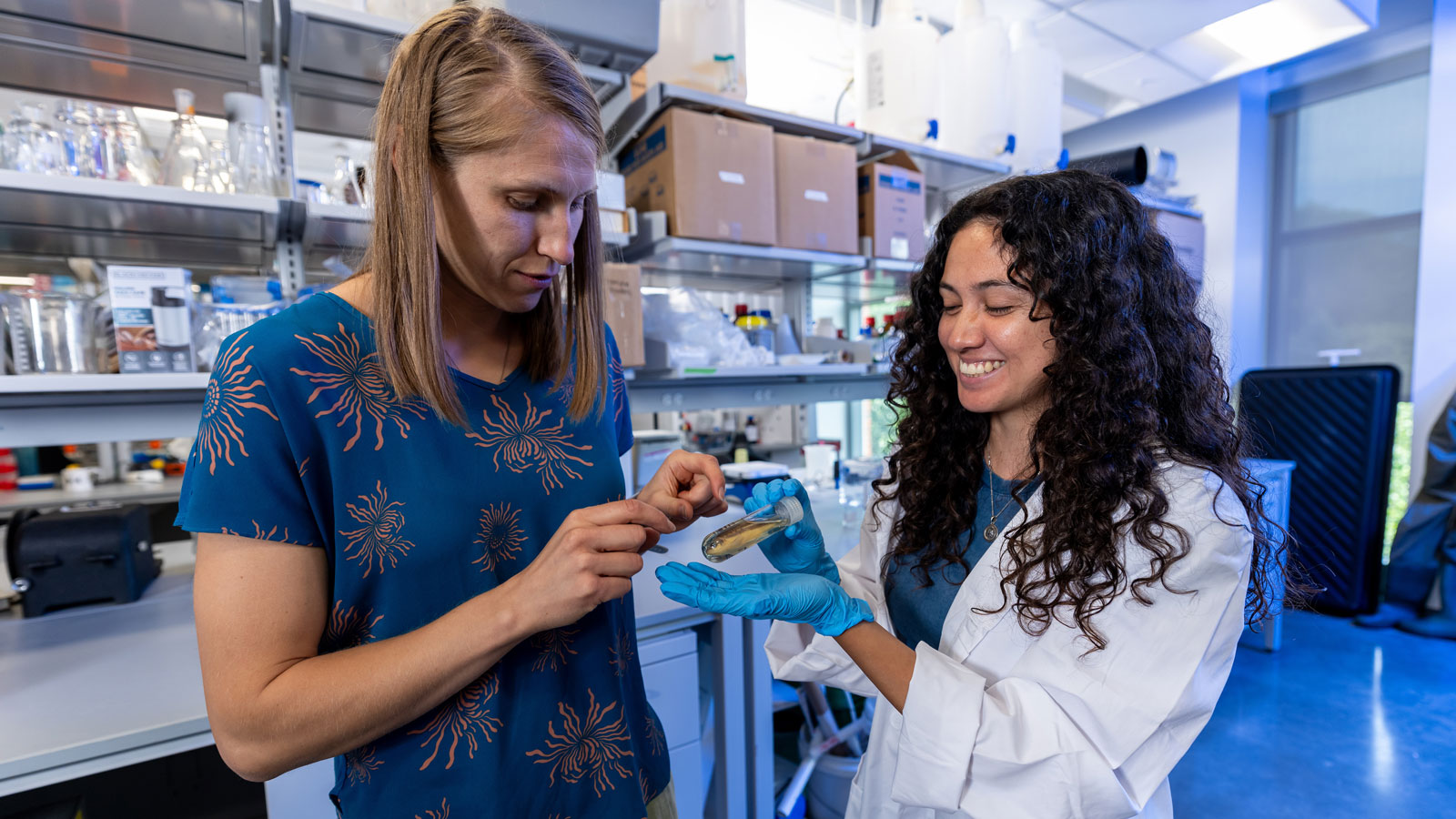
A future fish expert
Yvette Gaytan was an undergraduate researcher working with Kraskura at UCSB, and the two quickly developed a strong mentoring relationship.
That bond was so tight that when Kraskura took a faculty position at TU, Gaytan enrolled in TU’s biology graduate program to continue conducting research with her former lab mate.
This was Gaytan’s first trip to the East Coast; she left home and her loved ones to continue her education. But the Santa Barbara native says it was worth it to pursue her passion for aquatic wildlife research with a mentor she respects.
“One of the hardest parts of grad school is finding the perfect match, whether it’s research you’re involved with or who your adviser is,” Gaytan says. “It’s going to make or break your grad experience.”
The way (Kraskura) would talk about fish was so intriguing to me because there was so much passion there. Through working with her, I knew studying fish was what I wanted to dedicate my life to.
Yvette Gaytan
She is one of several students who care for the striped bass in the lab while helping determine how they can better survive in the wild.
And while the research has been stressful and some experiments have failed, she views contributing to such a major ecological concern as a privilege.
She's even had the opportunity to share her work on an international stage. This past summer, Gaytan traveled with Kraskura to Vancouver to present their research at the physiology section of the American Fisheries Society’s annual International Congress on the Biology of Fish.
With these experiences, and at least another year of working with Kraskura, Gaytan’s hoping to develop the same passion her mentor has.
“The way she would talk about fish was so intriguing to me because there was so much passion there,” Gaytan says. “Through working with her, I knew studying fish was what I wanted to dedicate my life to. Especially when I get to do field work—that's my element. I love being out in the field, love being in water, love handling fish and other critters.
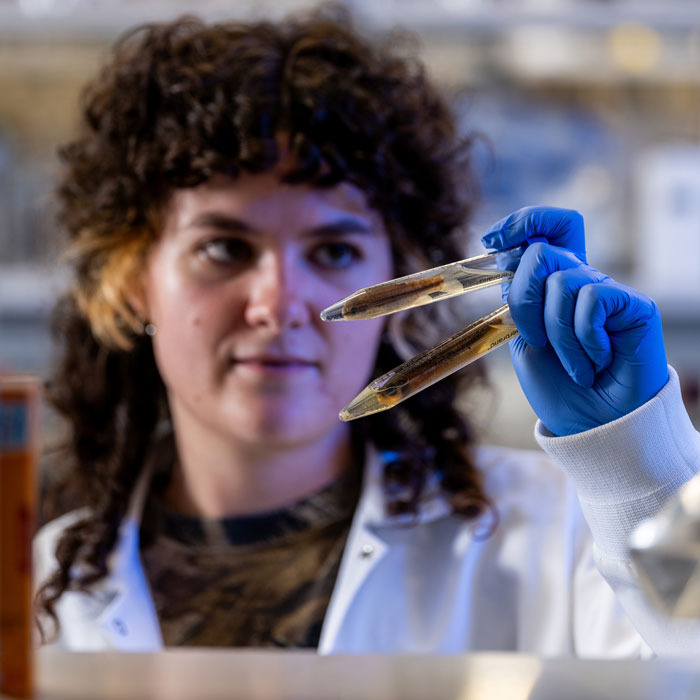
Our Research Impact
Research at TU is thriving. As a Carnegie Research Colleges and Universities (R3) institution, TU continues to move the needle in impactful discoveries and unique research opportunities for undergraduate and graduate students and faculty.
Discover More Biology research at TU