How they get it done
Four student leaders on the habits, hacks and help they use to achieve goals, excel in school and find balance along the way
From nationally touring musicians to student researchers working at the National Institutes of Health, TU students are pushing boundaries to make impacts inside and outside of the classroom. In honor of Women’s History Month, we asked four students who are leading their fields to give us a glimpse of what it takes to be among the best—and how they balance achievement with rest. Read on for their habits and hacks, including an app that notifies you of upcoming assignments and an evening reset routine that helps you wake up ready to seize the day.
All-American Gymnast
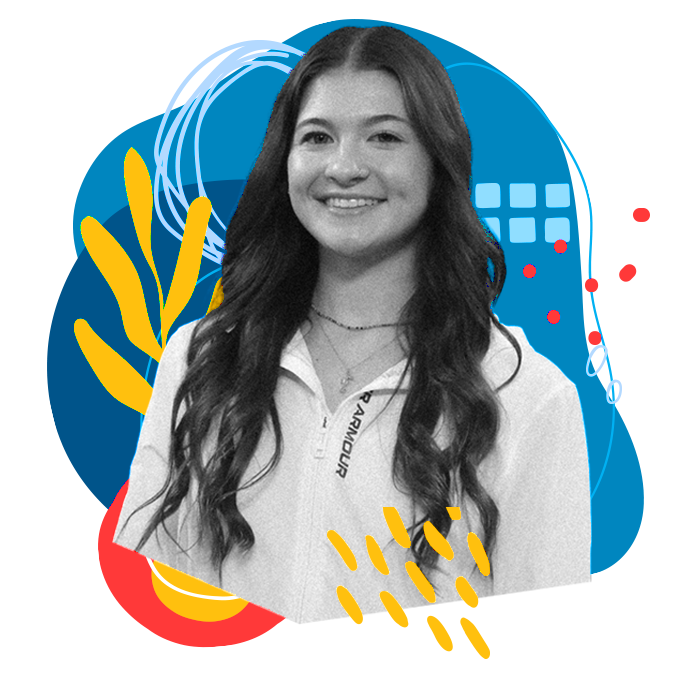
Bella Minervini ’26
You don’t rank in the top five gymnasts in the nation without putting in the work. Minervini spends 20 hours a week practicing and five hours a week coaching—in addition to competing in 15 meets a year and maintaining a 3.8 GPA. She’s been named TU rookie of the year, female student athlete of the year (twice) and first-team All-American on bars. Here’s how she does it.
How I keep track
I write everything down in a physical planner—homework, practice, post-practice treatment, even household duties—and then make a schedule for getting it done. I know apps work great for some people, but for me having a physical list is the best way to stay on track with what needs to get done.
How I stay balanced
I try to form personal relationships in every class, whether it’s introducing myself to the teacher or making conversation and exchanging numbers with whoever I sit by. Those connections can become great resources if you end up having questions, missing a class or needing support.
When I’m most productive
First thing in the morning or later at night. After our practice, which happens mid-day, I’m wiped out, so that’s when I relax, catch up with my parents or get dinner with friends.
Favorite hacks
Knocking off the scariest tasks first to take the weight off my shoulders for the rest of the week! And using found time—like long bus rides to meets—to get things done.

Student Government Association President
Allyyah Aali ’26
Representing nearly 20,000 students can take up your entire day if you let it. Each weekday, Aali spends about four hours meeting with campus leaders, advocating for student interests, sitting on shared governance committees, coordinating with SGA colleagues and working directly with students themselves. She’s also a mass communication major who serves as special events director for the Black Student Union and a second mom to her nine siblings. Here’s how she gets it done.
How I keep track
At the beginning of the semester, I take the syllabi from all my classes and make a Google Sheet listing out every assignment. From there I send a to-do list to Google Keep and sync it with my phone. It sends me notifications when things are coming up so I’m never caught off guard. I also reserve Sunday nights for going through the week ahead so I’m prepared for whatever’s on the schedule.
How I stay balanced
If I’m feeling scatterbrained, I’ll turn on good music and clean. Usually by the time my space is clean, my brain is clear too! It’s soothing because it reminds me of being at home, cleaning to music with my family growing up.
When I’m most productive
I set aside one to two hours every day to do schoolwork. Sometimes that means getting up a few hours early when I have a lot of meetings, or sometimes it means spending an hour between classes working on an assignment instead of opening my phone. Whenever I feel the urge to get something done, I run with it, no matter where I am.
Favorite hack
I sleep with my phone across the room, so I have to physically get up to turn off the alarm in the morning. It’s worth the early wake up to get a jump on the day.

Drum major of the TU Marching Band
Caroline Little ’26
That saying, "It takes 1,000 hours of practice to perfect a talent?" Caroline Little has lived it. The viola and mellophone player spent two years as drum major of TU’s marching band, four semesters as the principal viola in the TU Symphony Orchestra, and three summers touring with Drum Corps International. She also served as treasurer and vice president of membership of Kappa Kappa Psi (a fraternity for college and university band members) and worked as a student employee in the music office—all while practicing her instrument two or more hours a day and maintaining an average of 21 credits per semester. Here’s how she gets it done.
How I keep track
Every week I write a sticky note with all the things I need to do that week and put it on my laptop. Even the little tasks, because if I do the little things, the big things will fall into place. I check off the list and then tear the note off the laptop at the end of the week when everything’s done. That sense of accomplishment is the best feeling ever.
How I stay balanced
I dedicate one night a week to do “me things,” usually crafting, embroidering or reading a book. That one night just for me, free of guilt, keeps me from getting burned out.
When I’m most productive
I learned to be productive in the little spaces in my schedule. For example, if I had a one-hour break in between classes, I’d practice my instrument. If I had a shorter break, I’d do a quick written assignment. If I waited for big chunks of time to do things I’d never get it all done.
What I’ve learned
Failure is an opportunity to redirect toward something that works better for you. There were auditions I lost and classes I struggled with and even though it was hard, it always led me to a better path.

Student researcher and ambassador
Chinenye Ofor ’27
Not many freshman score internships doing bioinformatics research at the National Institutes of Health—but Chinenye Ofor did, and she hasn’t stopped since. The Honors College student and double major in molecular biology, biochemistry and bioinformatics and communication studies is a student ambassador for the Fisher College of Science and Mathematics, a student director in the Honors College, a Hill-Lopes Scholar, community relations chair of the Undergraduate Research Club and a featured TEDx speaker who thrives academically while participating in campus events, maintaining a robust social life and making it to the gym multiple times a week. Here’s how she gets it done.
How I keep track
I put everything in my iCalendar, from phone calls to social commitments, and I keep a running to do list of everything I need to do, even little things like responding to an email. Having it all written down keeps me from forgetting anything, and checking things off the list gives me a really satisfying sense of accomplishment.
How I stay balanced
I have a consistent evening routine that helps me wind down so I sleep well and wake up ready for the day. I start by stretching, then I take a long shower, do my skin care routine and end by journaling. Journaling is a big part of my life—it’s what inspired my TEDx talk! It helps me reflect and acknowledge the good things in each day. I also try to have something to look forward to every day and every week, whether it’s making a new recipe or doing something fun like going to a concert.
When I’m most productive
The beginning of the week is when I’m most fresh, so I purposely frontload tasks to happen then. Monday through Wednesday is go go go. Then I try to make the end of the week a little more chill. I’ll schedule rest days, sleep in or have chill activities like collaging. I’ll even put “rest” on my do to list to make sure I get it done.
Favorite hack
Locking my phone away! I’ll literally put it in my bookbag or leave it in my room when I go study. Then I use a variation on the Pomodoro Method to focus: I’ll commit to doing a task for 45 minutes straight before taking a 10-minute break, then repeat the cycle until I’ve accomplished what I set out to achieve. The breaks feel so much better when I know I’ve earned them.