Feathers and fashion: TU student traces the cost of luxury
Niki Koch explores how demand for egret feathers in luxury fashion fueled hunting and inspired conservation efforts in the Walters Art Museum's latest exhibit
Towson University art history major Niki Koch ’27 never envisioned herself as a researcher. But that all changed when she registered for her Advanced Studies in Digital History course.
Now, her research on the historical use of egret feathers in luxury fashion is part of "Luxury & Loss: Feather, Shell, Tusk, Horn"—the latest exhibit at the Walters Art Museum.
“Having my research featured in this exhibit is awesome. It didn’t hit me until recently just how big of a deal this is,” Koch says. “To be able to do this work and to be the only TU project picked to be featured in the exhibit makes me think, ‘hey, maybe I really can be a researcher.’”
A global story with a local impact
Three years in the making, "Luxury & Loss" includes pieces from as early as the 20th century BCE to a work created by a local Baltimore-based artist this year.
In collaboration with exhibit curator Dany Chan, TU history department professor Vicky McAlister shaped her Advanced Studies in Digital History course around the exhibit's theme—charging her students to craft a research project with the opportunity to have their work featured in the exhibit.
69% of Gen-Zers are worried about climate change.
On display from Nov. 7 to Jan. 24, 2027, the exhibit explores the use of shells, tusks, horns and feathers throughout fashion history, which largely contributed to the detriment or near extinction of elephants, turtles, kingfishers and rhinoceroses.
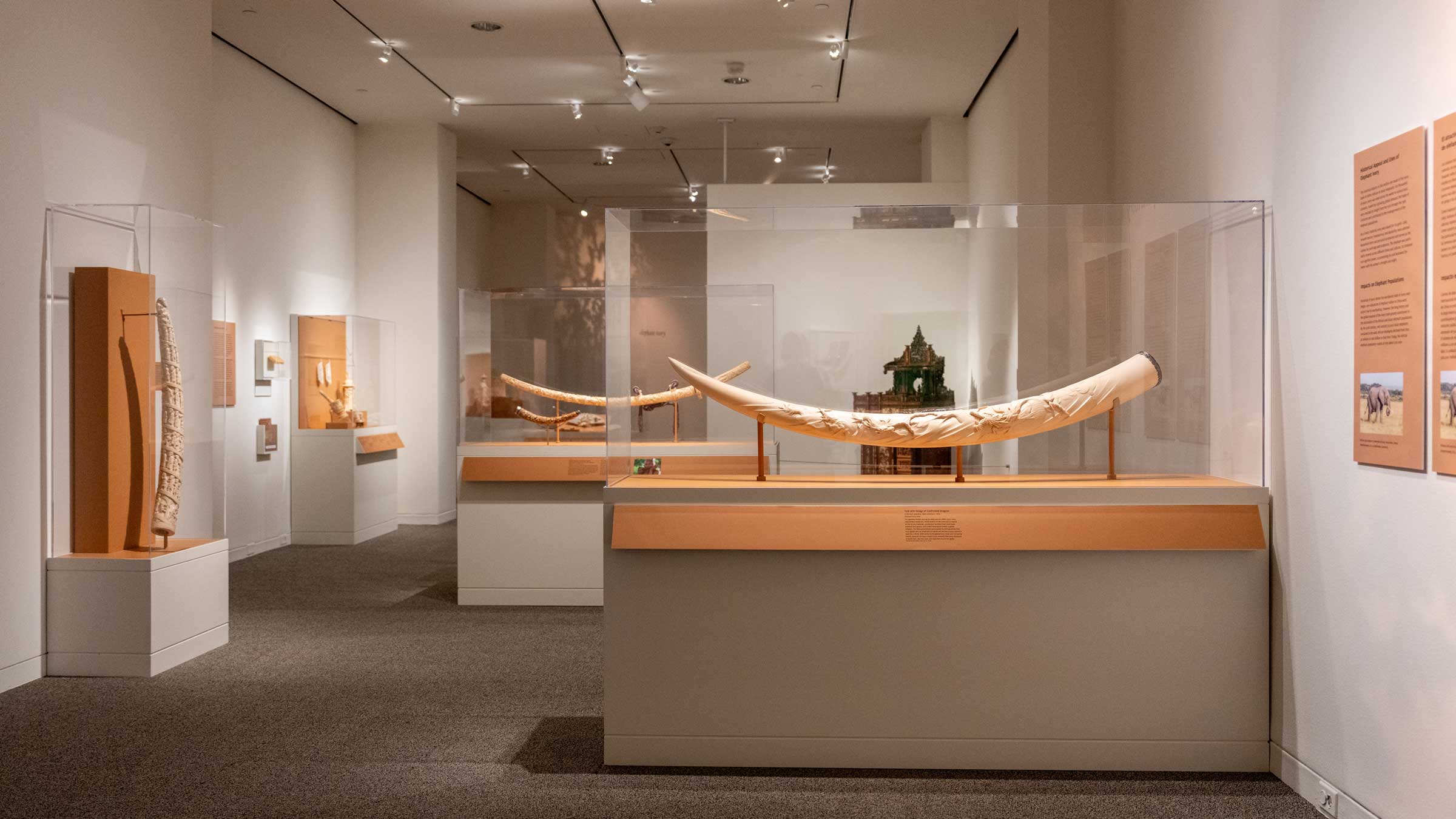
Installation view of Luxury & Loss: Feather Shell Tusk Horn featuring works made of ivory tusks sourced from African and Asian elephants.
Egret feathers in fashion
With the task of selecting all or one of the four animals’ histories to study, Koch chose to focus on the egret.
“I somehow stumbled upon the snowy egret and the great egret,” Koch says, “They were hunted mainly in the Victorian era because of how fashionable it had become to adorn your hat or clothes with feathers. Some women even wore full-on bird carcasses.”
Gen-Z are poised to take what they learn through exhibits like 'Luxury & Loss' to make a real impact on our collective future.
Dany Chan, exhibit curator at the Walters
Through her research, Koch traced the origins of the use of egret plumes in luxury fashion to France and Marie Antoinette’s early adoption of hats outfitted with plumes.
What began as a statement by a historical figure contributed to skyrocketing demand for feathers across the global fashion landscape for years to come.
Koch found that more than 1.5 million egrets were killed in 1898 alone for the use in luxury fashion items which—for advocates of the time like conservationist and New York socialite, Harriet Hemenway—called into question the need for widespread protections for animals like the egret.
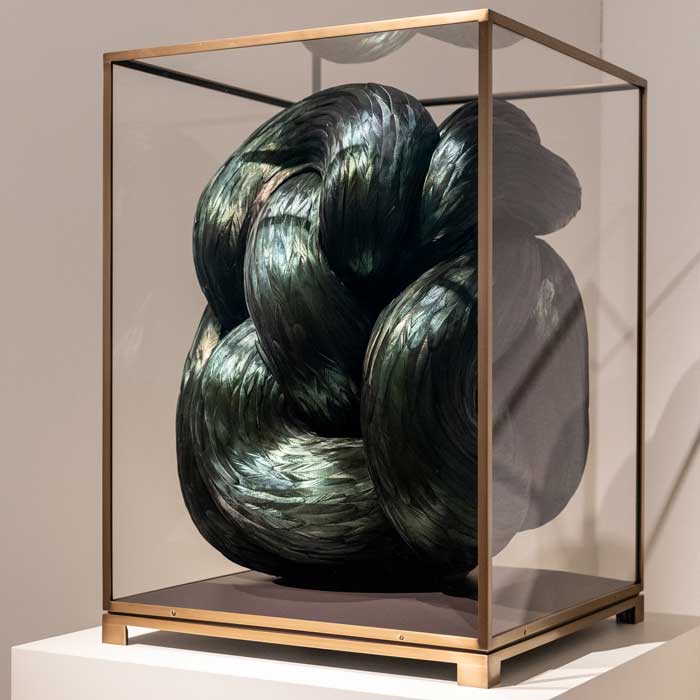
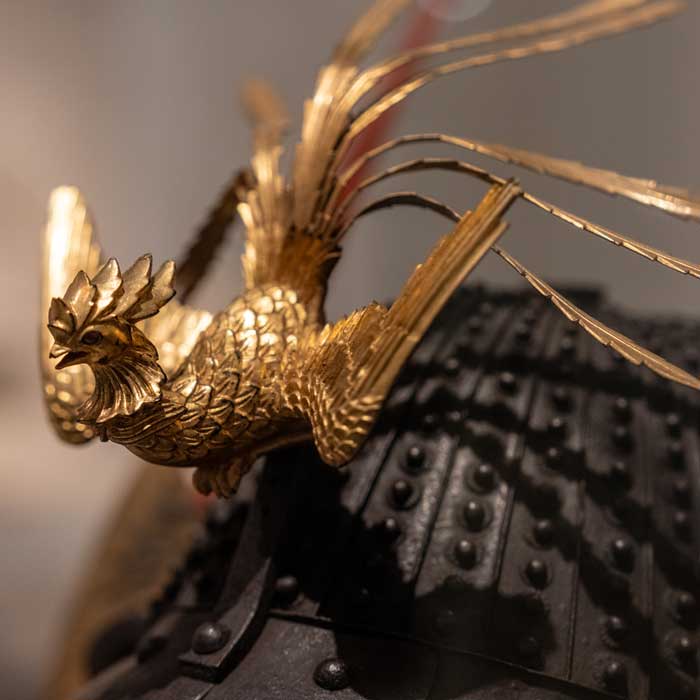

Top left image: Ravish, Kate McGwire (b. 1964, United Kingdom), 2023. Mixed media with rooster feathers. Private collection. Top right image: Helmet with Phoenix and Battle-Axe Ornaments, Unidentified artist(s) of the Myochin family (Japanese, active mid-19th century), 1825–1875. Iron, lacquer, bast fiber wood, baleen, rawhide, gilding. Acquired by Henry Walters, 1906.
Leveraging ArcGIS and research skills gained throughout her time in the course, Koch created an interactive history display that details the origins of egrets, their use in luxury fashion, the history of legislation put into place to protect this near-extinct species and the faces behind that advocacy.
“One of the maps in the display shows the timeline from when Harriet Hemenway started boycotting the sale and use of birds for consumption in fashion to when it became virtually outlawed to continue selling birds,” Koch says.
[Egrets] were hunted mainly in the Victorian era because of how fashionable it had become to adorn your hat or clothes with feathers. Some women even wore full-on bird carcasses.
Niki Koch
Her interactive display offers visitors a moment of reflection at the end of their journey through the exhibit and includes a map of where egrets can be seen in Maryland, Virginia and Delaware today.
Empowering the next generation
Chan planned the exhibit with a Gen-Z audience in mind, which meant including and uplifting the voices of Gen-Z students and professors in higher education.
According to a recent study from Sacred Heart University and Great Blue Research, 69% of Gen-Zers are worried about climate change and confidence in taking action has decreased from 69% in 2025 to 61% in 2026.
Though this dip may not seem significant at first glance, the study also found that more than half of respondents (55.1%) reported experiencing eco-anxiety and only 21% feel hopeful about the future of climate change.
"Gen-Z are poised to be the leaders of the world. They can take what they learn through exhibits like 'Luxury & Loss' to make a real impact on our collective future," Chan says. "That's part of why collaborating with Maryland college students and local artists is so valuable."

At the reflection portion of the exhibit, TU's own Steve Kimble, clinical associate professor in the Department of Biological Sciences, shares how vital conservation efforts are to protecting threatened species like the Maryland eastern box turtle.
Courses like Advanced Studies in Digital History provide liberal arts students with hands-on research opportunities that make a direct impact on their local communities and the greater Baltimore area.
"Experiential learning is a great way to bolster our students' career readiness," McAlister says. "By teaching digital humanities at all course levels at TU, we can connect students to research opportunities that help empower them in an increasingly technology-oriented world."
As a result of the connections built through her research project, Koch is currently volunteering at the Walters, with the goal of one day becoming a museum curator.
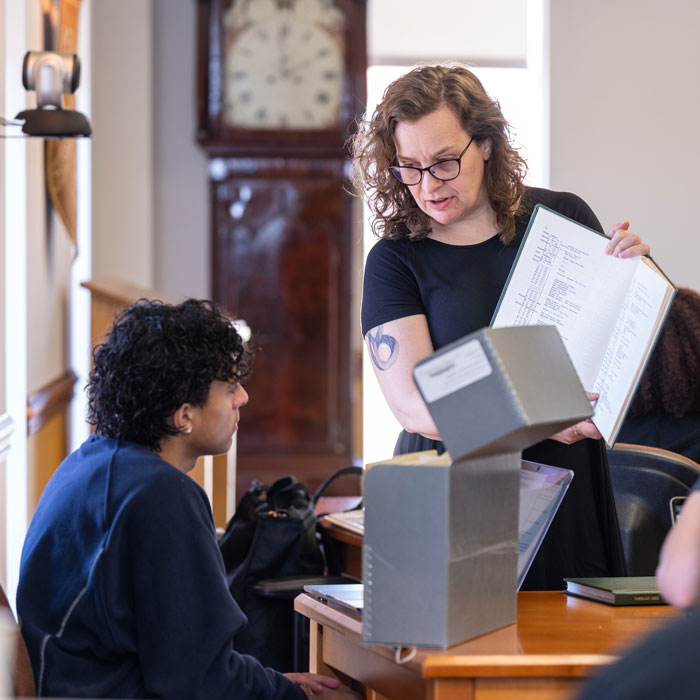
Our Research Impact
Research at TU is thriving. As a Carnegie Research Colleges and Universities (R3) institution, TU is continuing to move the needle on impactful discoveries and unique research opportunities for undergraduate and graduate students and faculty.
DISCOVER MORE. SHARE YOUR RESEARCH STORY.