Podcast
Three Degrees: You’re Allowed to Change Your Mind—And Your Career
Three grad students share what it takes to start over and why it's worth it.
Changing careers is not uncommon. According to a recent FlexJobs survey, about 43% of U.S. workers are actively looking to switch career fields in 2026 — that's nearly half the workforce. However, knowing you want a change and actually making it happen are two very different things.
In this episode of Three Degrees, Towson University graduate students share unexpected circumstances that led them to pivot into new career paths. A veteran turned economic analytics student, a former environmental specialist studying human resource development, and an engineer on the path to occupational therapy — their stories are different, but their resilience is the same.
Aaron's Story: Don't Fight the River's Flow
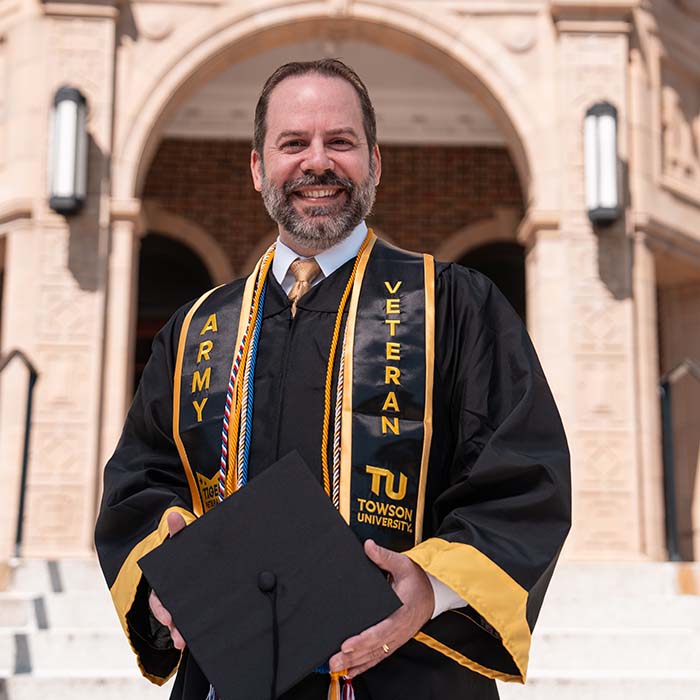
Aaron's career didn't follow a straight line—it had many twists and turns. After graduating from high school, he began his career in the U.S. Army. The military, he says, helped him figure out who he was, what he liked, and what he didn't.
When his military career ended, with no clear next step, the following years were a myriad of experiences and almost careers that didn't quite fit.
While working toward his undergraduate degree and growing his career in aviation, a professor suggested that Aaron consider becoming a professor. His initial reaction was swift and certain.
"And I said, no... Like, I have no interest in doing grad school. Forget it. I'm going to do my undergrad—finish that with my experience and a bachelor's degree. I'm fine. I'm set. I can go work wherever I want. And I'll be damned if she didn't inception me. And as time went on, the idea just grew and grew and grew and, well, maybe I could do that.”
[The key] is to not fight the river's flow... You can still steer and you can still navigate. But more than anything, take time to enjoy the scenery along the way…
Aaron
The idea of becoming a professor grew quietly until he couldn't ignore it. With the support of the VA's Veterans Readiness and Employment Program, Aaron took the leap and made the decision to come back to school to earn his master's in economic analytics with his eyes on a teaching career.
His advice to anyone navigating career change is to "not fight the river's flow... You can still steer and you can still navigate. But more than anything, take time to enjoy the scenery along the way because you may see things that you didn't expect to see."
Like life, a river isn't always a straight line, but we always have a choice to steer.
Shaun's Story: Finding Purpose After a Toxic Workplace
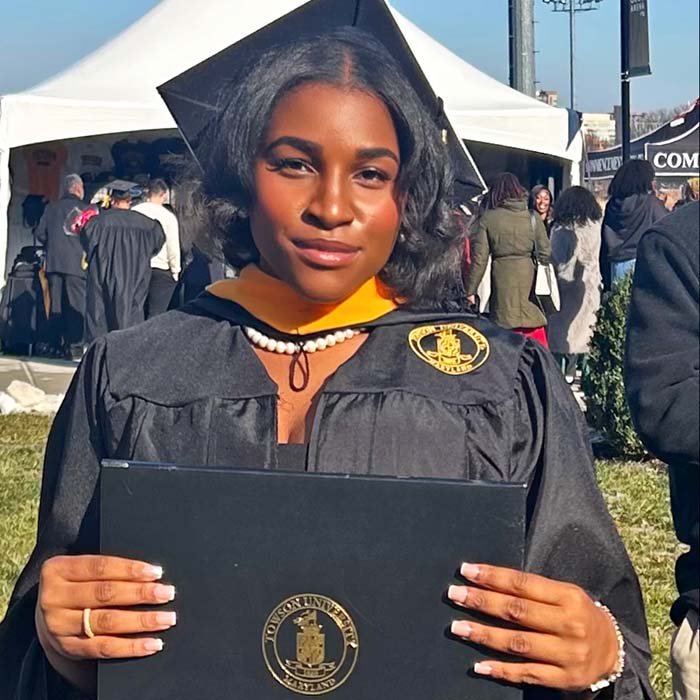
Shaun did everything right. She graduated from undergrad, got a job in her field, environmental science, and began building a career. But once she was inside the industry, something felt off.
Her organization worked with hazardous materials and required strict safety compliance, yet corners were being cut and employees didn't feel valued or protected.
“At first I just thought push through it like, you know, you're making good money,” she said, “But I was, you know, truthfully unhappy with the organization and I did not feel safe.”
Rather than simply leave, Shaun turned her frustration into fuel. When she learned her employer offered tuition reimbursement, she enrolled in Towson's Human Resource Development program—initially hoping to fix the workplace from within.
I was learning so much from Towson about different things within the workplace that happened that are wrong.
Shaun
“I was learning so much from Towson about different things within the workplace that happened that are wrong. And I realized, you know, a lot of this was happening at my workplace. Like every time we had a paper or a project or something to write about, I had material I had I had endless, endless, endless material."
She eventually left, landed an HR role at a staffing agency, and then secured an internship with a federal agency—a path that felt like everything her family had told her to aim for. Then a change in administration brought a hiring freeze, and she watched her entire department slowly disappear. A second internship with a well-known organization followed, only to end when federal funding cuts rippled through that team too.
At the time of recording, she had just received a new job offer—still processing a road she admits was "very bumpy," but one that made her more resilient, more vocal, and more committed to being an advocate in the workplace.
Martha's Story: The Hardest Path Isn't Always the Right One
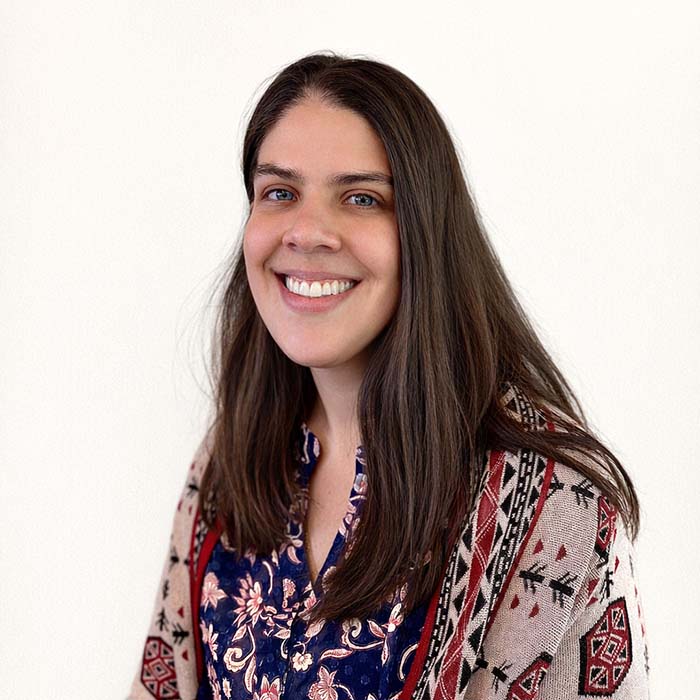
Martha grew up in the Canary Islands, Spain, and came to the United States to pursue electrical engineering with a biomedical concentration — the kind of rigorous, prestigious path her family had always encouraged her toward, with the hope of one day building machines that could help people in hospitals. But three years in, circuits and electronics weren't lighting her up.
"I can do the work," she said, "but it's not something that I wake up excited about."
Financially draining and motivationally depleting, the program eventually led her to take a break and reassess.
You don't have to get it right the first time. And sometimes pushing, pushing, pushing makes it worse.
Martha
The reassessment led her somewhere unexpected—working directly with patients, one on one, building trust and making people feel comfortable. To her surprise, connecting with patients came naturally. She'd spent years being steered toward hard sciences because she was good at math, but it was the interpersonal work that made her come alive.
Today, Martha is pursuing her doctorate in Occupational Science at TU, with plans to eventually open a multidisciplinary clinic alongside her husband and a friend in optometry.
Her advice to anyone considering a similar leap: give yourself grace. “You don't have to get it right the first time. And sometimes pushing, pushing, pushing makes it worse,” she said.
She encourages others to explore opportunities beyond the traditional path and trust that new perspectives can open doors they didn’t know existed.
This summary narrative of a TU original podcast titled "Three Degrees" was created with assistance from artificial intelligence.
About the series

The Three Degrees podcast series dives deeper into the lives and experiences of Towson University graduate students, exploring what sets them apart—and more importantly, what brings them together.
Three Degrees is available here and on: