Podcast
Three Degrees: Degrees That Make a Difference
Meet the grad students who chose their programs to change the world.
Hailey grew up collecting cicada shells on nature walks with her mom. Michelle saw firsthand that when a child feels truly seen and understood, something shifts—and that connection is the whole point. And Zorica walked away from a successful advertising career because she kept feeling the pull of something more—work that created real change for real people.
In this episode of Three Degrees, host Steph Sundermann-Zinger sits down with three Towson University graduate students—in environmental science, child life, and communications and advocacy—who each arrived at grad school the same way: driven by something bigger than a degree.
Hailey’s Story: Keeping Hope Alive for the Planet
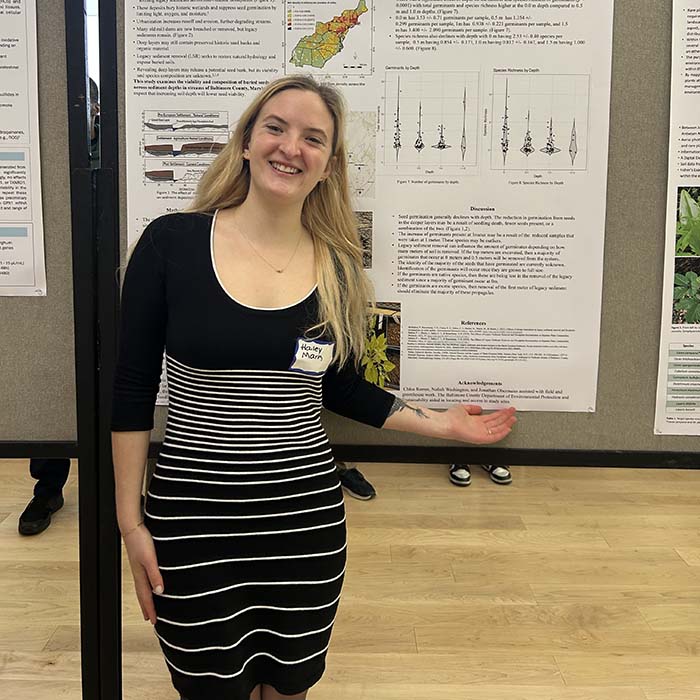
Hailey's love of the natural world started early, collecting bug wings and cicada shells on nature walks with her mom. By high school, a wave of environmental activism had transformed that childhood curiosity into a calling. Now, as a graduate student in environmental science, she's channeling that passion into hands-on research—and into a broader mission to keep people from giving up on environmentalist efforts.
“Honestly, I'm most concerned about people's hope. I feel like a lot of times there's a lot of negative news articles that come out about recycling is not actually helpful, or this is happening in this part of the world, and I feel like it feels very doom and gloom. And I think it's really important to still inspire people because I feel like if people are motivated, small actions do make a difference.”
Hailey has made it her business to cut through the noise around sustainability—including some of the most persistent myths about recycling. Pizza boxes? Yes, you can recycle them. Water bottle caps? Leave them on. And no, you don't need to scrub every container before it goes in the bin—recycling facilities have machines for that, and over-rinsing wastes more water than it saves.
“Everybody can do it. A lot of days, activism is really important—especially getting out there and telling everybody what you can support.”
Honestly, I'm most concerned about people's hope... I think it's really important to still inspire people because I feel like if people are motivated, small actions do make a difference.
Hailey
Her approach is practical and accessible by design. Swapping single-use plastics for a reusable water bottle. Repurposing a jelly jar as a coffee cup. For Hailey, sustainability isn't about perfection—it's about building habits that stick.
Michelle’s Story: The Power of Play
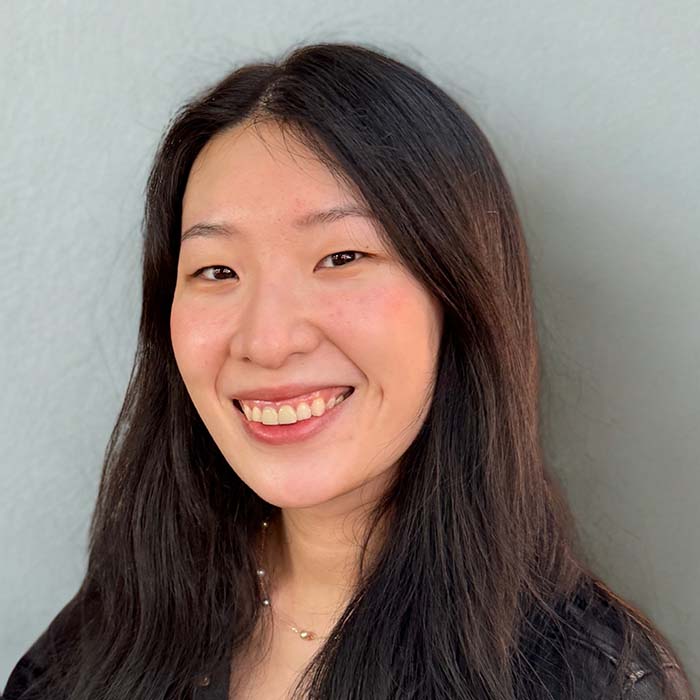
Michelle's path to child life came into focus during a practicum course that required a hospital volunteer role. What she witnessed there made the case better than any textbook could.
"You can see them physically get happier," she said. "The goals of child life—building resiliency, bringing coping skills, supporting children through tough times—even though they might not be able to fix everything."
Child life specialists help children understand and process difficult medical experiences—and they do it largely through play. Play isn't just a distraction; it's a window into what a child is actually experiencing.
Michelle described working with a seven-year-old girl in a hospital playroom who gravitated straight to a small play house and began acting out a scenario.
The girl picked up a plastic card from a toy mailbox and said: "This is a letter from my mom. She says, I miss you a lot. I'm going to come visit you soon."
When child life specialists of color are able to build a deeper sense of trust in those relationships—that is one of the things that I would like to see more of in hospitals.
Michelle
It's a simple example of how play gives children a language for emotions they may not yet have words for. "It can be a really good way for them to process their emotions, and also for a child life specialist to observe their play and understand what the stressor is for them right now."
For Michelle, the work is also about who shows up to do it. Connection is at the heart of child life, and that connection can go deeper when there is shared experience or identity to build on.
"There can be extra support that can be given," she said. "When child life specialists of color are able to build a deeper sense of trust in those relationships—that is one of the things that I would like to see more of in hospitals."
After graduation, she hopes to work in communities with diverse populations—not just to provide more equitable care, but to keep growing herself.
"I want to continually challenge myself to stay curious and to stay aware of my own biases so that I can improve as a practitioner," she said.
Zorica’s Story: Joy as Resistance
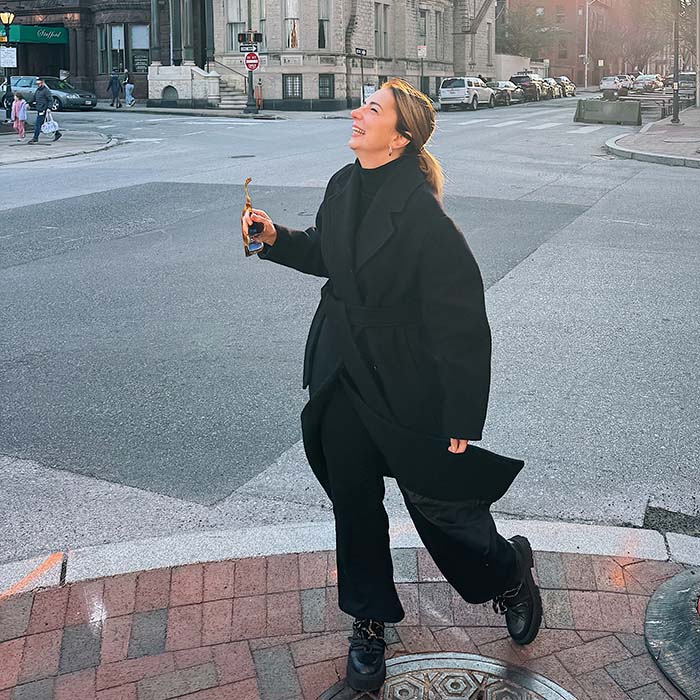
Zorica came to Towson University from North Macedonia on a Fulbright scholarship, bringing more than a decade of experience in nonprofit work, youth advocacy and communications. Her thesis topic: the happiness of women social entrepreneurs.
It's not a frivolous subject. For Zorica, joy is a political act—and an underexplored one.
"After reading one of the bell hooks books, I realized that joy as resistance is something that is very common in the lives of many women who are changemakers," she said. "So that was my final decision that I want to wrap up my whole Fulbright journey with something of that kind."
“I feel that our own well-being is the essence of everything. You cannot focus on your environment or eating healthy or supporting others if the well-being is not there.”
Zorica's research centers on how women in social impact work communicate their emotions—with their partners, their colleagues, and themselves. The burden, she argues, is often invisible and underappreciated. Women change-makers are expected to show up as positive, resilient, and strong, even as they quietly absorb the weight of difficult work.
When the people closest to them don't understand what they do or can't measure its impact, the isolation compounds.
I feel that our own well-being is the essence of everything. You cannot focus on your environment or eating healthy or supporting others if the well-being is not there.
Zorica
She recalled a past partner who once told her: "You're not going to change the world because you're only torturing yourself." That response—well-meaning, perhaps, but ultimately dismissive—is exactly what her research is trying to address. When there is no space to communicate about the work, the burden gets heavier. The joy gets harder to find.
Zorica's path to advocacy began in high school, when her country, North Macedonia, was on the verge of civil conflict. She volunteered with a nonprofit building projects for intercultural understanding, and never really stopped. A detour into advertising left her feeling like something was missing.
"I keep telling people that what you do in social impact, at the end of the day, you are like, wow, I did something," she said.
She eventually found her way to youth advocacy and the nonprofit sector in North Macedonia, then to the Communications and Advocacy program at Towson—drawn by its community of support and the blend of working professionals and traditional students in its classrooms.
Her advice to anyone who wishes they could make the world a little better?
"I will tell them that they can do anything, and I really mean it," she said. "Even if you change the life of one person, that's still making change in the society."
About This Episode
The guests on today's show came from different places with different passions, but all had one thing in common: the courage to see past what is, to what could be—and to push for the change they want to see.
This summary narrative of a TU original podcast titled "Three Degrees" was created with assistance from artificial intelligence.
About the series

The Three Degrees podcast series dives deeper into the lives and experiences of Towson University graduate students, exploring what sets them apart—and more importantly, what brings them together.
Three Degrees is available here and on: