Treasures
Out of the woodwork
Professor and associate chair John LaPolla keeps bees, beetles, damselflies, cicadas, butterflies…
For most people who find bugs unexpectedly—a wasps’ nest in the attic, carpenter ants in the walls—their reaction is dread. But when John LaPolla, Ph.D., professor and associate chair of the biological sciences department, arrived at TU in 2006 from the Smithsonian Natural History Museum and found the university’s insect collection, he felt something different: possibility.
“I was really excited about it because I came from the Smithsonian Natural History Museum,” LaPolla says. “Much of my research was collections-based already, so it certainly was one of the things that helped attract me to Towson.”
An unexpected treasure in the Science Complex
One LaPolla interacts with frequently contains everything from tiny ants to titan beetles. He estimates the insect collection contains around 100,000 specimens representing a clear picture of the biodiversity of the Mid-Atlantic region.
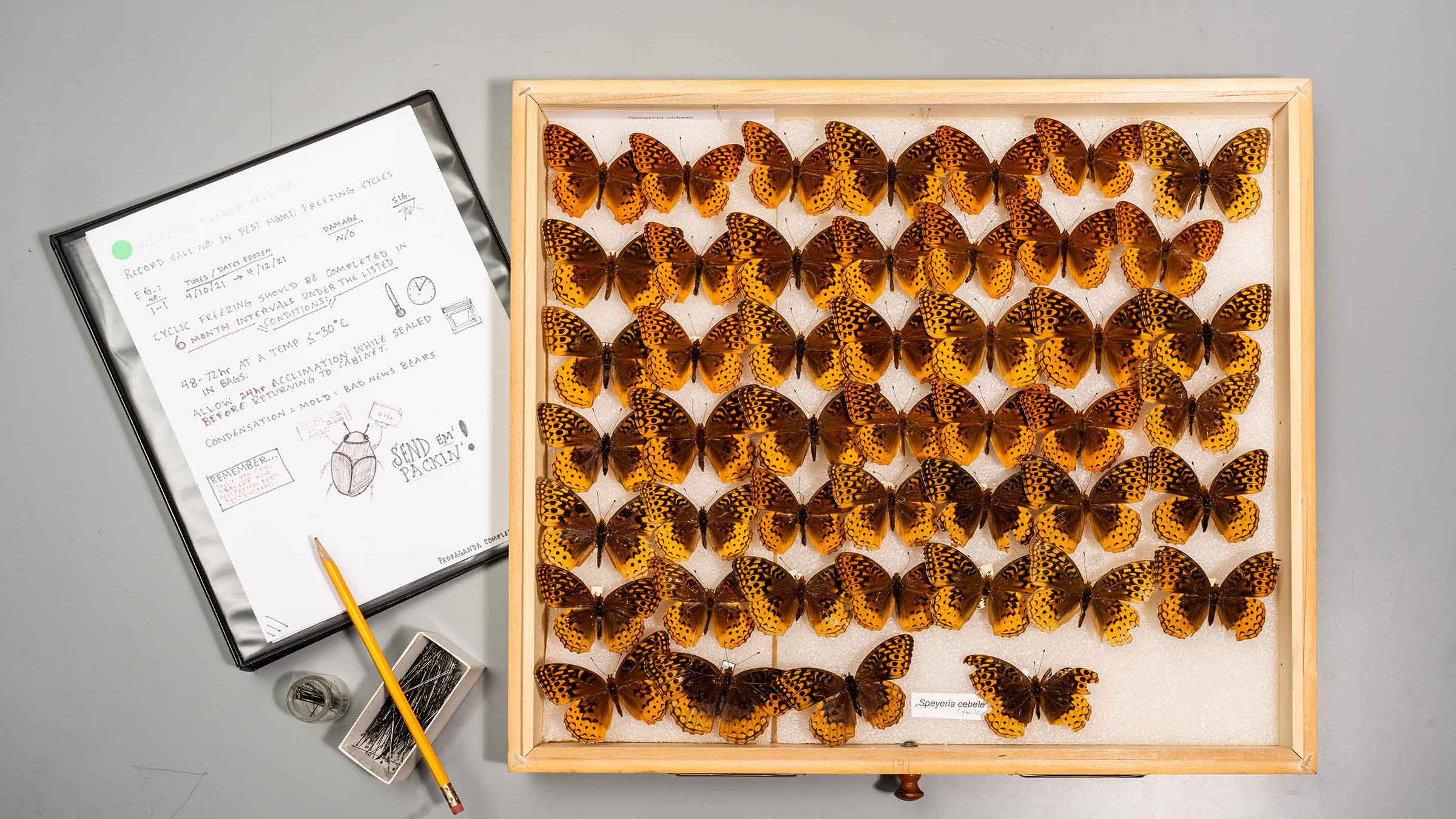
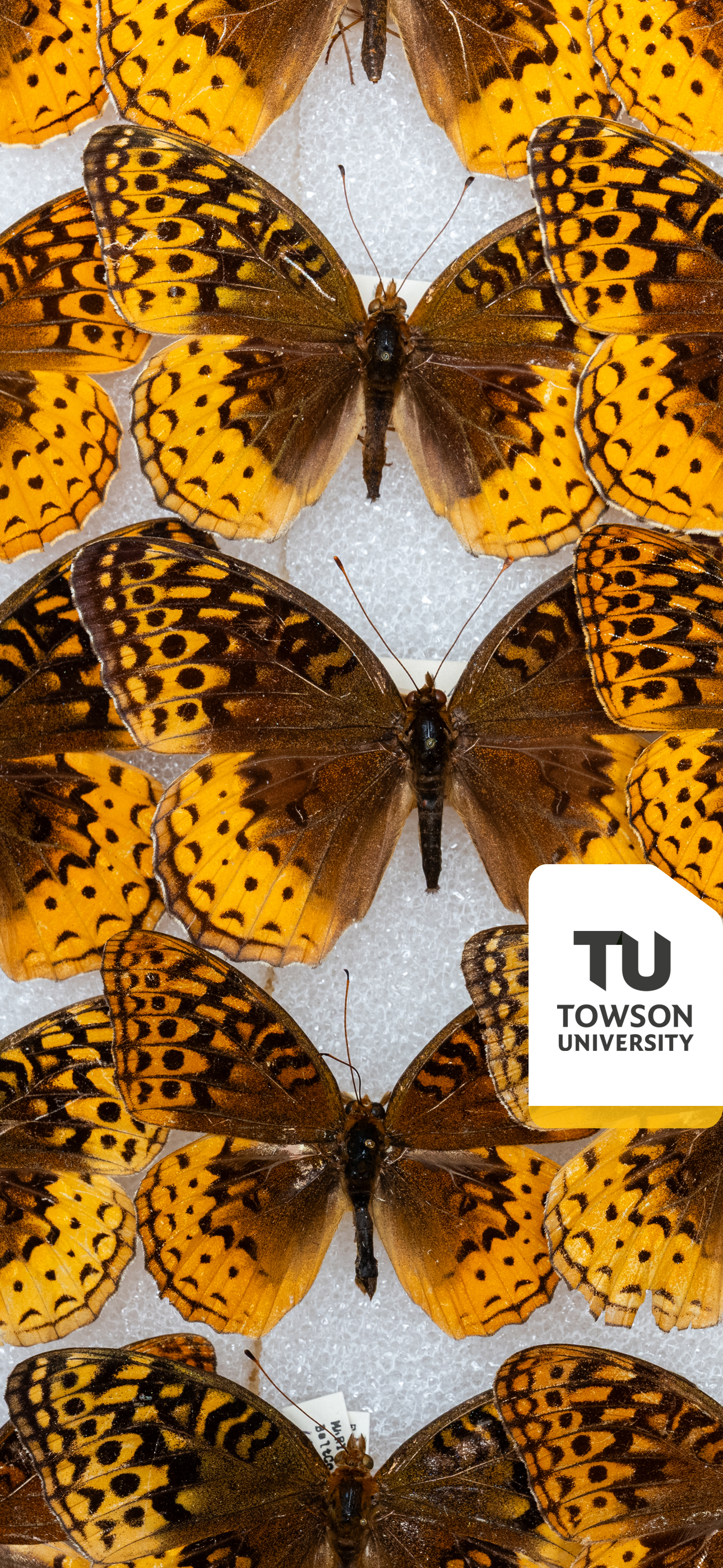
A specimen drawer of great spangled fritillary butterflies
“It gives us the only record, from a biodiversity standpoint, of species distributions,” LaPolla says. “If you wanted to know how native bee diversity in Oregon Ridge Park today compares with 50 years ago, one of the only ways to answer that question is by looking at collections and asking, ‘Fifty years ago, what did people collect?’”
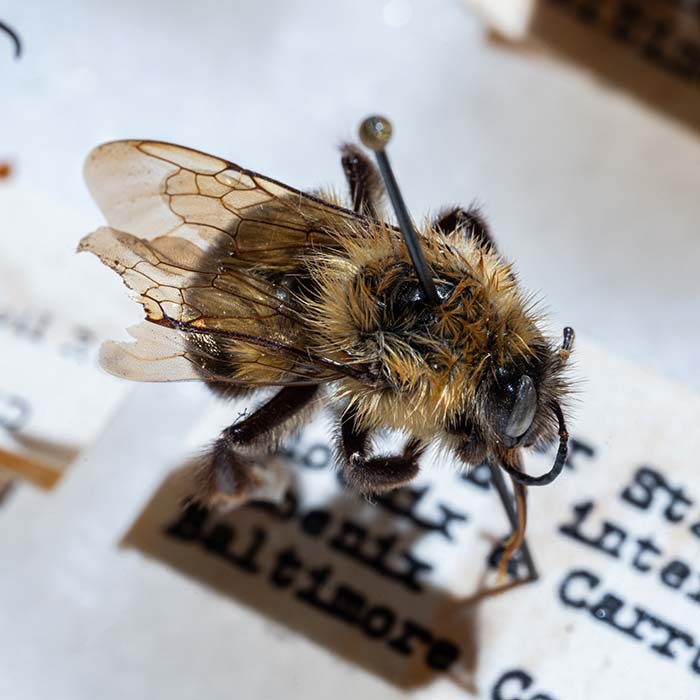
TU’s insect collection contains specimens from all over the world, but he stresses you don’t have to brave the Amazon to find interesting bugs.
“You don't have to travel to go see predator–prey interactions or weird social behaviors,” he says. “There's stuff happening all the time in your backyard that you can watch if you pay attention.”
LaPolla also points out something obvious but still slightly mind blowing: You don't know what they're going to be used for in the future.
Research that connects past and present
“The collections here are over 100 years old. The botany collection is even older, going back into the 1880s,” he says. “With plants, you can study the stomata and use them as a proxy for carbon dioxide levels. Nobody knew 50, 70, 100 years ago they would be collecting a specimen we could use for collecting DNA. They didn’t even know what DNA was. So there’s going to be uses for our collections we aren't anticipating too.”
In the end, though, one of the collections’ biggest selling points might be its most basic: It’s real.
“These collections span many decades, and they’re authentic,” LaPolla says. “In our digital world, being able to have a physical thing to connect with is so valuable. Looking at a picture is fine, but there's still something special about seeing or touching a physical specimen that’s right in front of you.”
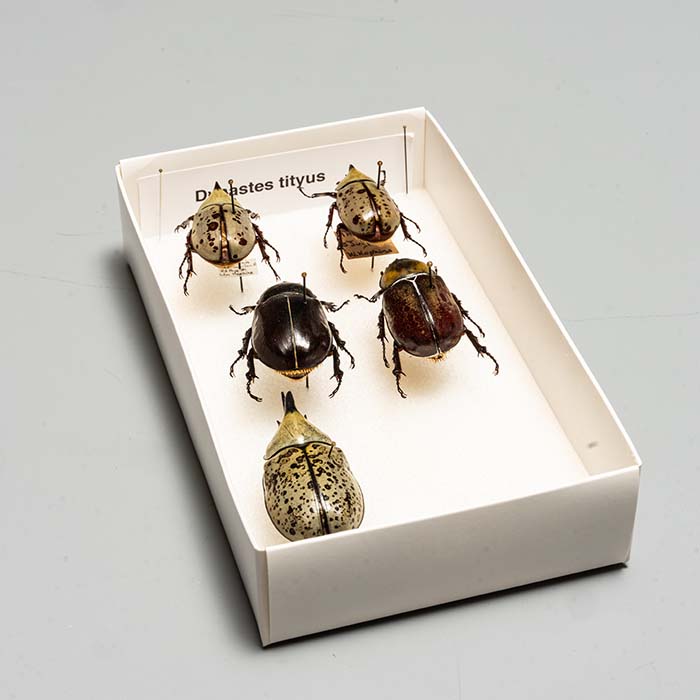
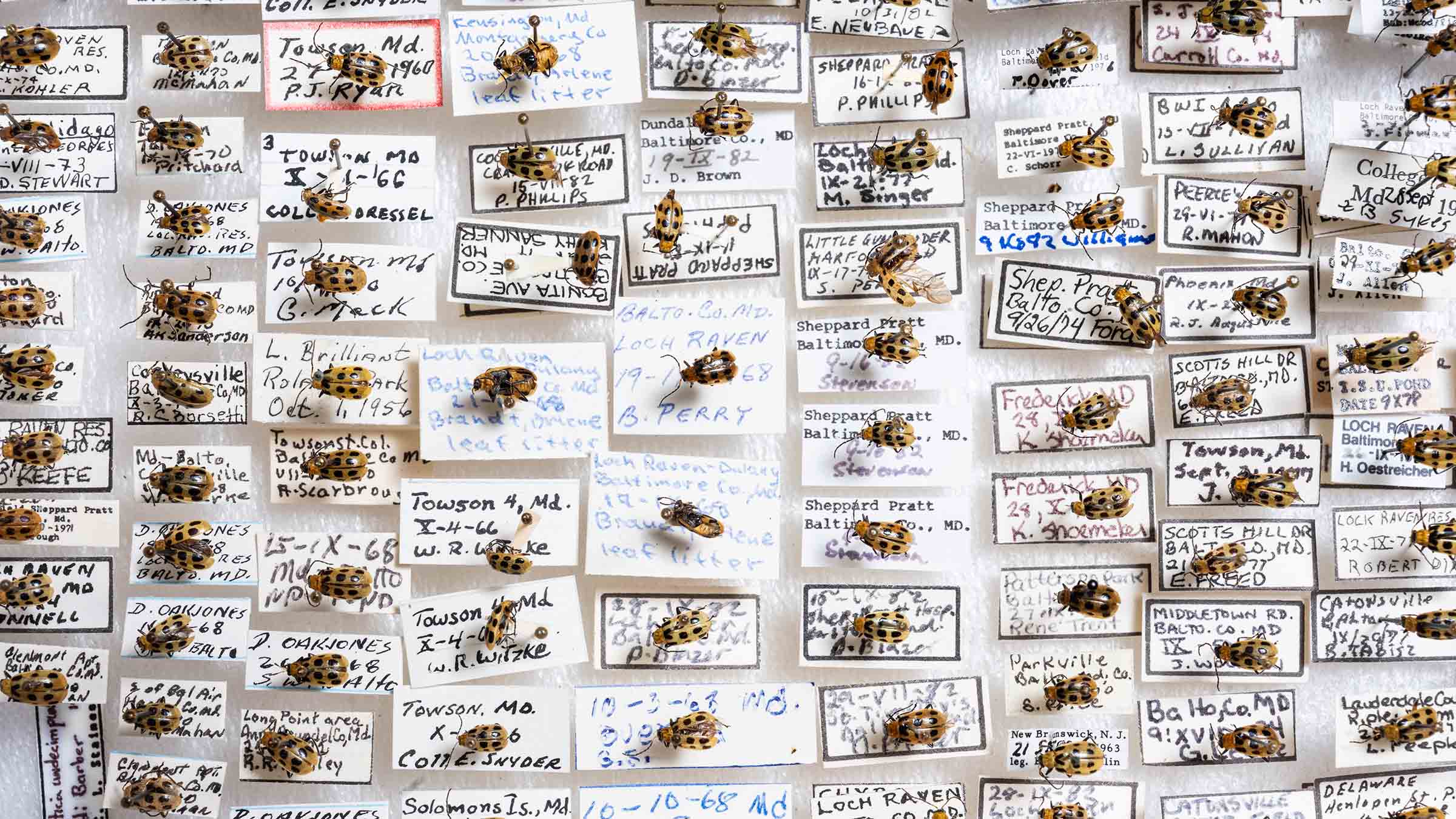
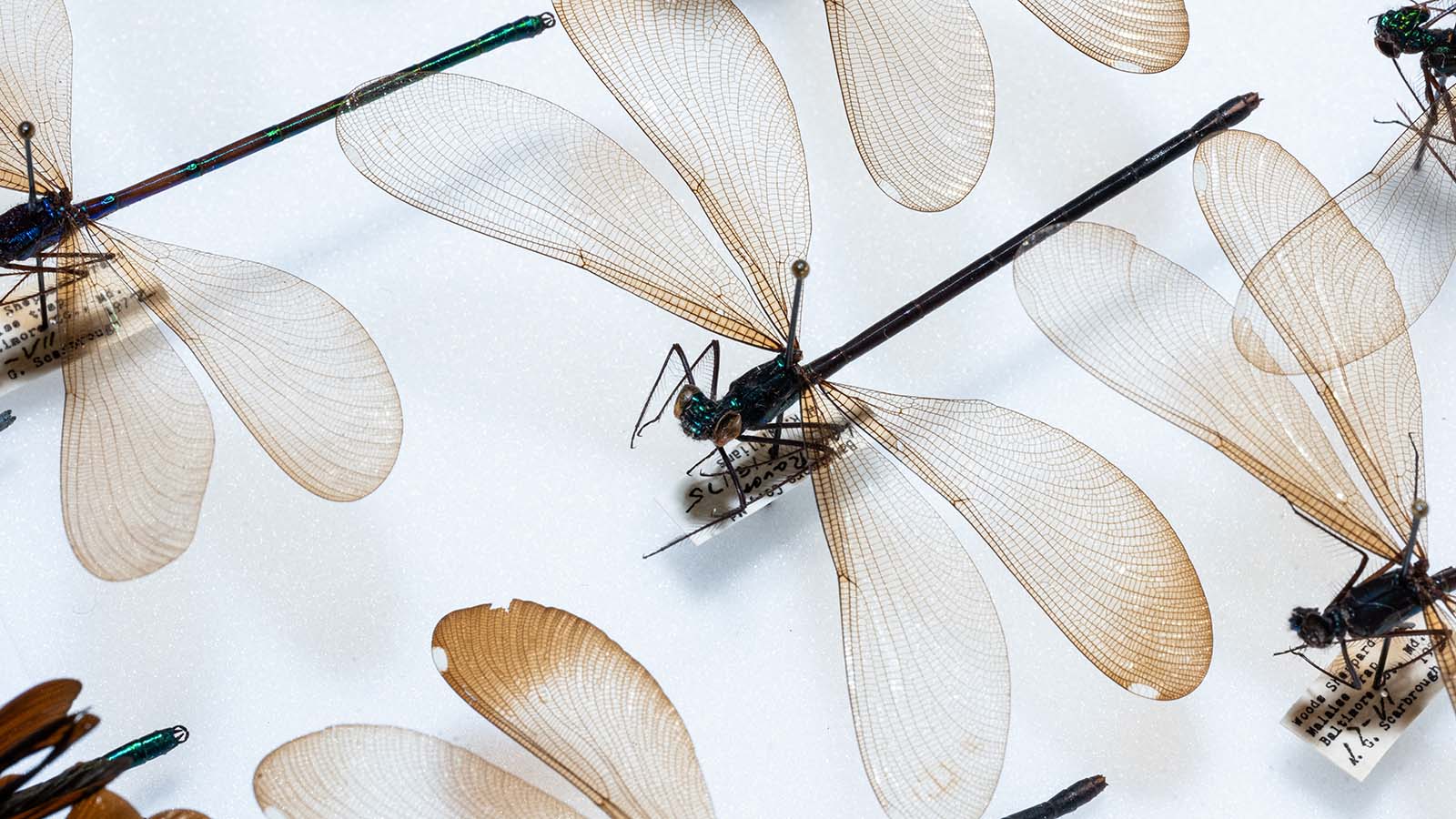
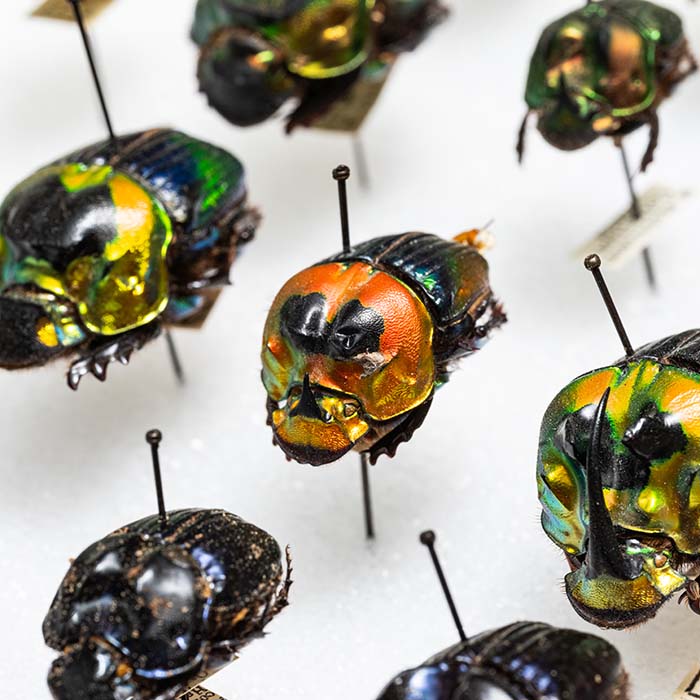
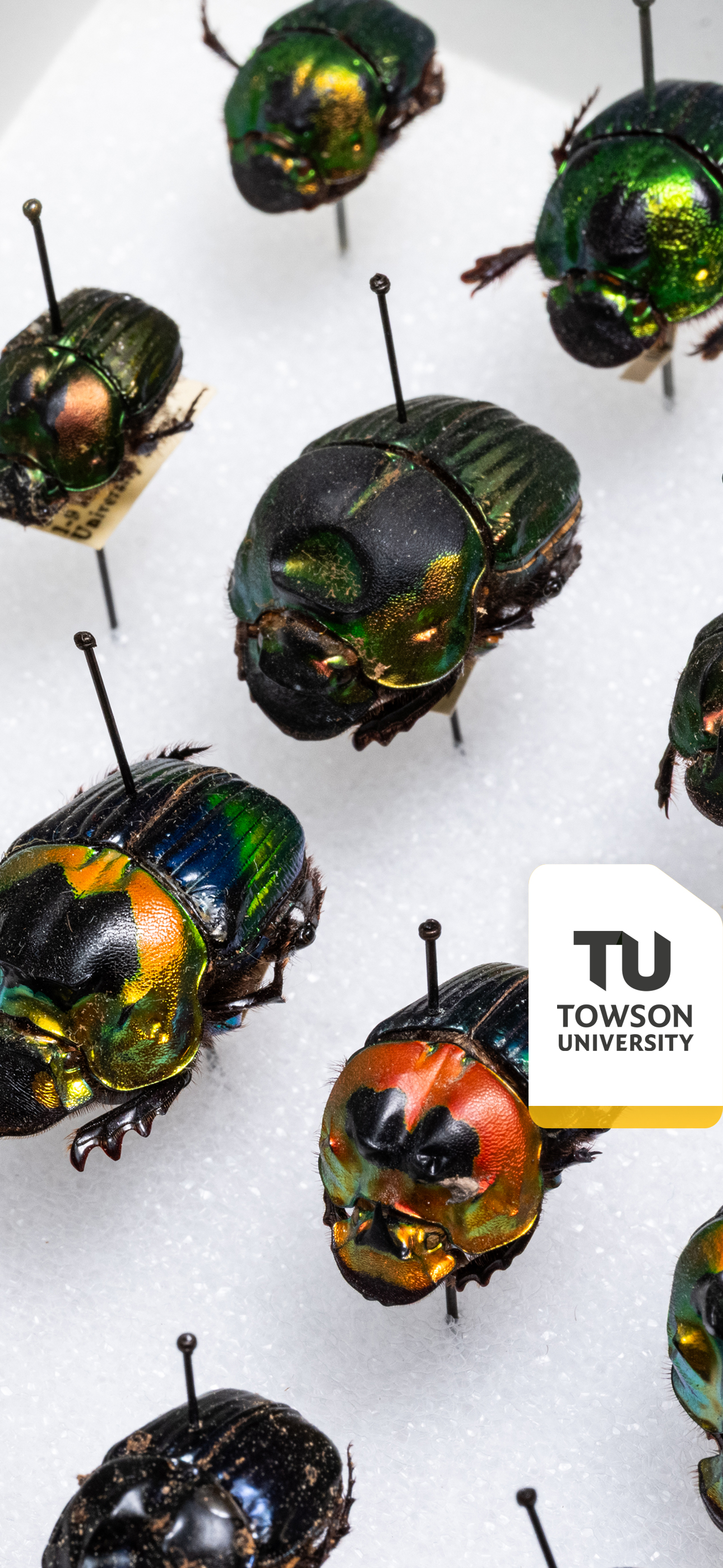
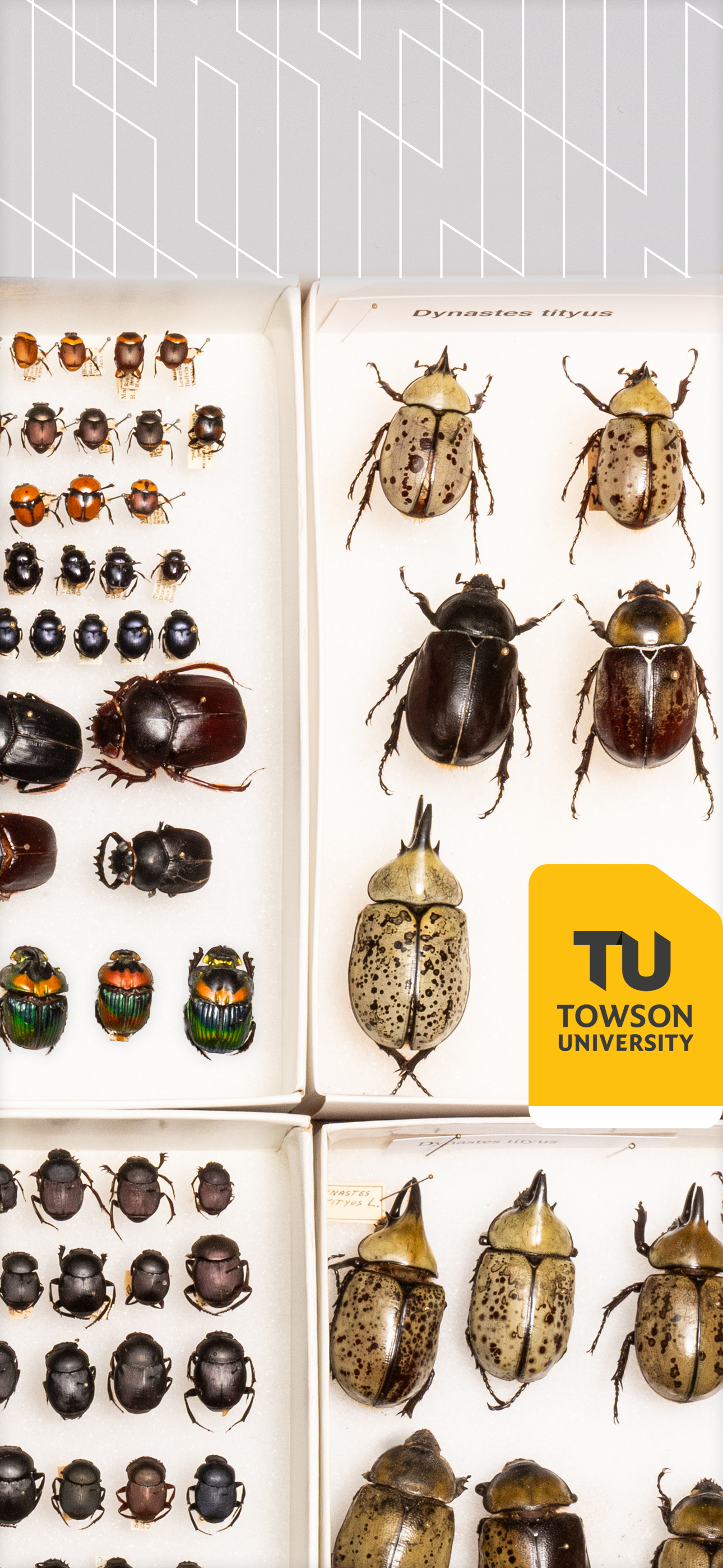
(clockwise) Eastern rhinoceros beetles; a collection of beetles labeled with location data, collector information and dates; rainbow scarab beetles; one of the damselflies collected
Bonus content
Think bugs are cool? Need more nature in your life? Download a phone lock screen featuring insects in TU's Entomological Collection.