Feature
Wellness through community and connection
The Institute for Well-Being’s four centers emphasize the tie between health and well-being to significantly enhance participants’ overall health and happiness.
When the clock ticks 12:01 a.m. on January 1 each year, people have likely already been bombarded for weeks with what experts say will be the wellness trends for the next 12 months.
But at Towson University’s Institute for Well-Being (IWB)—an educational teaching facility for the College of Health Professions (CHP)—wellness isn’t a trend or New Year’s resolution. It’s something lived every day by the faculty, staff, students, clients and program participants in each of its four centers.
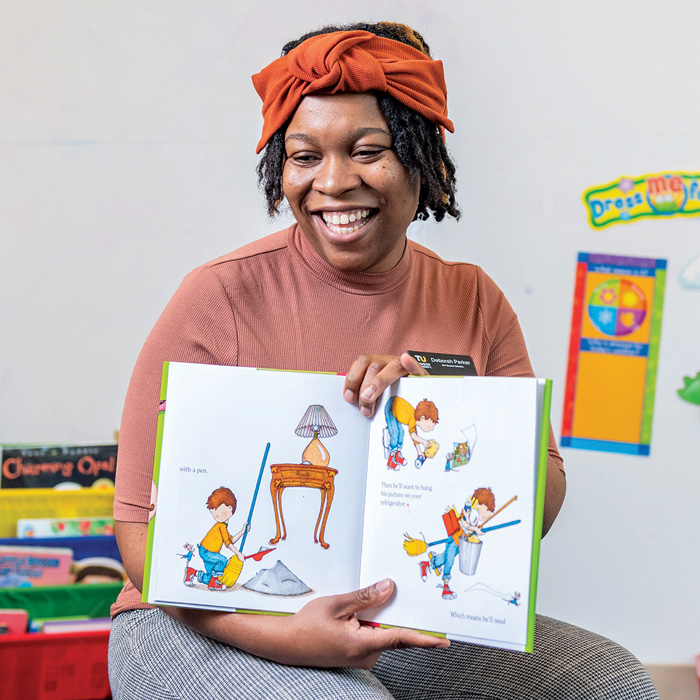
The Hussman Center for Adults with Autism and the Hearing and Balance, Occupational Therapy, and Speech and Language centers offer professional services from licensed and certified health care experts.
They also serve as a dynamic interdisciplinary learning lab for TU students working under the mentorship and supervision of staff to learn best practices in health and wellness.
The IWB epitomizes wellness through community and connection, a concept endorsed by the World Health Organization and the U.S. Centers for Disease Control as highly beneficial to individuals' health and longevity.
Each of the four centers help their participants combat isolation, develop confidence, find a sense of purpose and focus on their physical health by meeting them where they are with individualized treatment plans or programming.
Fostering advocacy and independence
In addition to providing hearing and balance evaluations and fitting clients with a full array of hearing aid products, Amanda Kozlowski, director of the Hearing and Balance Clinic, and her team of licensed clinicians and supervised students advise individuals with hearing loss or balance issues on how to advocate for themselves.
...how can we make the whole environment better for our clients?
Amanda Kozlowski
“We teach communication strategies,” she says. “How to ask people to slow down their rate of speech, to talk a little bit louder and to situate themselves in well-lit environments to see faces better. Hearing aids are great tools, but how can we make the whole environment better for our clients?”
The Occupational Therapy and Speech and Language centers coordinate their efforts in evaluation and treatment programs, helping clients from young children to adults with a variety of sensorimotor, physical or communication disabilities.
“Independence is an important pillar of mental and emotional health,” says Karen Day, director of the Speech and Language Center. “Helping children to communicate socially with their peers can also provide a confidence boost. If you’re anxious in a school-based situation with social difficulties, then having some positive practice interacting with peers and a positive space to be in can be helpful.”
Dan Hollern, director of the Occupational Therapy Center, agrees.
“A lot of what we do is help children with social and emotional regulation,” he says. “If you become dysregulated, then you’re not really able to attend to what’s going on around you. This can really impact social participation, learning and everything else you do in a day.
“Our OTs do a great job at figuring out what might be triggers for kids and finding solutions—deep pressure, vibration, swinging, whatever it may be—that allow them to be more successful in whatever environment they may be in.”
The Hussman Center for Adults with Autism offers programming, training and resources for adults on the autism spectrum. The center includes TU students with community participants in a variety of interactive learning opportunities from cooking classes to comedy nights. But one of the most important functions is simply to be a safe space.
“When they are here, they feel they can be their true authentic selves, and they can interact with whoever they want to, and they can engage to the extent that they want to without being forced,” says Doug DeHaan, center director. “They make friends if they want to. They can ask for help if they’re not exactly sure what to do.”
Building bonds for better health
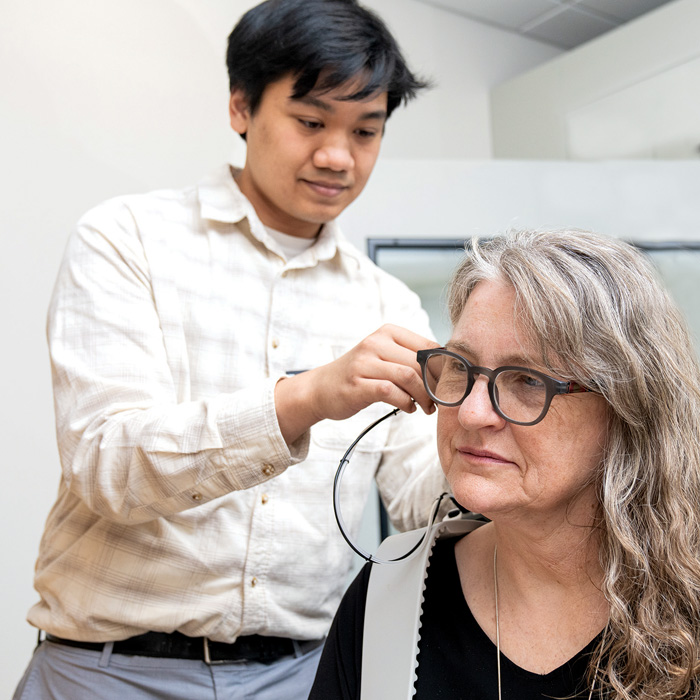
Combatting isolation is a vital component to all the IWB centers’ work. Chronic loneliness has been shown to negatively impact health, with some studies finding isolation to be as detrimental as smoking.
“A life-changing disability or disease, such as a stroke, can be very isolating,” says Hollern. “The programs here give folks maybe their only opportunities to get out of the house. It can be a lot of work for individuals with disabilities to get washed, dressed, in the car, travel, be here for a couple hours then go home again. A lot of our clients return every single semester. They’ve really built a community bond and connection with each other.”
The benefits extend beyond the people visiting the centers for treatment or activities to their families. There are caregiver support groups and coffee hours, but it also happens organically.
“I’ve seen a lot of bonds form between the family members of [participants],” says Carol Gebhardt, IWB director. “They’ll sit outside on a sunny day and have their time while family members are participating in programs.”
Making physical fitness fun
The emotional-social bonds developed extend to activities that have been created with physical health maintenance or improvement in mind. All the center directors have noticed the connection between participants has made fitness programs fun and even a bit competitive, from pediatric clients to older adults.
“When we work on gross motor activities, we may use the playground, an obstacle course or climbing up the stairs to go down the slide,” Hollern says. “The TU students [working under supervision] are creative in coming up with fun activities that engage the kids. In our pediatric motor rooms, we have the rock-climbing wall. We have swings. We’ve got equipment to climb on that’s soft and safe.”
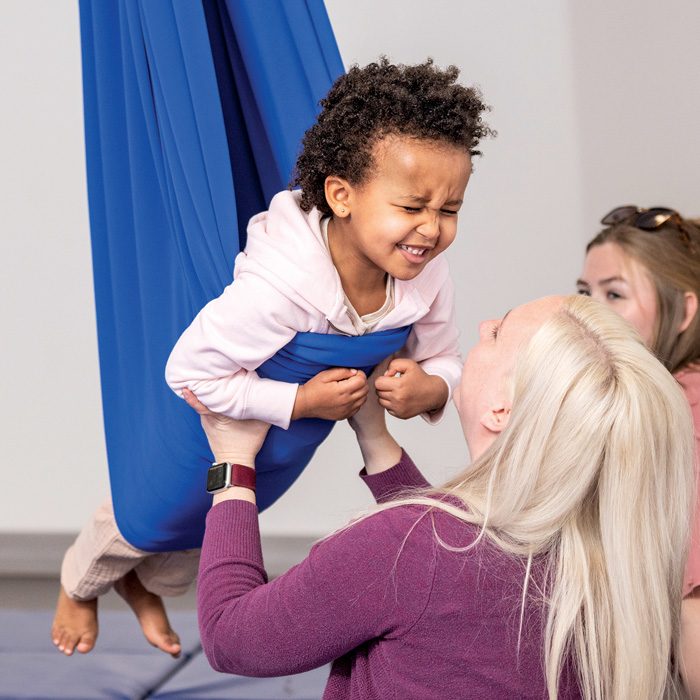
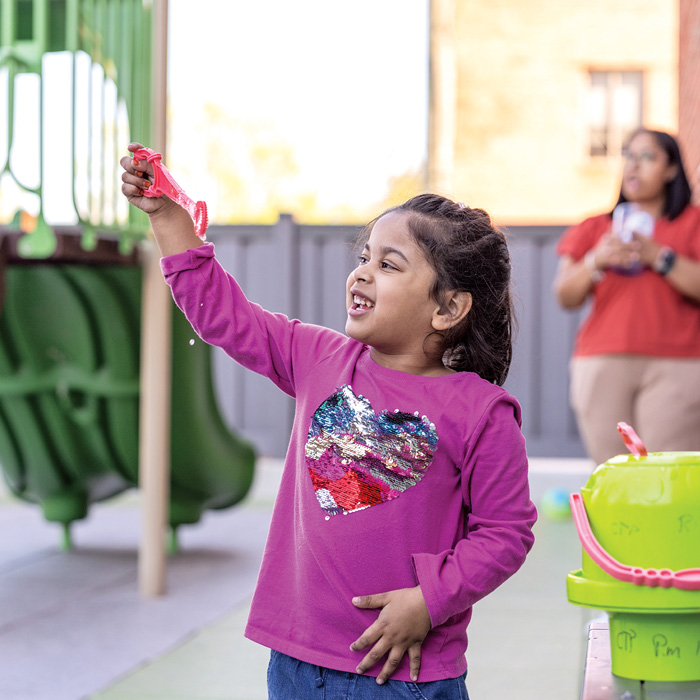
(1) Occupational Therapy Center (2) Teeny Tigers
The Hussman Center’s physical health programming is mostly indirect, offering social opportunities like ping pong and resources on making healthier food choices.
“We support physical health through our cooking programs—sharing information on making healthy choices related to how they’re shopping, what they’re cooking and the amount they’re eating and drinking,” DeHaan says.
The center also offers fitness- and dance-related programs that include movement components to support physical health.
The IWB has programs for older adults—Wellness in Stroke and Head Injury (WISH) and Community Health and Resilience in Parkinson’s (CHRP).
The former program, which is designed for recent or long-term survivors of head injury or stroke, involves a variety of daily living and movement activities. The latter is for individuals with Parkinson’s Disease to maintain their wellness through social/emotional support, client and family education, daily life skill training and a structured, movement-based exercise program.
Exercise doesn’t have to feel like work. You can find fun activities that are still beneficial.
Dan Hollern
“Twice a week, the last hour of [the stroke program] is movement activities,” says Hollern. “Exercise doesn’t have to feel like work. You can find fun activities that are still beneficial. We do a lot of things from yard games or obstacle courses or scavenger hunts.
“Making fitness fun and competitive gets them engaged, and they play off each other well. Being in a group, you’re looking around and thinking, ‘Everybody else is doing it, so I’m going to do it too.’”
DeHaan sees a similar dynamic in Hussman Center participants.
“Even amongst autistic people who have this diagnostic characteristic of ‘being unsocial,’ when they’re in the fitness programs, often I find them chatting, and that boosts overall well-being,” he says. “Your wellness is tied to being active in community. That’s the only way you’re going to grow. At the IWB, we provide that community in a lot of ways.”
Developing research-driven approaches to care
The IWB's role as a vibrant interprofessional learning lab for TU students helps the licensed staff and clinicians provide innovative services and educational programs to participants. It also creates opportunities for ground-breaking research conducted by faculty, staff and students in CHP and the IWB.
The IWB's research spaces and faculty–student collaborations further enhance innovative thinking and problem-solving, positioning TU students to lead through evidence-based practices in a dynamic and ever-changing health care industry.
CHP and the IWB are integral parts of the university's push for the Carnegie R2 research classification. There are spaces throughout the IWB for research that can potentially improve systems and practices in health care while also contributing to changes in culture and improvement of outcomes.
Educating TU students
Making a lifelong impact is also a goal for the directors when it comes to the TU students working under clinical supervision or participating in Hussman Center programming.
“We reach out to the [outside] community, but there’s such a huge component of student education,” Gebhardt says. “We’re educating future clinicians. At the Hussman Center, the TU students come from all over the university, taking an undergraduate class called Individuals on the Autism Spectrum.”
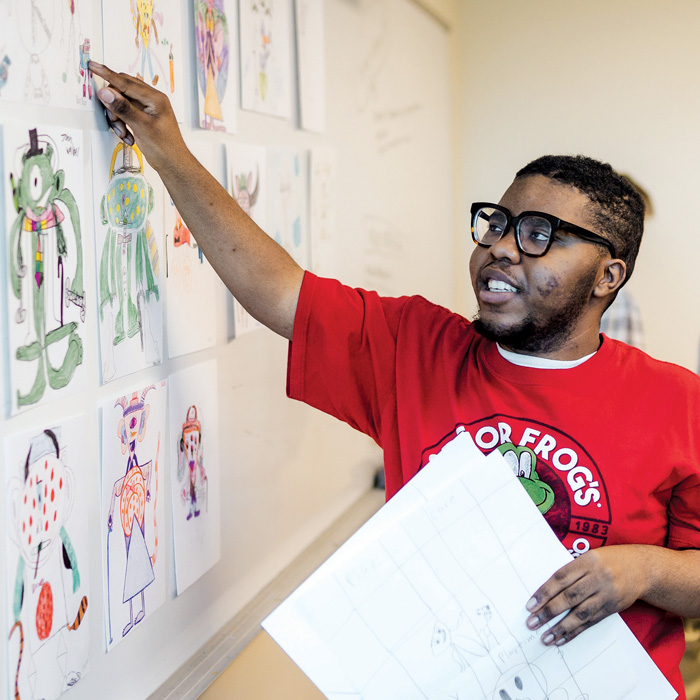
Their role there is to co-participate and develop a sense of allyship with autistic and neurodiverse people in what they navigate on a day-to-day basis.
“We’re respecting autistic individuals for whoever they are and walking alongside them wherever they are,” DeHaan says.
All four directors emphasize learning how to talk to clients and patients is a key skill for students to develop, and at the IWB they have opportunities to practice communication skills in a highly supportive and mentored environment before going to off-campus placements or starting a full-time job.
“The textbook may say [a patient has] a particular type or degree of hearing loss, but how that impacts the individual can vary greatly based on their environments and interests,” Kozlowski says. “We spend a lot of time teaching the students how to ask patients about their lifestyles and their environments to learn the information they need.”
Occupational therapy students simulate and practice skills learned in the classroom on each other. But working with clients in the IWB gives them a new perspective.
“In class, we talk about what muscle tone is, but [students] don’t really know until they experience it on a client,” Hollern says. “One of the most impactful things I’ve heard a student say was how much their participation in the WISH program helped prepare them for their full-time field work.”
Paying it forward
Community connection provides essential emotional and practical support, acting as a buffer against life’s challenges and, working in tandem with wellness, significantly enhancing overall health and happiness.
This is true whether it’s an IWB participant or a TU student working in the centers.
They receive first-hand experience in practicing health care best practices, learning to be an ally and collaborating in interdisciplinary teams to help center participants live their best lives. They learn from their supervisors and the people they help. So when they start their careers there’ll be a connection between the IWB and their former, current and future clients.
With 79% of recent TU graduates staying in Maryland to live and work, those clients are or will likely be members of the greater Baltimore community. Whether it's in a clinical or school setting, taking health and wellness care into area retirement communities like Blakehurst and Edenwald or bringing people together over popcorn and a movie at the Hussman Center, TU faculty, staff and students play a key role in connecting with the community and improving the health and well-being of residents throughout the region.
“The impact is going to extend so much because the students are going to take what we’re doing here and what we’re focusing on to the community and beyond,” Hollern says.