EDUCATE
The power of summer research at TU
Four faculty members share why they research
From faculty collaborating on innovative projects, to undergraduate students learning how to compare DNA profiles through the TIGURS program, TU’s campus is abuzz with research and creative inquiry.
In 2024-25, Towson reported over 1,300 faculty, staff, and students involved in research and creative inquiry funded through external and internal support.
“Research and creative inquiry thrive year-round at TU, but summer offers faculty and students dedicated time to explore ambitious questions, deepen collaborations and make meaningful progress,” says Sidd Kaza, Vice President for Research at TU’s Division of Research. “External and internal funding, student research stipends help amplify faculty passion to pursue impactful work.”
Meet a few of the faculty members blazing new trails in research at TU.
Studying social determinants of health
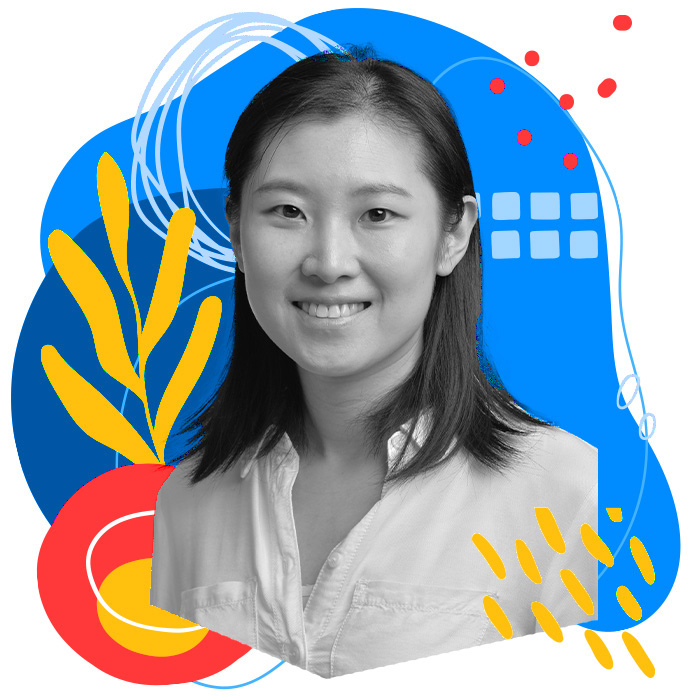
A dedicated health economics researcher in the College of Health Professions, professor Chengcheng Zhang dedicated her summer to collaborating with two faculty members and an undergraduate research assistant on public health research.
Part of a series of research projects on health economics, Zhang's focus this summer was to refine a manuscript that explores health economics with a focus on late housing payments, financial hardship, and health care access among U.S. adults.
Over the course of 10 weeks, Zhang coached her research assistant on the literature review development and review process.
This was a totally different experience compared to my past research projects. Using the summer to conduct this research made the process very efficient.
CHENGCHENG ZHANG
Using the summer to refine her manuscript and take on a research assistant enabled Zhang to not only make headway on her research, but to inspire a future researcher in the making.
"I feel good when I can provide students with useful experiences [like research assistantships]," Zhang says. "When they learn something new, they have more confidence later on in their academic and professional careers."
Mentoring forensic science research
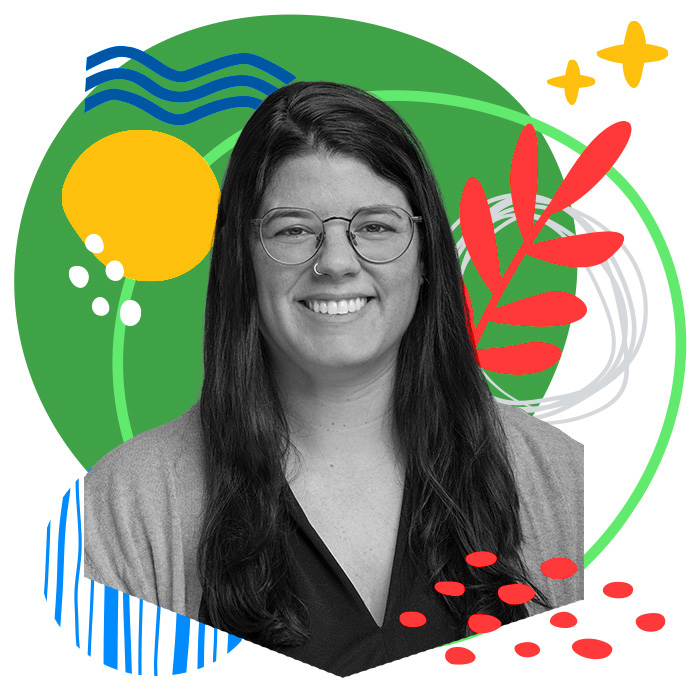
As a mentor for Towson Inquiry Grants for Undergraduate Research in the Summer (TIGURS) in the Fisher College of Science and Mathematics, Filipa Simao took on a mentee to explore the genetic diversity of human populations and the impact of forensic databases.
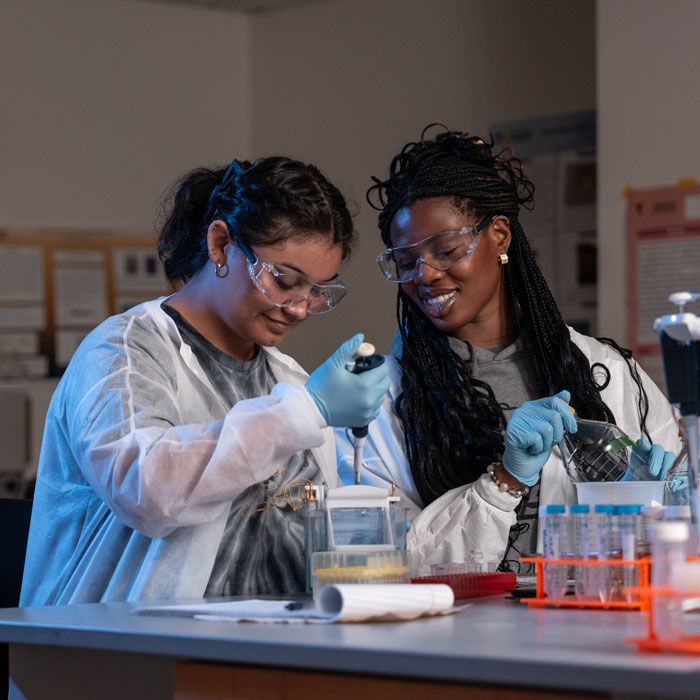
Over the course of the five-week program, Simao’s mentee learned crucial lab techniques involved in forensic research including genetic profile database analysis, obtaining DNA samples, analyzing sample diversity and ethics considerations like informed consent and the Institutional Review Board approval process.
Summer research allows immersion that is not possible during regular class time. Spending three to six hours a day researching together, I really get to see their confidence grow in using lab technologies.
FILIPA SIMAO
Simao’s student explored one type of genetic marker and learned how to conduct genotyping – a powerful lab technology used to detect small genetic differences. But beyond the lab work, Simao also imparted the importance of critical thinking and public speaking skills to her student.
“After you’ve made a match, you must determine how strongly you believe the DNA profile matches that particular person. That’s where genetic databases come in,” Simao says. “These databases can help you determine where a genetic profile is rare or common within the human population you’re viewing.”
Research techniques and processes, like those Simao taught her student, are fundamental for any young researcher aiming to work in forensic science and Simao is grateful to be part of that learning process.
Learning from West African pedagogy and culture
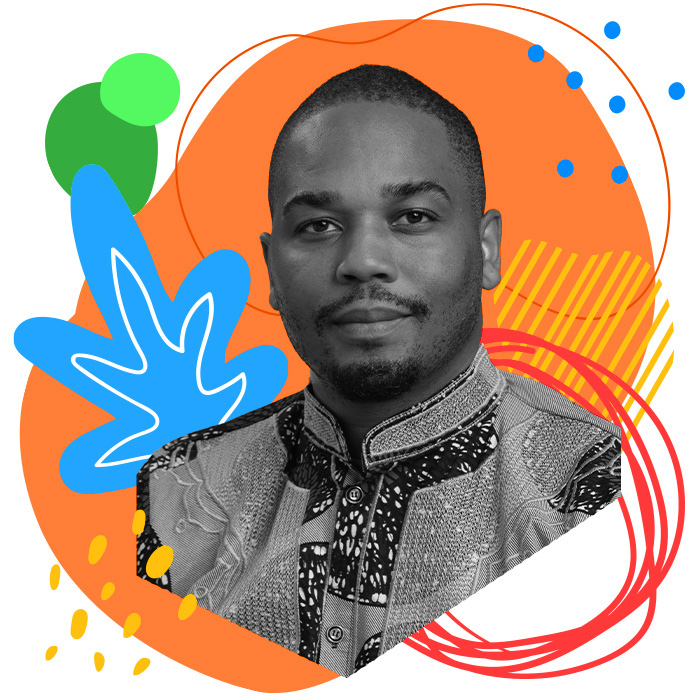
A lifelong learner and researcher at heart, assistant professor Kofi LeNiles collaborated with fellow professors in the College of Education this summer on two pedagogy-focused research projects.
Through a grant he received from TU's Office of Sponsored Programs & Research, LeNiles is researching heritage knowledge among current and former school principals.
Case studies focused on the leadership experience of these academic leaders will enable LeNiles and fellow TU researcher and assistant professor Paul Koh to better understand what principals navigate as leaders and how they address challenges to improve their pieces of the education system.
"We take the approach of understanding leadership as a well of knowledge," LeNiles says. "We want to know what challenges they've experienced, how they solved them and how they applied that knowledge moving forward."
Whatever I research, I turn it into a children's book so that is is accessible to a variety of audiences – beyond academia.
KOFI LENILES
In collaboration with fellow TU assistant professor Deneen Dixon-Payne, LeNiles visited Ghana this summer to research "ways of knowing," in West African education - an element of the Theory of Knowledge that refers to the various methods individuals use to acquire and interpret knowledge - in other words, how we come to know what we know.
"[We're exploring] what can we learn from that data related to pedagogy, culture and the relationship between how we teach ways of knowing and what we can learn from how Ghanaian educators teach STEM," LeNiles says.
The takeaways from his visit to Ghana, LeNiles says, will be made accessible to children and teachers alike through a series of children's books.
Machine learning models in macroeconomics

Macroeconomics professor Dr. Shantanu Bagchi is no stranger to going down rabbit holes of research and creative inquiry.
In his 12th year with the College of Business & Economics, Bagchi leveraged a departmental summer research grant to kick off a multi-year investigation into machine learning models (MLMs) in the context of public finance analysis.
"The beauty of machine learning is that we have access to data that we didn't have ten years ago, and that allows us [economists] to be more nuanced in our approach," he says.
Bagchi spent most of this summer locating data sets, writing an extensive list of MLM programs and software and using the data to train MLMs – the kind of detailed work that would be impossible to fully focus on while investing in student success during the semester.
There is no way I could do this kind of detailed research during the school year. This summer, I learned the vastness [of data collection models] – the summer allowed me to dedicate large amounts of time to this work.
SHANTANU BAGCHI
Accustomed to using "rational models" in economics research – a theoretical framework that assumes people make logical decisions to yield maximum personal benefit or satisfaction – Bagchi’s ever curious mind led him to question how MLMs might yield deeper insights on a larger scale.
“I thought, if I were to try and do some of the public finance analysis investigation using MLMs, then I can propose that we take machine learning more seriously in the policy domain,” Bagchi says.
As his research progresses, Bagchi is hopeful his findings will create a general understanding within policy making circles that – when it comes to policy analysis – it's better to let the data do the talking than theoretical models.
"If our goal is to make policymaking effective, we have to do better at using the limited information that exists."

Our Research Impact
Research at TU is thriving. As a Carnegie Research Colleges and Universities (R3) institution, TU is continuing to move the needle on impactful discoveries and unique research opportunities for undergraduate and graduate students and faculty.
Discover more. Share your research story.
Got Research?
Are you conducting research at TU? Submit your story to the TU Newsroom for the opportunity to have your research impact shared with the greater TU community and beyond.