EDUCATE
Building on a legacy
In honor of Black History Month, four campus leaders share how they're moving TU forward and paving the path for the next generation.
Like our trailblazers who paved the path for generations of Tigers, leaders at TU continue to enhance student success, inspire professional and personal growth and break financial barriers to education.
Read on to learn how four of our campus change-makers are supporting the TU community in ways that will shape the student and staff experience for generations to come.
Empowering student well-being
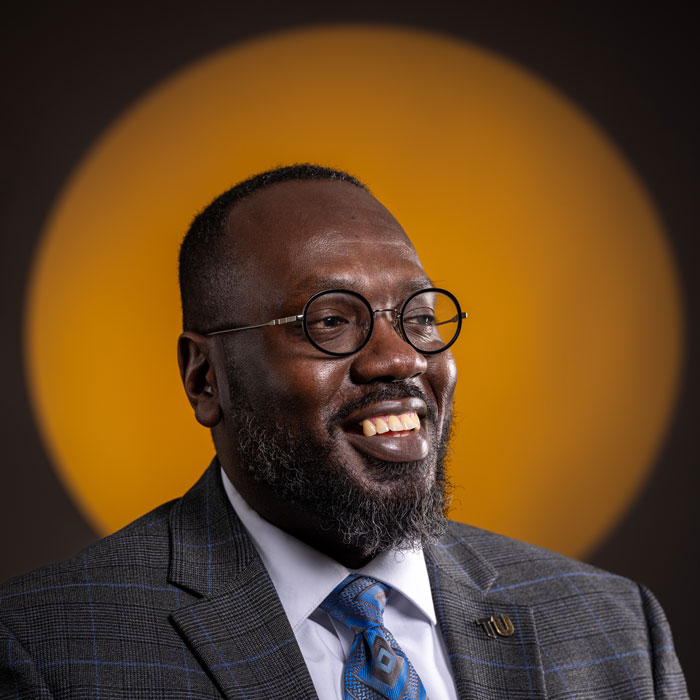
The leaders of today are often influenced to empower others because of those who inspired them. Vernon J. Hurte, senior vice president for student affairs and university life, chose his career path in large part due to the faculty, staff and students who supported him throughout his undergraduate experience as a first-generation college student.
Hurte’s English professor, Mary McManus, inspired and challenged him, and on tough days, Renardo Hall—director of housing at the time—raised his spirits, reminding him that people cared about his success and well-being.
In the last several years, Hurte focused on tangible ways to support student representation at TU because to see yourself somewhere is to feel that you can and should be there.
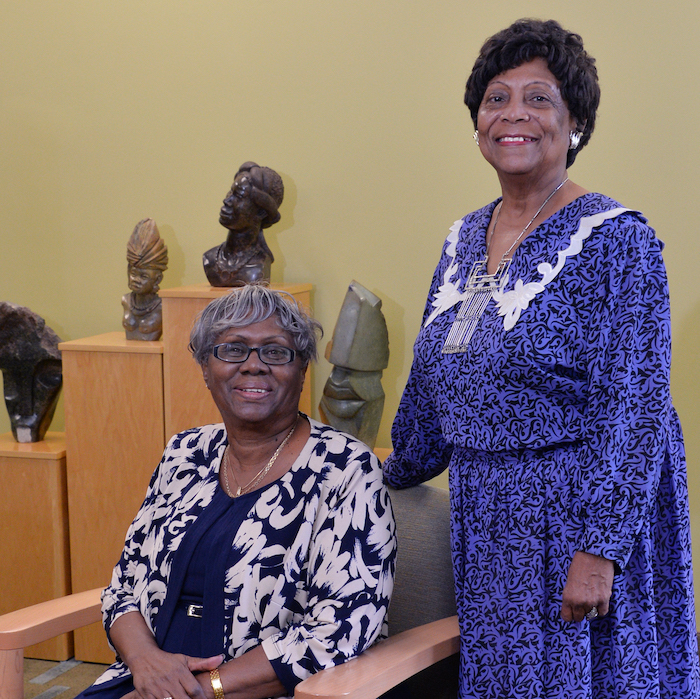
One of those ways was leading the effort to rename two residence halls in honor of TU trailblazers Myra Harris ’59 and Marvis Barnes ’59, TU’s first Black four-year graduates.
"When we talk about belonging and students feeling at home, it was important for me that students from all backgrounds are in some way able to see themselves in the campus community and the physical space," Hurte says. "I wanted to pull from the example of strength, courage and tenacity that those two women showed at that time."
When he arrived at TU, it was important to Hurte to focus on the many nuanced factors that impact student success—including food insecurity and access to affordable education and mentorship.
"Having conversations with students, asking them, ‘what are your hopes and dreams,’ and helping connect them to others in our networks, those are the things that really energize me," Hurte says.
Given that nearly 40% of TU students are Pell Grant-eligible, Hurte and his team are hopeful of continuing to identify the evolving barriers students face in accessing affordable education and to build on key support resources through campus partnerships and alumni network support.
We're all standing on the shoulders of those who came before us. As a person of color in particular, there have been some leaders who really created a strong foundation of student-centricness. I’ve seen this as an opportunity to continue to build on those wonderful accomplishments that continue student success.
VERNON HURTE, SENIOR VICE PRESIDENT FOR STUDENT AFFAIRS AND UNIVERSITY LIFE
Connecting cultures
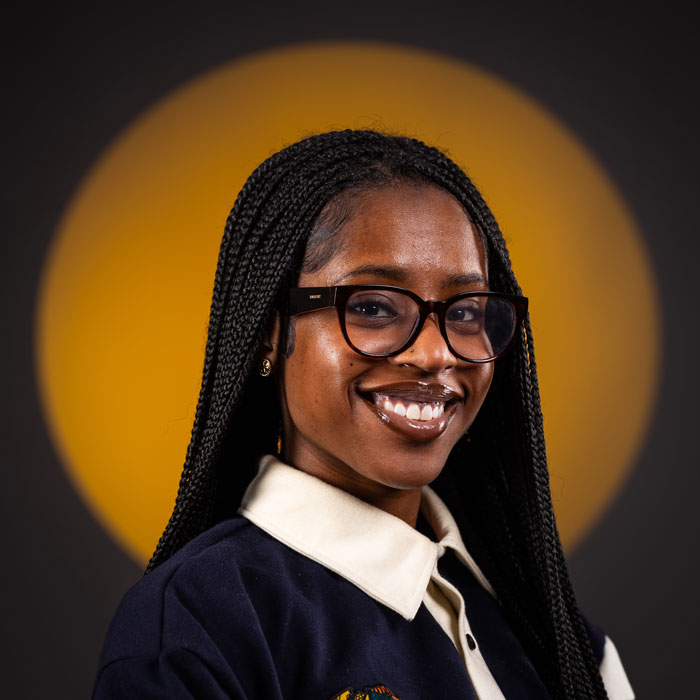
Student organizations become a second home to many Tigers. Senior Ore Olarinde is one.
Entering college, she knew she wanted to remain connected with her culture. Through the African Diaspora Club (ADC), she has explored other African cultures while staying grounded in her own Nigerian culture.
ADC fosters community at TU by bringing together African students and celebrating the diversity of African cultures in the U.S. and abroad.
As a freshman, Olarinde attended ADC’s signature event—Explosion, a celebration dedicated to myriad African cultures present at TU. The energy and pride present at Explosion cemented her belief that she’d found her community at TU.
Olarinde quickly involved herself with the leadership team, first as the social events chair, then as vice president, and now as president. In collaboration with ADC's team, Olarinde meaningfully engages members in community service, providing care kits for local homeless shelters and hygiene supplies for children in Africa.
The experience she had attending Explosion and making friends through ADC has remained close to her heart. "To me, Explosion is a way to celebrate not only the African community, but also expand to the broader Black community at TU for years to come," Olarinde says.
As president, Olarinde wants to make the organization and its events as meaningful to others as they were to her. "By contributing to spaces like this, providing my voice and being a resource, I can leave an impact of connection, support, and empowerment," she says.
I desire to leave a lasting legacy for the African community. My time here at TU and with ADC has been a testament to me of the power of community and its ability to transform. The connections we make today and the support we have today will play a role throughout our current season. You will be able to take the connections that you build today into future seasons.
ORE OLARINDE, President of the TU African Diaspora Club
Developing a new generation of leaders
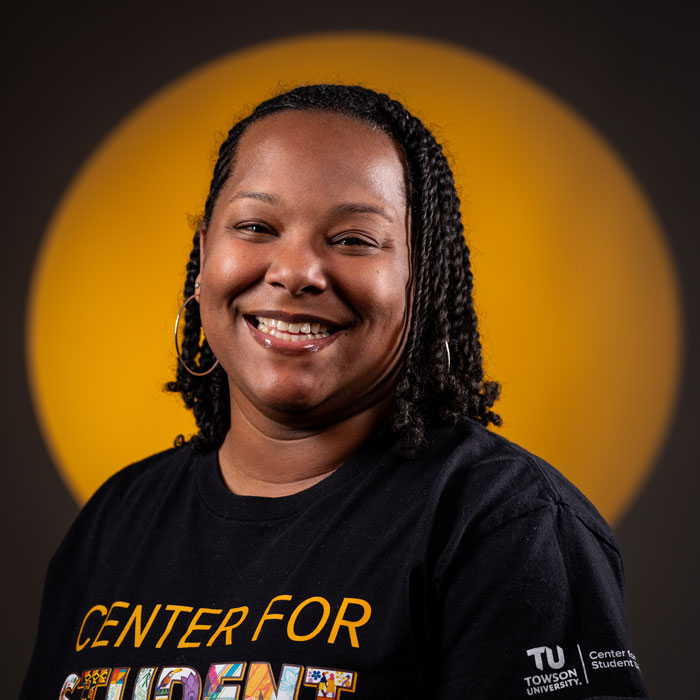
Since 1969, the Center for Student Diversity (CSD) has sought to create a culturally aware and supportive campus community for all students. From personal student support to scholarships, culture-based signature events and more, director Keiwana Perryman takes that mission to heart.
One of the many hats Perryman wears is that of leading the planning efforts for the Black Student Leadership Conference (BSLC). The signature CSD event celebrates Black history, culture and leadership annually on the last Friday of Black History Month.
“We want our students to be able to claim and tell their own stories, honor their identities and recognize themselves as part of a campus movement,” Perryman says. “The Black Student Leadership Conference creates space for students to engage in conversation about their Blackness, what it means to them and how they show up on campus."
In alignment with CSD programming centering storytelling, this year's BSLC theme, Rooted & Rising: Where Culture Meets Power, celebrates the ways Black students draw strength from culture, community and collective memory to inform their own leadership with confidence and purpose.
By collaborating with alumni and student groups like Ujima, Perryman has built relationships with local high schools to enhance mentorship opportunities and bridge generations.
In the spirit of encouraging future generations to embrace their identity and culture, Perryman’s children frequently join her at events she helps host with the Black Student Union, Ujima and the African Diaspora Club.
Perryman inspires her students, just as they have inspired her. Looking ahead, she is excited to support the BSLC's evolution and leverage insights from this year’s programming to strengthen future student leadership opportunities and creative expression.
Being able to provide spaces of reflection, learning and joy for students who look like me is a full-circle moment. In undergrad, I didn’t have someone telling me how to connect, how to celebrate myself, how to access resources and how to take advantage of them. Now, I make sure that students not only have access to these kinds of experiences and opportunities but are surrounded by them.
KEIWANA PERRYMAN, Director of the Center for Student Diversity
Helping students find their voice
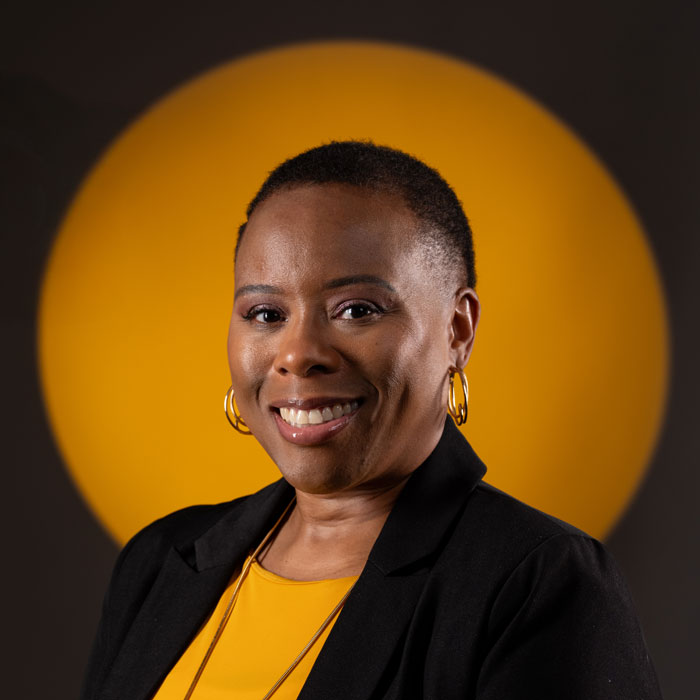
At the root of effective communication is being confident in one's own voice. At TU’s Public Communications Center (PCC), director Kanika Jackson is most energized when helping students harness their authentic voice and become confident public speakers.
“I discovered my love of public speaking my junior year in high school. I didn’t know it would become part of my career, but I’ve always loved good storytelling,” Jackson says. “Now, being able to support students in developing that good communication muscle gives me a great sense of purpose. It not only makes me feel like I’m doing something that matters in the world, it’s also that I’m elevating my place of work.”
The PCC is an environment where students, staff, and faculty can become comfortable being themselves, sit with and listen to their own discomfort, and learn how to make mistakes without judgment.
“We really emphasize getting them out of their seats and out of their comfort zones so they can walk away from their appointment with tangible feedback,” Jackson says.
My goal is for people to become better communicators in a genuine way. Not to communicate like someone else but to be confident communicating in a way that is genuine to who they are. So that they walk into a room, no matter what the context is and because they have been cultivating their communications skills, they feel confident and show up as their most authentic selves.
KANIKA JACKSON, Director of the Public Communications Center
Celebrating Black History & Culture
TU celebrates Black history and culture throughout February and beyond. Learn about trailblazers who forged a more just TU, students, faculty and staff continuing their legacy today, and groups, events and resources connecting a thriving community.