Behind the scenes at the World Cup
U.S. men’s national team performance coach Steve Fell ’05 on what it’s like behind the scenes at the world’s most-watched sporting event
U.S. men’s national team (USMNT) performance coach Steve Fell ’05 is no stranger to elite soccer. The 2000 regional all-American was named 2001 rookie of the year while studying exercise science at TU. He then spent three seasons playing with the Baltimore Blast before getting his doctorate in physical therapy and transitioning to the field of physical preparation coaching.
Fell rose through the ranks at professional soccer clubs like MLS’s Houston Dynamo and USL’s Phoenix Rising and Sporting Club Jacksonville before opening his own clinic and getting a call to join the USMNT, home to the most elite soccer talent in the country.
As he prepares for his second FIFA World Cup with the team, Fell gave us a glimpse at how he scored his dream job and what it’s like behind the scenes at the world’s most-watched sporting event.
What’s it like to work with the men’s national team?
While the spotlight is on us the strongest during the World Cup, we’re on the road 110 to 120 days every year for training camps, matches and exhibitions.
We typically have a month-long camp in the summer as well as shorter camps every couple of months throughout the year. So you really become like a family.
We’re flying across the world together, competing in front of 80,000 people, experiencing all the highs and lows that come with that. The relationships you form through those experiences are really special.
What goes on behind the scenes during the World Cup?
We’re set up at a hotel that will serve as our hub for the tournament. We bring in everything the team needs, from recovery labs to performance and medical rooms, a coffee bar, a player’s lounge and even a barbershop.
The high-performance team has daily meetings to go over player health and work individually with players. We have a full range of therapies, including cryo chambers, hyperbaric oxygen chambers, vibration plates and special sleep support. We want players to access every treatment that can give them an edge.
The tournament lasts 39 days. How do you keep players healthy through it?
It starts with establishing good relationships with the players’ home clubs long before the tournament begins. Our high-performance staff has done a great job of getting the information flow going, so we have a history of the players’ training levels and baseline metrics. That way, we understand where they’re at when they first get to camp and can hit the ground running with preparing them for upcoming matches. It also enables us to flag when they’re over or under their typical threshold and support accordingly.
Are the players close?
Yes! There’s a misconception that the players don’t know each other very well because they play for different pro clubs. The truth is, they all came up through the youth systems together and have known and played with each other for a very long time. It’s a close-knit group, and it’s very special for all of us to be playing in our home country.
What advice do you have for others trying to score their dream gig?
Invest in yourself, develop the ability to endure challenges and be good to work with.
After graduating from TU and then getting my doctorate in physical therapy, I started practicing in an outpatient clinic. I noticed there was a big gap between the continuum of rehab to performance—which was something I’d experienced myself as an athlete. I wanted to help bridge that gap, so I started working at TU as a volunteer strength and conditioning coach.
Taking on that role in addition to my outpatient work was a challenge, but it led to progressively bigger roles working with collegiate and pro athletes, which led to the call to join the senior national team.
You put yourself in the right places, make good impressions on people and good things will happen.
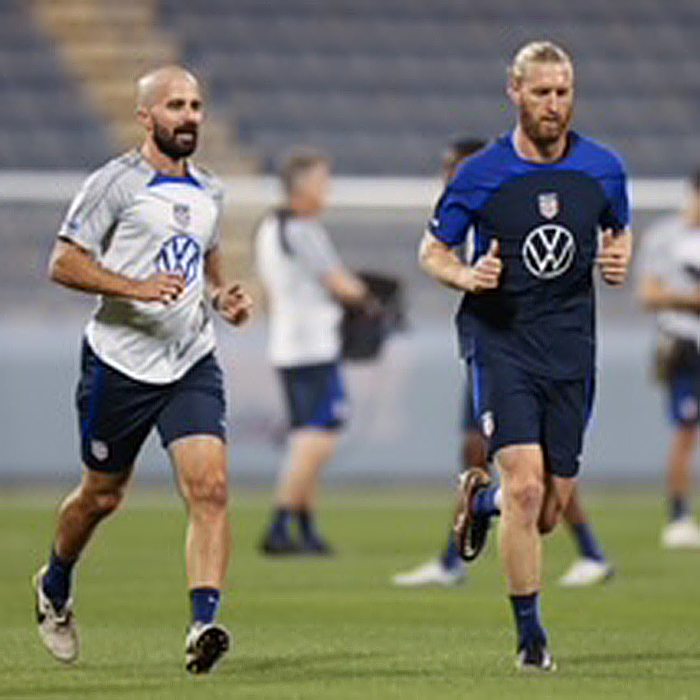
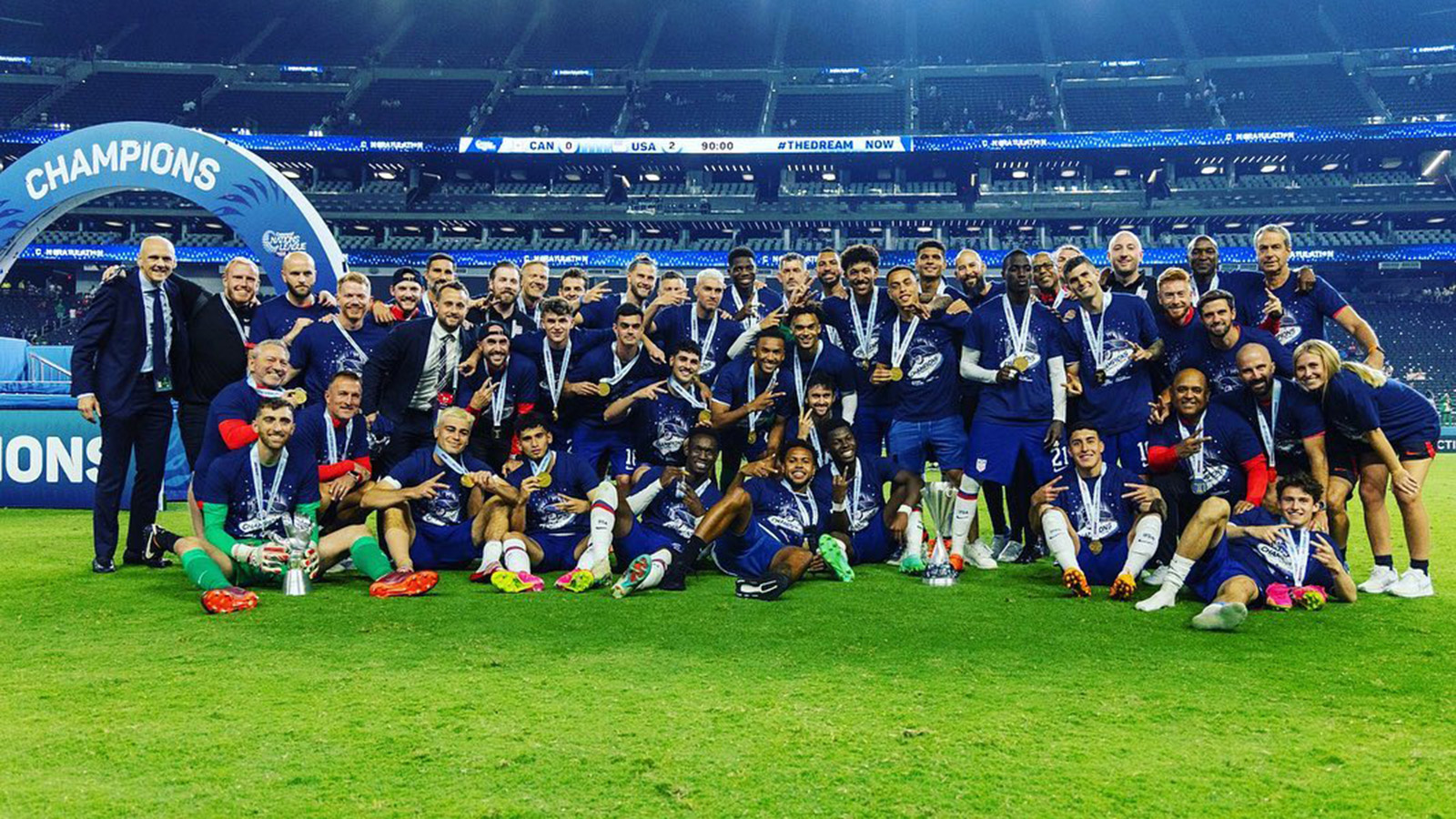
From left: Fell with USMNT captain Tim Ream; Fell (middle right) celebrating alongside the team after a win. Photos courtesy of Steve Fell.