Inside TU’s program to promote girls in STEM
How a campus and community program is helping kids from across the area learn more about computing, artificial intelligence and cybersecurity
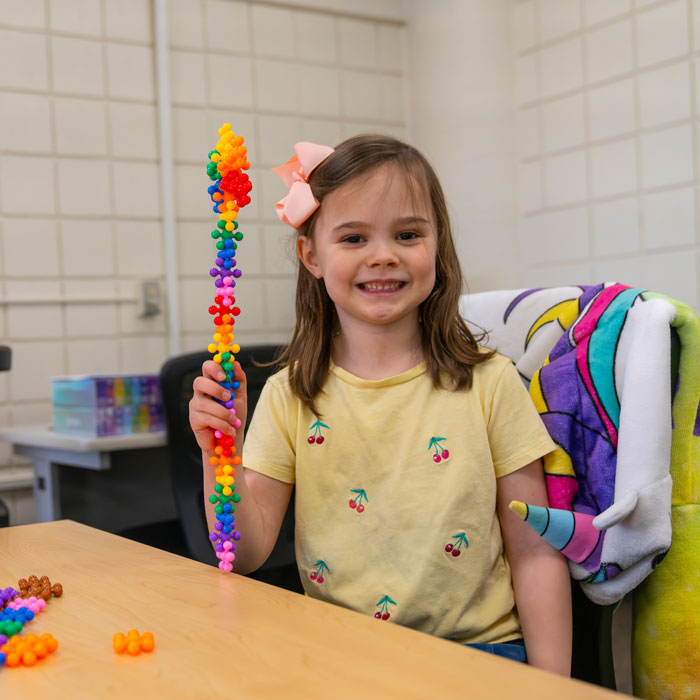
Most Saturdays at Towson University are quiet. But every other weekend, classrooms inside Hawkins Hall buzz with whirring robots, clicking keyboards and the excited voices of young girls learning new technologies .
That’s when Towson University and the College of Education host the Girls Computing and Cybersecurity Clubs, a free program facilitated by TU faculty and students for local girls ages 4–18.
The program introduces participants to computing, artificial intelligence and cybersecurity through hands-on activities that focus on solving real-world challenges.
The program was created by Mahnaz Moallem, professor and chair in COE’s Department of Learning Technologies, Design and School Library Media.
The catalyst for this initiative was Moallem’s research showing women remain significantly underrepresented in cybersecurity and technology careers, thus making early exposure programs like this one critical to building future talent pipelines.
“Many of the girls who are attending our enrichment clubs do not have access to similar opportunities in their schools and communities,” Moallem says. “Furthermore, bringing girls and their parents to campus fosters tangible goals and aspirations to pursue studies in STEM fields and education.
“We have female faculty and female teaching assistants working with girls as mentors, helping them establish identities in the field and improve their sense of belonging.”
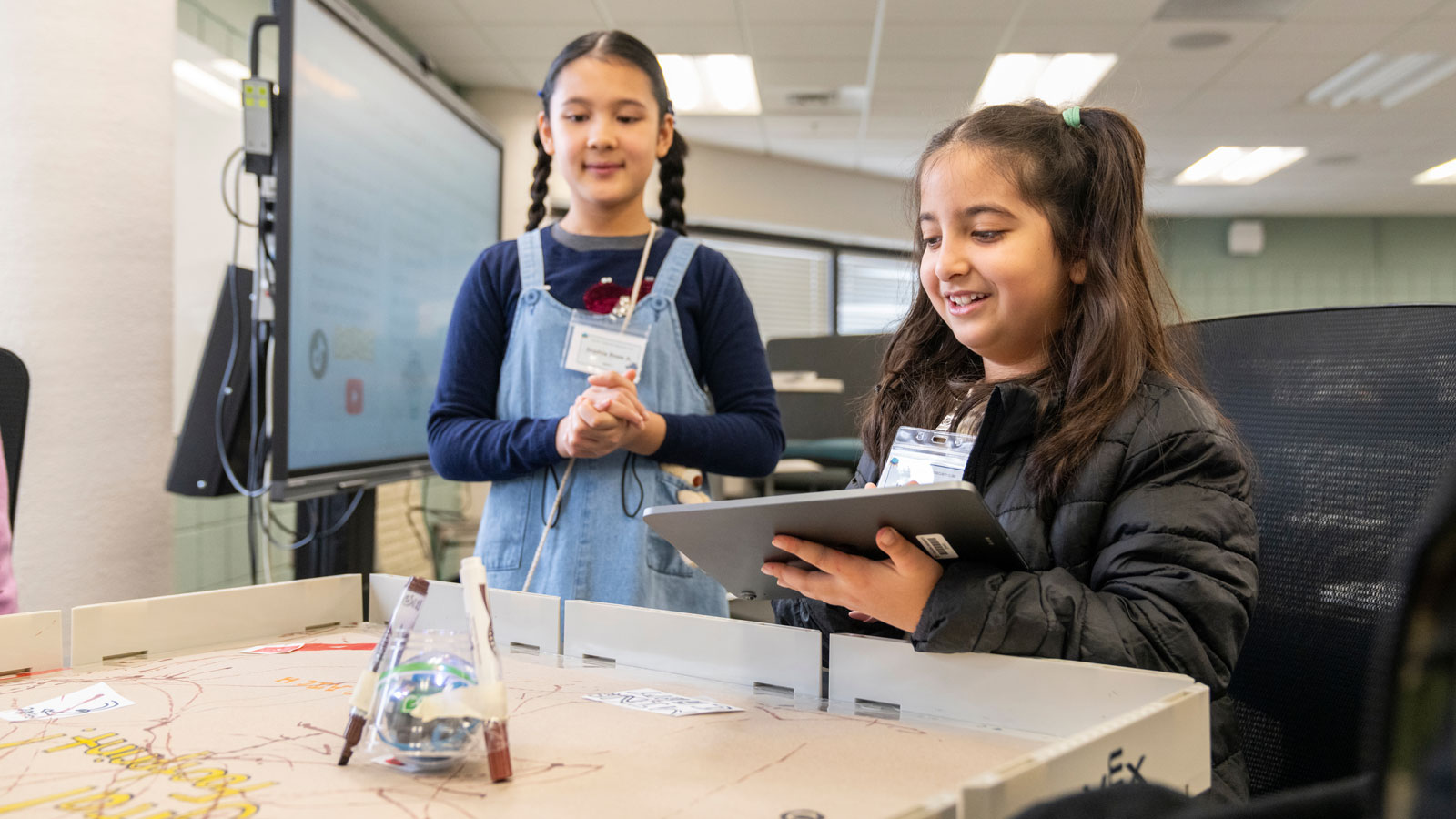
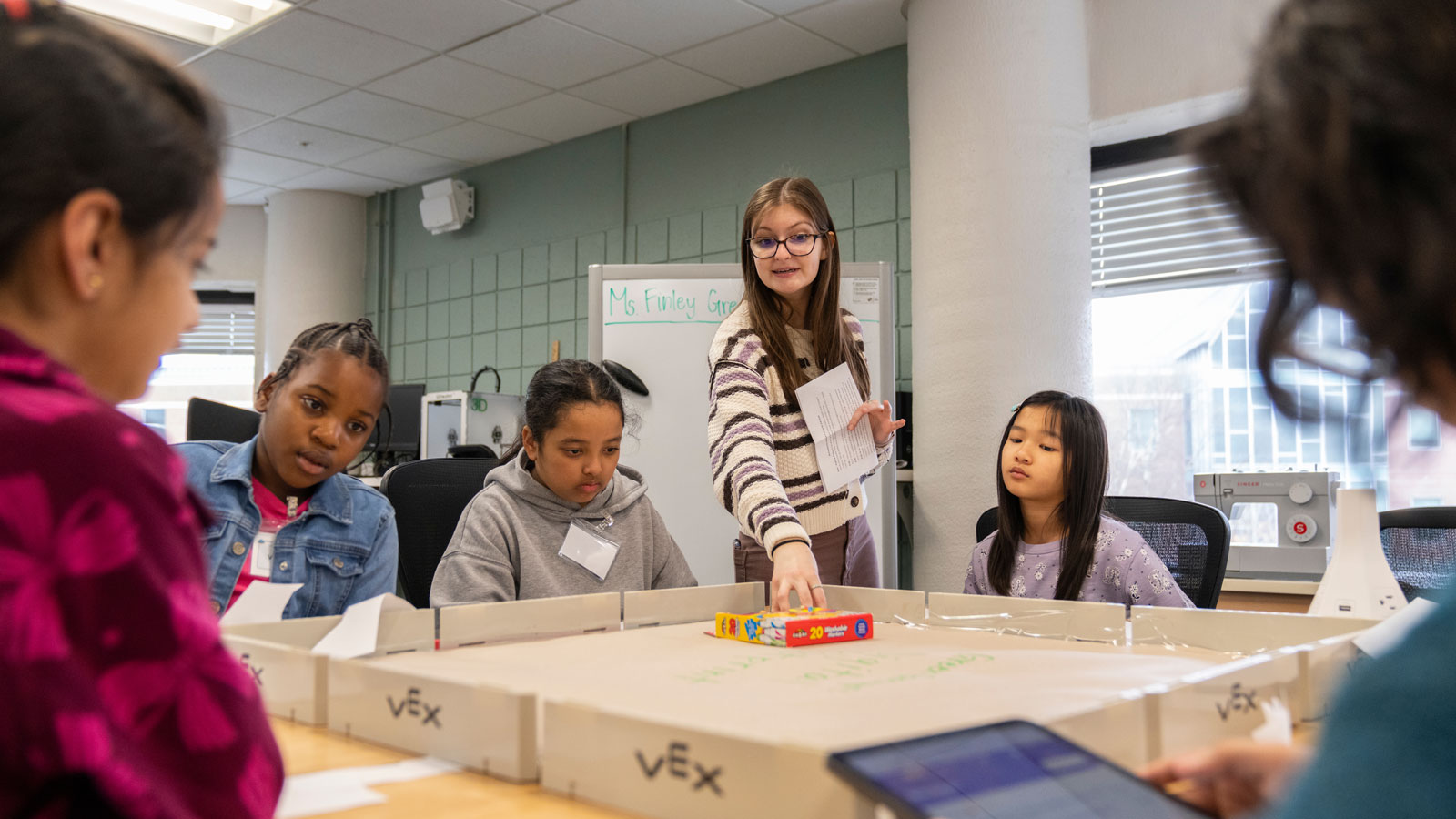
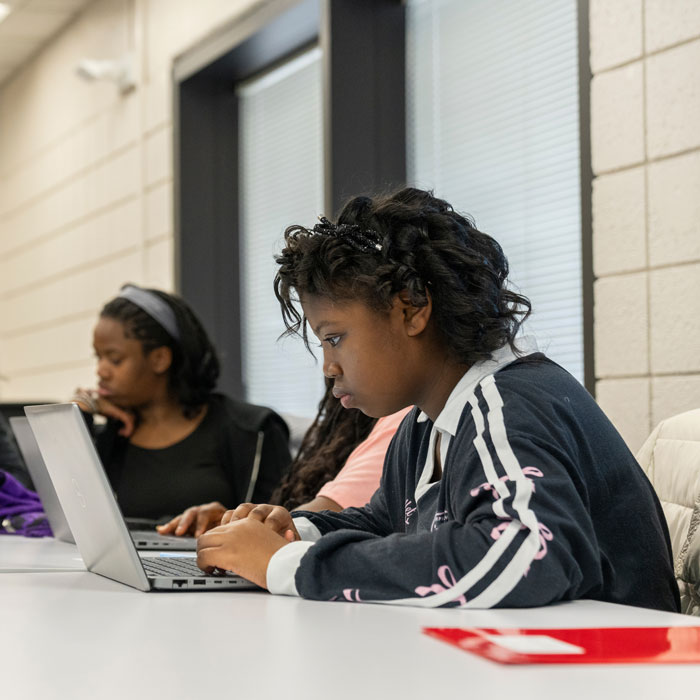
Top: Two students control a robot from an iPad, doing an exercise to understand online safety. Bottom Left: Junior elementary education major Finley Curtis gives students instructions. Bottom Right: Several high school students work on a coding excercise during the start of the program.
Support from across campus
The idea for a computing and cybersecurity program came in 2020.
Early financial support came from the TU Foundation. Subsequently the project received strong support from Laurie Mullen, dean of the College of Education, as well as parents who asked Moallem and her team to continue providing the opportunity.
After two years, when the TU Foundation grant ended, Mullen decided to support the initiative, which was initially focused solely on computing and the elementary age group.
In 2024, Mullen nominated Moallem and the project for the University System of Maryland’s Elkins Professorship Award. Moallem won the award, which allowed her to expand the project to three groups and broaden the curriculum to include AI and cybersecurity.
"Programs like this are exactly how we change the future of STEM—by giving girls early, meaningful access to technology, mentorship and a sense of belonging," Mullen says. "What we’re seeing here isn’t just skill-building—it is identity and opportunity taking root.
"This is another example of how the College of Education at Towson University is redefining educational excellence in new and innovative ways."
The program has continued to grow over the years. Last spring 44 girls participated, with that number growing to 67 during the spring 2026 semester.
“I am so excited to see our impact on girls’ confidence and interest in the STEM fields,” Moallem says. “It is also refreshing to see how much we impacted parents and their views on the role of their daughters in STEM fields and their confidence that their daughters are as good, if not better, than boys when it comes to computing and related subjects such as math and science.”
TU student experience
The program also offers valuable experience for several TU students who run and design activities and gain experience working with children.
I’m able to continue working on my craft and exploring new ways to present materials. I was able to take what I learned here and prepare for my job interview and to eventually get a job.
Olivia Meyers '26
Kayla Williamson, a junior elementary education major, has volunteered with the program for the past three semesters and has seen firsthand its impact.
“It’s been super awesome and empowering to teach them topics like coding and cybersecurity in a welcoming environment,” Williamson says. “We want to get them literate about how to use technology appropriately, how to be respectful online and how to have fun with technology.”
Olivia Meyers, a senior early childhood and special education major, works with the pre-K through second grade students in the program. She will graduate this spring and start working at Vincent Farm Elementary School this fall.
For Meyers, working with the students has helped her adapt material for different learners and strengthen her teaching strategies.
“Doing this for three semesters has provided me an opportunity to explore different teaching skills,” Meyers says. “I’m able to continue working on my craft and exploring new ways to present materials. I was able to take what I learned here and prepare for my job interview and to eventually get a job.”
Finley Curtis, a junior elementary education major, works with the third through sixth grade students and is student teaching with Baltimore City Public Schools.
Working with the program has her looking forward to coming to campus on the weekends and helping even looking towards life after graduation.
“I’m so excited to come here. I call my parents when I'm done and I tell them about my day,” Curtis laughs. “Because of my work at TU, my goal in the future is to establish my own girls coding club within whatever school I work at. I have all these skills now and all this information and these connections; I want to use them to the best of my abilities to help my future students.”
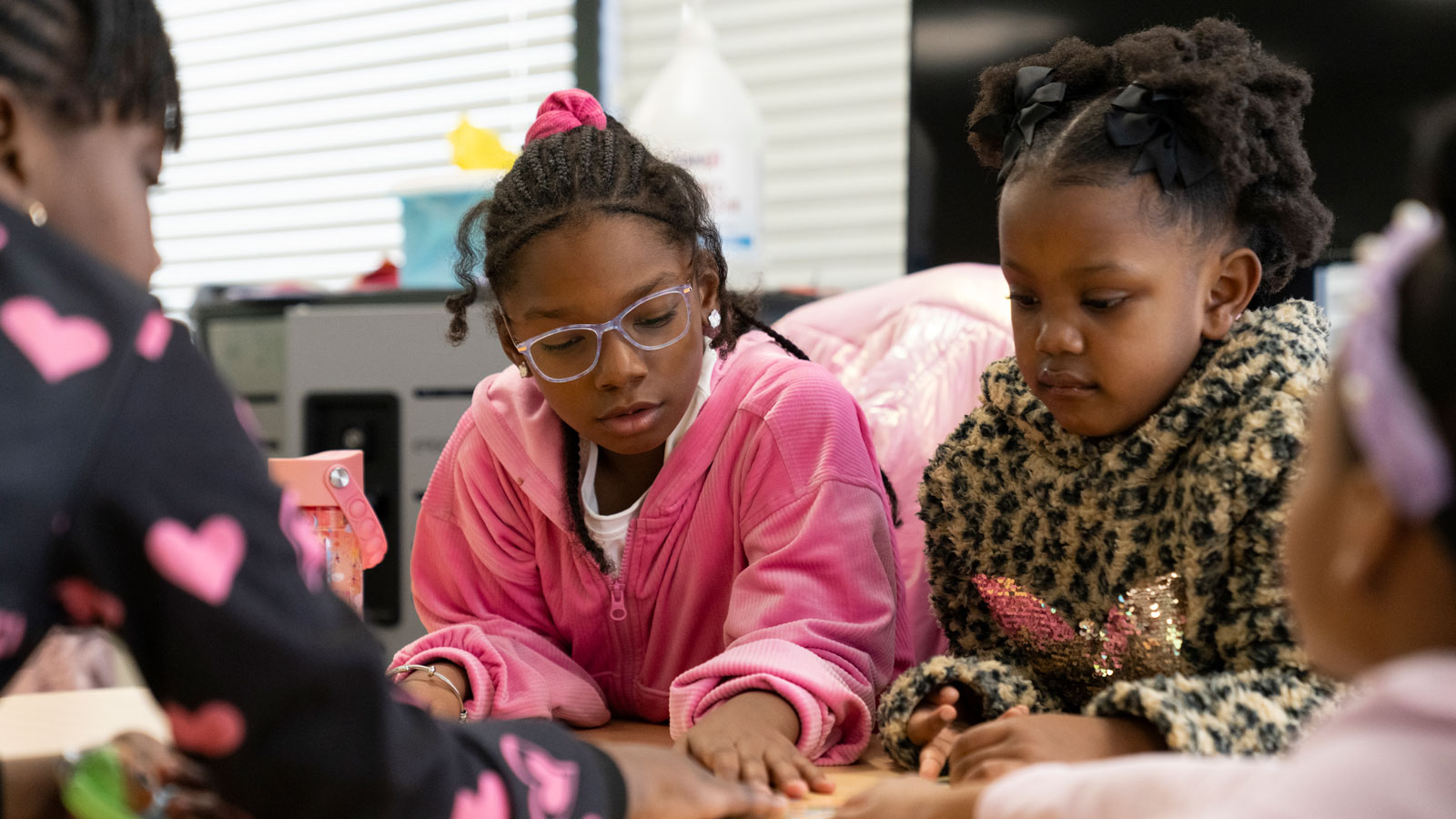
LEFT: Several high school students work on a coding excercise during the start of the program. RIGHT: A local student shows off her work with a exercise to help her understand cybersecurity.
The parents’ perspective
Nathaniel Boston ’12, ’14, has a bachelor’s degree in computer information systems (CIS) and a master’s degree in applied information technology.
He has three daughters participating: Princess, 17; Queen, 11; and Bella, 5. Since starting with the club, he has seen his girls become more aware of how they use technology.
“I work in the Department of Defense, and I know for a fact that cybersecurity awareness is mandatory in this world,” Boston says. “My girls are now more aware of how AI operates. They now understand the importance of it because they understand how our everyday life is affected by technology and how important of a tool technology is.”
Richard Okaka has two daughters, 13-year-old Faith and 11-year-old Lucy, attending the program.
Seeing a university encouraging female students to get interested in cybersecurity and STEM at large, and it’s for free—this is something every parent shouldn’t miss out on.
Richard Okaka
He’s been impressed with how much his daughters have been learning and likes to joke that he didn’t know about these topics until he was in the professional world. He’s also impressed by how much the university cares about the future, especially by offering a free weekend program.
“Seeing a university encouraging female students to get interested in cybersecurity and STEM at large, and it’s for free—this is something every parent shouldn’t miss out on,” Okaka says. “When you look at the TU students and faculty you see their commitment, it’s a complete sacrifice and a complete involvement.”