EDUCATE
Pathways to success in athletic training
TU's athletic training graduate program supports health education in daily life across the country
Most people don’t realize the variety of expertise athletic trainers possess.
Often, they are seen on the field or court, leading to assumptions that they solely provide on-field hydration and injury support to sports-focused athletes. But a glimpse into the Athletic Training (M.S.) Program at TU paints a broader picture of the reality.
A dynamic line of work
Athletic trainers leverage their knowledge in anatomy and physiology to support rehabilitation and double as confidants and voices of encouragement for those on injury prevention or healing journeys.
TU’s tight-knit program takes a holistic approach to training students for careers in the exercise science field through injury prevention, evaluation and assessment of injury and rehabilitation studies.
"There is such a wide range of jobs you can go into as an athletic trainer. Some go into in injury prevention and emergency care with fire departments, while others work with Cirque de Soleil and companies like Frito Lay," says Ashley Santo, Ph.D., program coordinator for the Exercise Science Program and lecturer in the Exercise Science and the Athletic Training programs at TU.
On-campus clinics bolster experiential learning
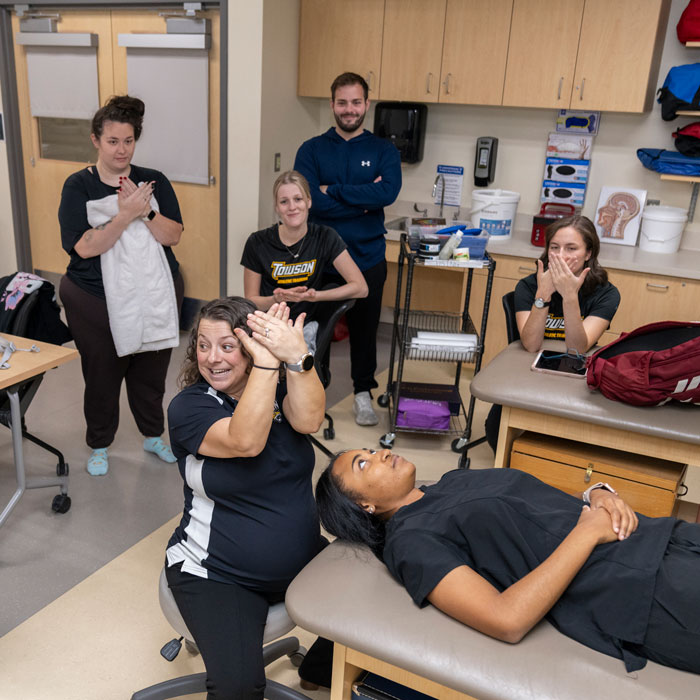
Interactive simulation labs in the Department of Kinesiology help reinforce knowledge gained in lecture-based studies on human physiology and anatomy.
“These practical applications help them ask the right questions: ‘How do I determine if a patient has head trauma?’ and ‘What does rehab entail based on my individual patient’s needs?’” says Ashley Hildebrand, Ph.D., director of the Athletic Training (M.S.) Program.
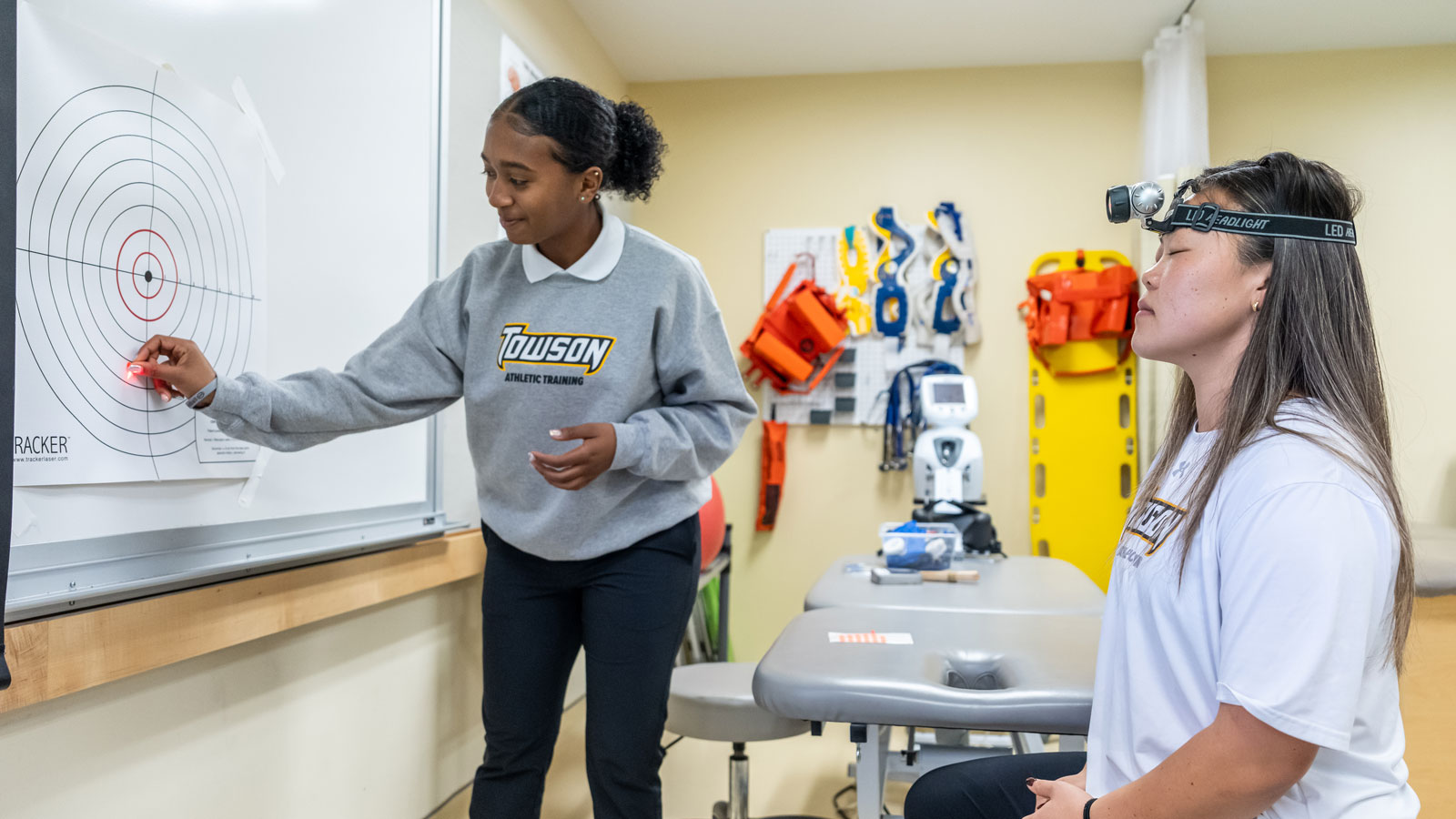
In Santo’s Concussion Evaluation and Rehab Clinic, students review two key tools that can be used to assess impacts from head injuries. Approximately 3.8 million sport-related concussions occur every year in the United States, and an estimated 5–10% of athletes will experience a concussion in any given sports season according to data from the CDC and Athletico Physical Therapy.
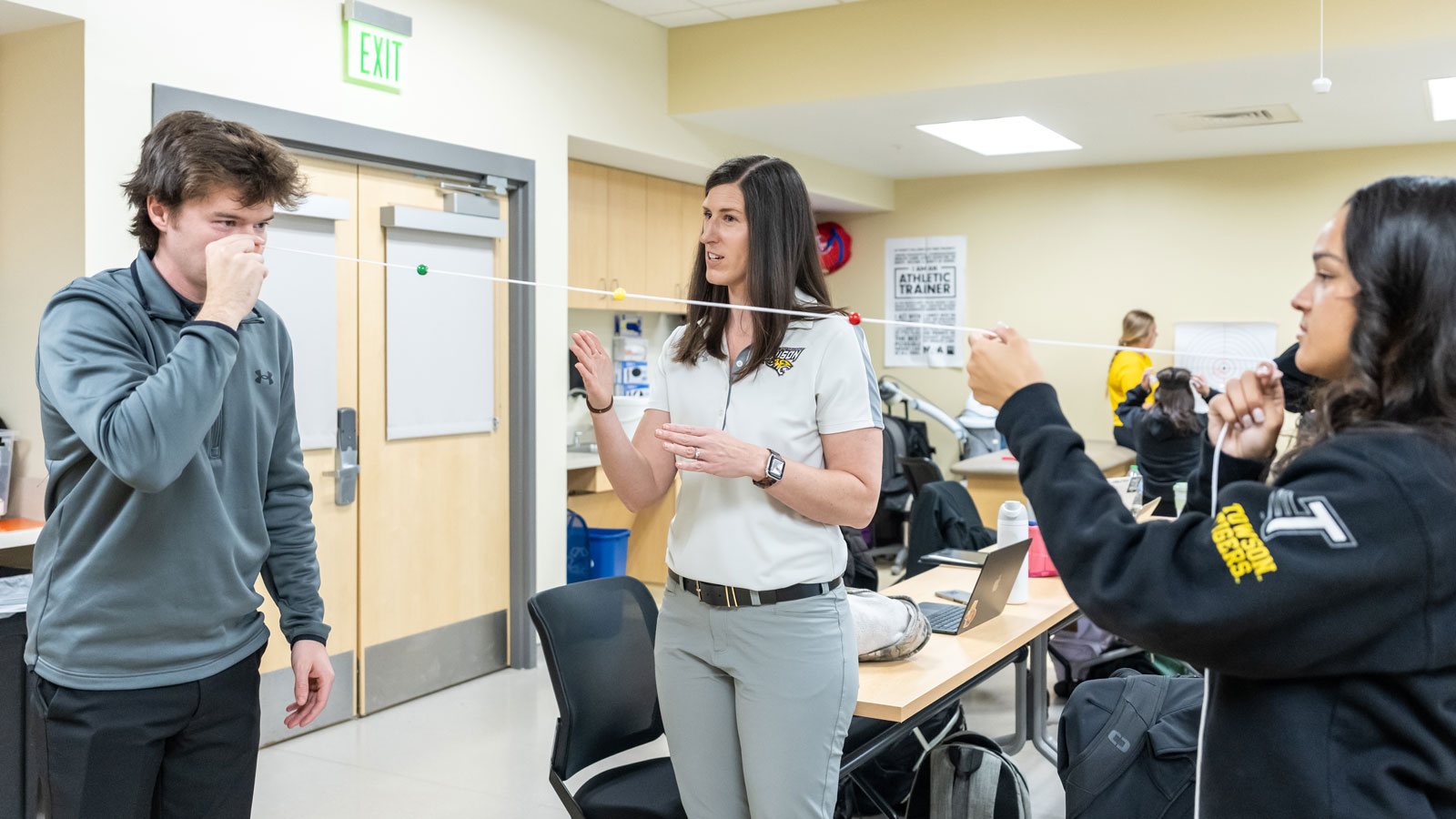
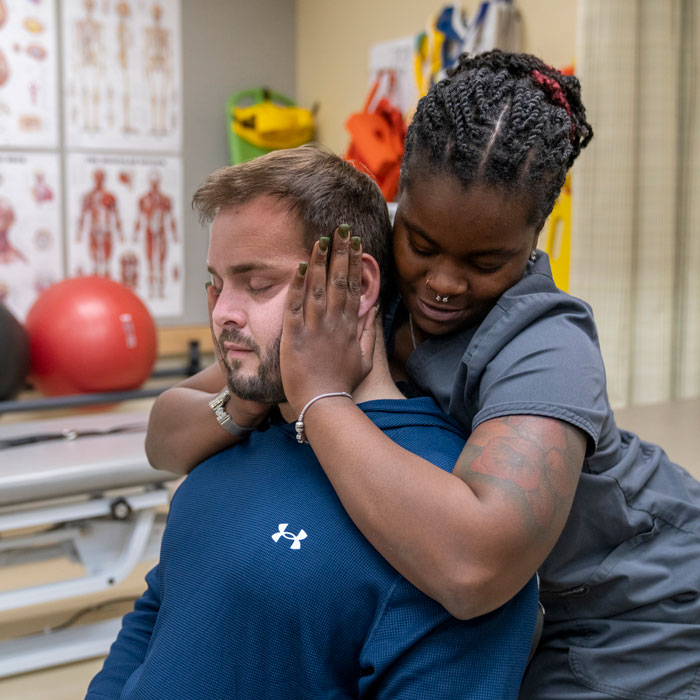
Students practice cervical joint reposition error testing—used to determine if a patient’s neck is contributing appropriately to their spatial awareness—and discuss how to address deficits in that area of the body if a head injury has occurred.
As head injuries can impact mobility and sight, Santo also teaches students how to use a Brock string—a visual rehabilitation tool—to treat visual deficits like an inability of the eyes to work together.
Conversely, Hildebrand's Traction Lab Clinic helps students assess what rehabilitation therapies can be performed on the spine to help alleviate issues like herniated discs or arthritis and what tools will best support a patient's needs.
Becoming competitive in the job market
Students are required to complete five different clinical rotations during their time at TU, enabling them to apply their skills in settings ranging from medical offices and K-12 schools to emergency services.
Serving as athletic trainers with TU’s NCAA Division I teams has helped alumni and recent graduates stand out in an already competitive job market—regardless of whether they find jobs in traditional athletic settings.
“Watching [NFL] football and seeing Kiara Smith ’21 on the sidelines of the [San Francisco] 49ers game over the weekend was such a full-circle moment,” Hildebrand says.
But Devon Lyons '21 works for the U.S. Air Force, conducting search and rescue missions by plane—a career path many aren't aware of when they begin pursuing education in exercise science and athletic training.
"We endeavor to craft a curated experience for our students," Santo says, "to help prepare [them] well for their individual goals."
Get Connected