"Your goose is cooked" is an idiom dating to the 15th century and popularized in the 1800s, that means you're in serious trouble.
Web Exclusive
OK, Boomer: learning about modern slang and its relation to culture and history
TU English professor Sherita Roundtree explains how generational slang evolves, why people use it and how culture and social media shape new slang words.
Many people think of languages and their grammars and usages as unchanging. Yet each day, words and pronunciations enter and leave the lexicon, sometimes forever and sometimes to be revived when a later generation rediscovers them.
TU Magazine staff sat down with Towson University English professor Sherita Roundtree to talk about slang words: what they are, where they come from and why only some become permanent.
[Language] shouldn't be fixed but reflecting where people are and how they are evolving.
Sherita Roundtree
How do you define slang?
I think of slang as being made up of several factors. It can be geographically situated, but it's also something that is culturally situated, depending on your cultural backgrounds or what type of experiences you have had within those communities. But what's most important is that slang is something that is often evolving over time, place and within communities and context.
Why do people use slang?
It is a way of seeing yourself and one another through your language practices. I saw on social media recently someone said “hankering” to their partner. Their partner's from D.C.; they're from the South. The partner didn’t understand the term. It’s the small things that are distinct enough you can pinpoint the region, but you also see yourself in that language.
But there can also be generational language differences. There are certain words or phrases that I don't really know a lot of other people who say, but then when I look at my parents' generation, a lot of them say that.
What is the difference between jargon and slang and dialect and slang?
I would say jargon is more disciplinary or professionally situated. It is specific to a set of ideas and practices that individuals outside of those industries or practices likely don't have the same access to or the need to use.
Non-standardized variants of English, like Black English or Chicana English are their own language forms.
Slang is something that is focused on the communal aspect rather than the disciplinary practice. I see jargon as a type of gatekeeping, where I see slang as an opportunity for connection.
When people talk about non-standardized variants of English—Black English or Chicana English—they sometimes conflate that with being slang. That is inherently wrong because those are their own language forms.
For example, irregardless is very commonly used in Black English, and among some Black communities understood for what it means. In previous standardization of grammar and language, it was incorrect but now has been adopted as a possible usage.
More on the origins of slang
What have been some of the effects of social media on slang and culture?
It has become so widely recognized, the use or the understanding of it is no longer specific to its cultural or regional origins. They are lost in that transmission.
Sometimes it’s like, ‘Oh, this is Gen Z language,’ but a lot of these phrases have origins in Black English and LGBTQ+ language practices. The language becomes flattened—presented as shared knowledge rather than acknowledged that it is often co-opted from marginalized communities. Language should reflect where people are and how they are evolving, but more parameters are necessary to reduce cultural theft.
Why do you think some slang words stick around and the majority disappear?
That is difficult to answer. It might be related to how that term or phrase emerged. If it is some clip of somebody saying something that randomly circulates on the internet, I don't know that that is as longstanding as maybe something that emerged out of a very popular song that has lasted generations.
There has to be something memorable or affecting you can pinpoint in the language that causes it to stand the test of time.
Taking a deep dive: Evolution of cooked
The slang term "cooked" is said to date to the 1500s, and it's meaning has evolved repeatedly since. The modern version of "cooked" originated decades ago from African American Vernacular English and has since spread on social media.
1400s
1790s
The usage meaning exhausted or tired began.
1840s
People began using the single word to mean in serious trouble or difficulty.
1920s
"Cooked" began to be used to describe someone intoxicated or high.
2010s
Around the 2000s–10s with the rise of social media, people used "getting cooked" to mean that their sports team was losing badly.
2020s
Six hundred years after it came into use, "cooked" has circulated widely on social media platforms to mean, once again, someone or something is doomed.
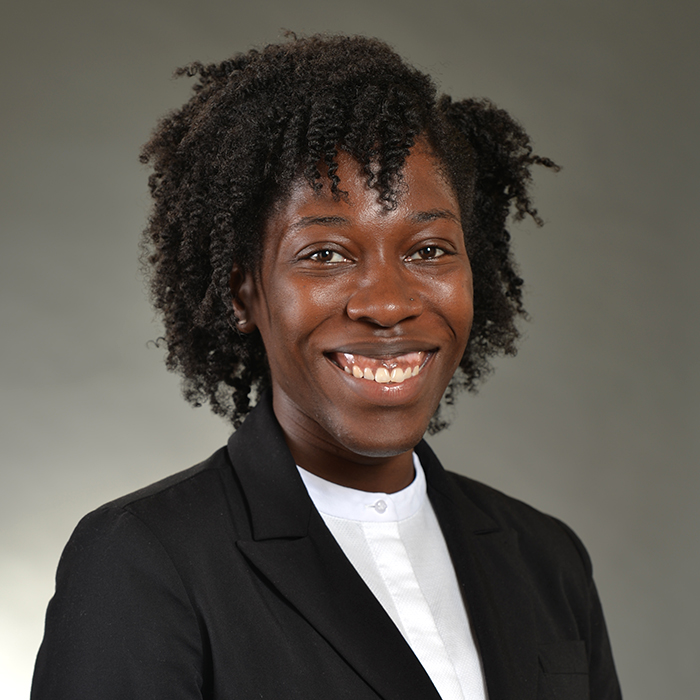
Sherita Roundtree, PhD
Sherita Roundtree is an assistant professor in the English Department. She studies approaches for developing diverse representation and equitable access for students, teachers and scholars who write in, instruct in and theorize about writing classrooms.
Definitions of slang, jargon and dialect
What is slang?
An informal, nonstandard vocabulary composed typically of coinages, arbitrarily changed words and extravagant, forced or facetious figures of speech.
What is jargon?
The technical terminology or characteristic idiom of a special activity or group.
What is dialect?
A regional variety of language distinguished by features of vocabulary, grammar and pronunciation from other regional varieties and constituting together with them a single language.