How one TU student is planting seeds of sustainability
Whether it’s through research or community service, Rebecca Harasymczuk is ready to change the world
Rebecca Harasymczuk isn’t waiting to make a difference—she’s already doing it.
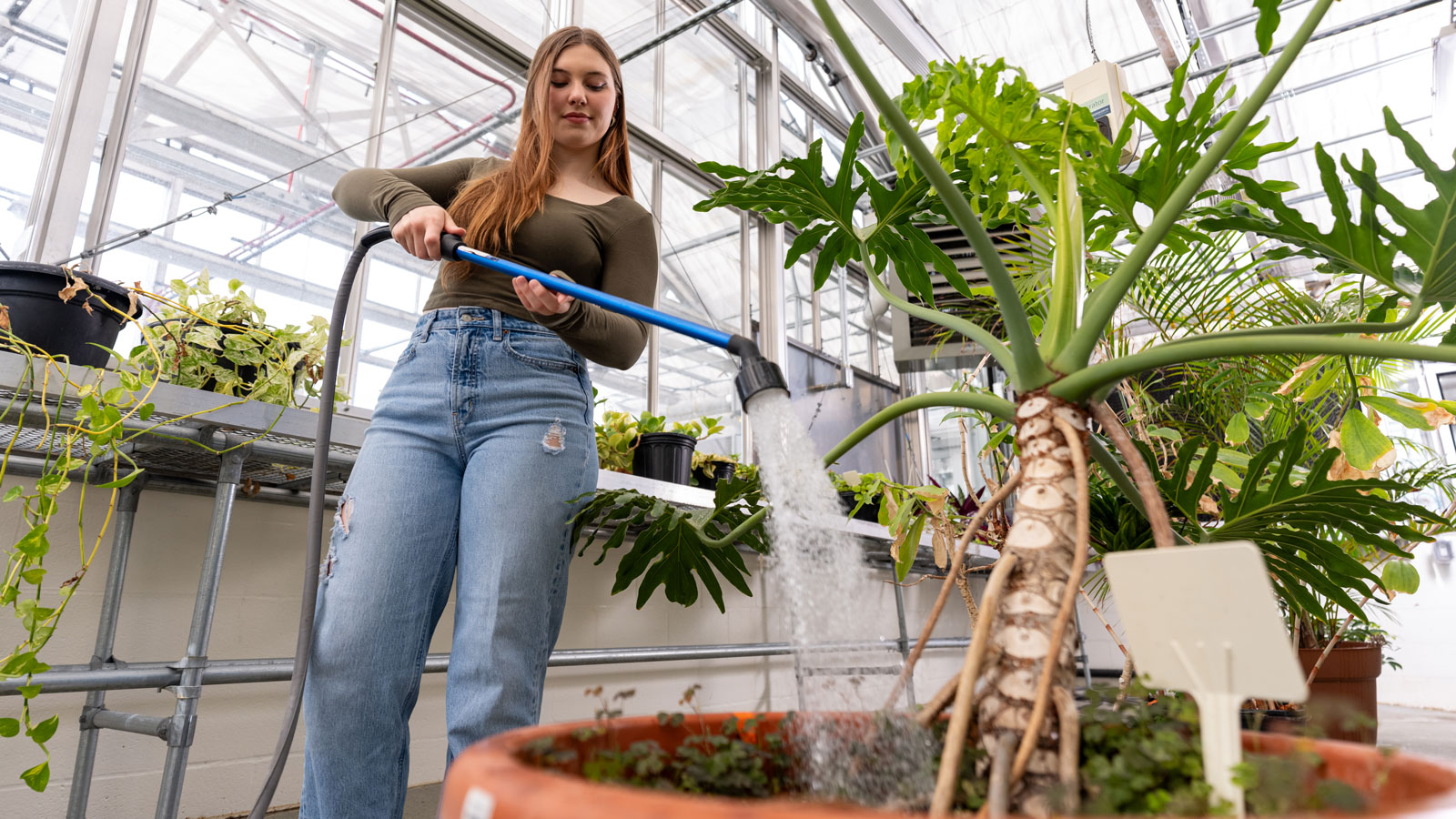
From the lab to the local community, the Towson University junior is turning sustainability into action—researching microplastics, volunteering across campus and giving away more than 1,000 plants along the way.
Her journey began with support from the Fisher College of Science and Mathematics (FCSM), where she quickly found opportunities to explore her passion for environmental science.
“I love that I feel like I built a community here,” Harasymczuk says. “The best thing about TU is that I’m always learning. I love the environment, so I’m always learning about things that affect climate change. It’s cool because we’re learning how we as students can advocate for our community and what we can do to help.”
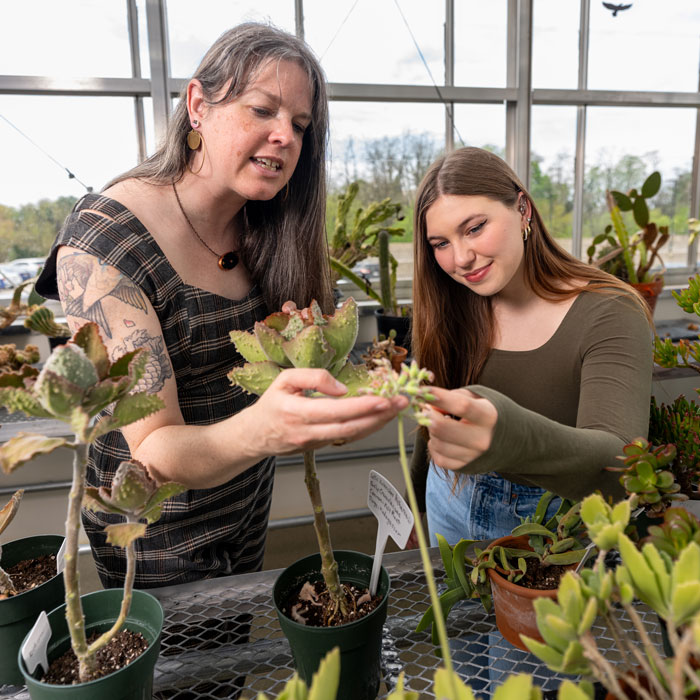
The opportunities started for Harasymczuk early in her TU career as a member of the Honors College. It was in one of her first honors biology classes where her professor pushed her to get involved with research. Assistant professor of biology Iskander Ibrahim and his work on molecular plant physiology really spoke to Harasymczuk.
She met with him on Halloween—of course, dressed in a witch’s outfit—and asked if she could work with him. He said yes, and she started studying how different chemicals affect Arabidopsis, a small weed in the mustard family that is a widely studied specimen in plant biology.
“Getting to do research has changed my life, honestly,” Harasymczuk says. “To have Dr. Ibrahim believe in me and the Honors College faculty and staff help me start this journey, it’s been so transformative.
“I don’t think I would be the student and advocate for science I am without having that initial support.”
Researching on her own
With Ibrahim ‘s support, the junior biology major began studying how microplastics affect plant life. She took different plastic powders, added them to soil and observed how that affected a plant’s development. She discovered plants in high concentrations of plastics didn’t grow at all.
Harasymczuk has received support from TU to continue her research, including the Research Impact Award, the Advanced Summer Research Grant and the Leadership for Public Good Grant.
FCSM and the Office of Undergraduate Research and Creative Inquiry have helped her to attend conferences to learn more about working with plant life. And all this is happening before her senior year.
“I can be persistent, and I’m very ambitious,” Harasymczuk laughs. “I wanted to travel for my research, I want to have a good resume and most importantly, I wanted to make an impact. I feel like I’ve been able to do that through my research here at TU.”
She's also working to help other students get opportunities as well. Working with the Office of Competitive Fellowships and and Awards (OFCA) and its director Mary Devadas, Harasymczuk works to educate students campus-wide about national and international scholarships.
Getting involved with the OFCA came about her freshman year when Harasymczuk began applying for internal grants to help build her portfolio.
She is currently awaiting to hear results after applying for the Udall Environmental Scholarship, a prestigious, highly competitive scholarship given to undergraduates pursuing careers related to the environment.
"The OFCA is not only an office, but it's also a place for students to learn, connect and fund opportunities to grow," she says.
Helping TU become sustainable
Harasymczuk is a student leader for the Office of Sustainability’s Eco-Reps program. Eco-Reps are peer educators who support green practices in residence halls through presentations and engagement activities.
She even represents Eco-Reps externally throughout the local community. In her sophomore year, she represented the university at an Earth Day event in downtown Baltimore’s Power Plant Live last year. Getting opportunities to spread the school's message showed her that TU’s sustainability staff supports her ideas and work.
“I feel like my ideas can sometimes be too ambitious or too far-fetched, but they are pushing me to do them,” Harasymczuk says. “They give me so much hope and they make me believe I can be an agent of change in my community. TU sustainability ignited a sense of drive in me.”
For Paddy Watson, director of sustainability at TU, it’s easy to get behind a student like Harasymczuk.
“Rebecca is a star,” Watson says. “She easily translates her passion into action through her tenacity and can-do attitude. As the student leader of the Eco-Rep Program, she spends hours every week supporting her fellow classmates’ efforts to create a more sustainable campus.
“She is always willing to lend a hand if someone needs help, and she leads by example.”
Planting service in her community
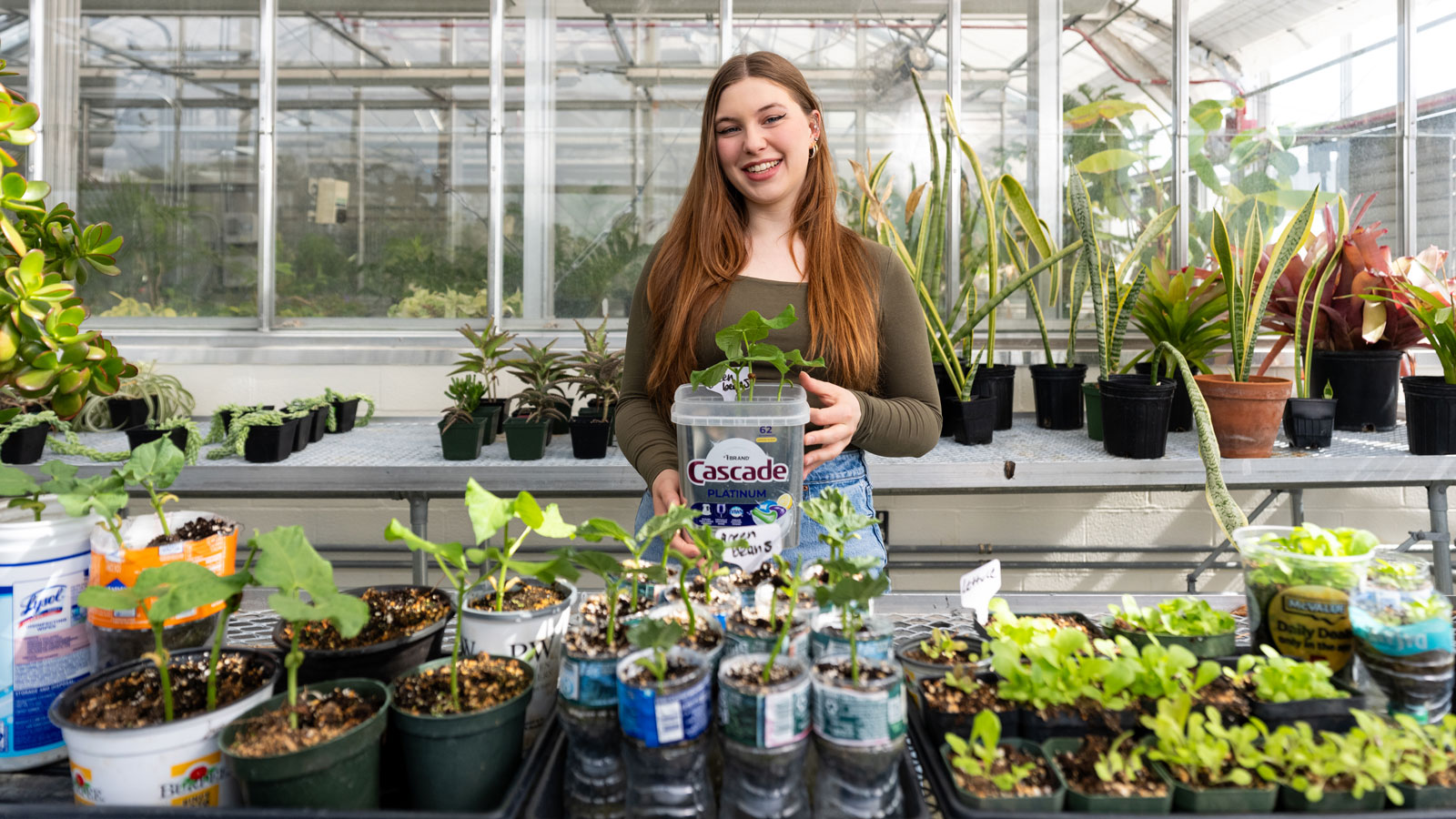
Another way Harasymczuk is making the world a little greener is by recycling plastics and using them as plant starters.
The service, “Spreading Sprouts,” started when Harasymczuk was in high school and realized the coffee pods her parents used could be starters for plant life. So she planted peppers in them and watched them grow.
“I love that I feel like I built a community here. The best thing about TU is that I’m always learning. It’s cool because we’re learning how we as students can advocate for our community and what we can do to help.
Rebecca Harasymczuk
Years later, she has continued the service at TU. These brown, colorfully decorated Boxes can be seen next to the doors of the Science Complex, inviting the TU community to recycle their plastic items. Harasymczuk takes those recyclables, puts seeds in them and gives them to the local community and TU students to grow.
So far, she has given out 1,000 plants and hopes to continue after she graduates.
“Research shows that 357 million metric tons of plastic end up in landfills every year and hurt our wildlife and biodiversity,” she says. “This project helps remedy that a bit, and it’s a fun and easy project. A lot of change won’t happen unless we do something about it, and this is just another way we can be the change in our community.”