Celebrate a remixed Homecoming with an old standard: Tiger pride
This year’s Homecoming Week will run from Oct. 26–31, with all new events and old
favorites. But how did we get here?
By Felicity Knox '94
For more than 100 years, TU has celebrated its students and alumni with activities that range from alumni
gatherings, the arts, dances, and of course, sports events. This year is the first
time TU will hold Homecoming on Halloween, combining two beloved school events into what is sure to be one exciting week.
Watch as campus is awash with black and gold starting Mon., Oct. 26, and take part
in the brand-new Tiger Tuesday Bash and Homecoming Parade — an old Tiger tradition — starting in uptown Towson and winding
its way back to Tiger Plaza. Starting this year, TU will celebrate Doc the Tiger's
"birthday" during the bash with a cake. While not yet named Doc, the tiger mascot
debuted 63 years ago.
During the week, students, alums and area community members can enjoy annual favorites
like Dance the Madness and TU’s Got Talent. All that leads up to the T-Pain Homecoming concert on Friday
night, a tradition revived this year, then football vs. Hampton Pirates, on Sat., Oct. 31, at 1 p.m., with tailgating beginning at 9 a.m.
Whether it’s a couple thousand Tigers dancing and singing at the concert in SECU Arena
or the few hundred students who kicked off the tradition, one thing remains the same:
lots of Tiger pride.
1920s
At the start
The first evidence in the Towson University archives of something resembling Homecoming
is a 1922 article in The Tower Light, the student newspaper. In it, the reporter described welcoming alumna back to the
Maryland State Normal School to share their classroom experiences as new teachers
with MSNS students who would soon be following in their footsteps.
This simple tradition became more social with card games, dancing and luncheon included as it was repeated in the following
years—often during the fall but not with any set pattern. It was just one of the many
entertainments the small school community created for its student population, which
included an elementary school on campus, later known as the Lida Lee Tall School.
MSNS students and faculty performed plays; played music; held dinners, birthday parties
and picnics; organized school-wide sporting events and, of course, hosted dances.
1930s
You make me feel like dancing
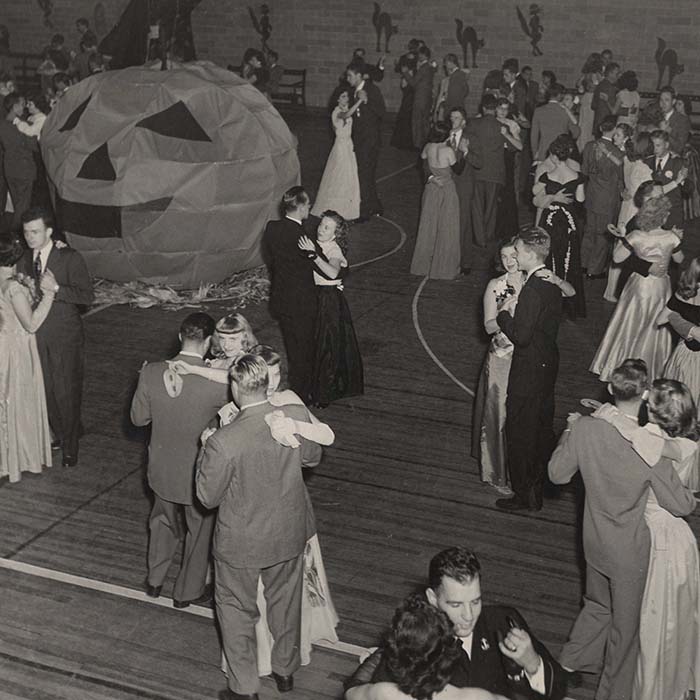
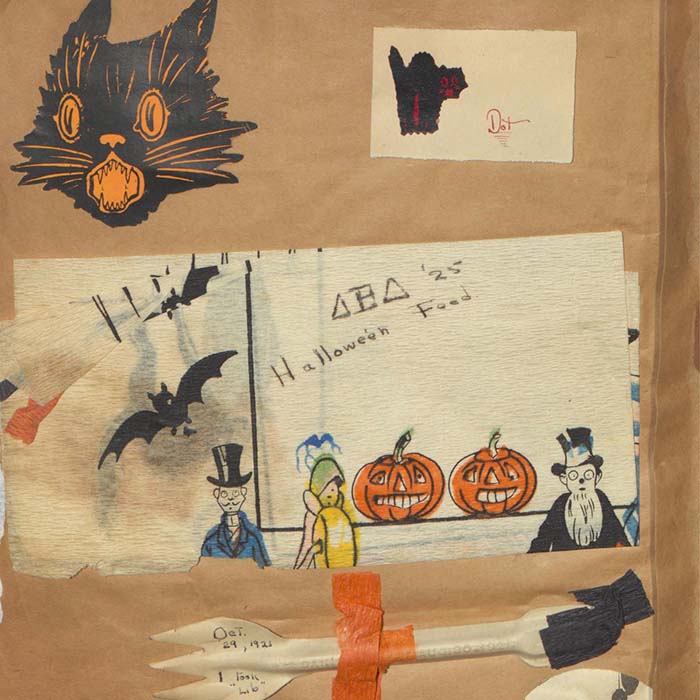
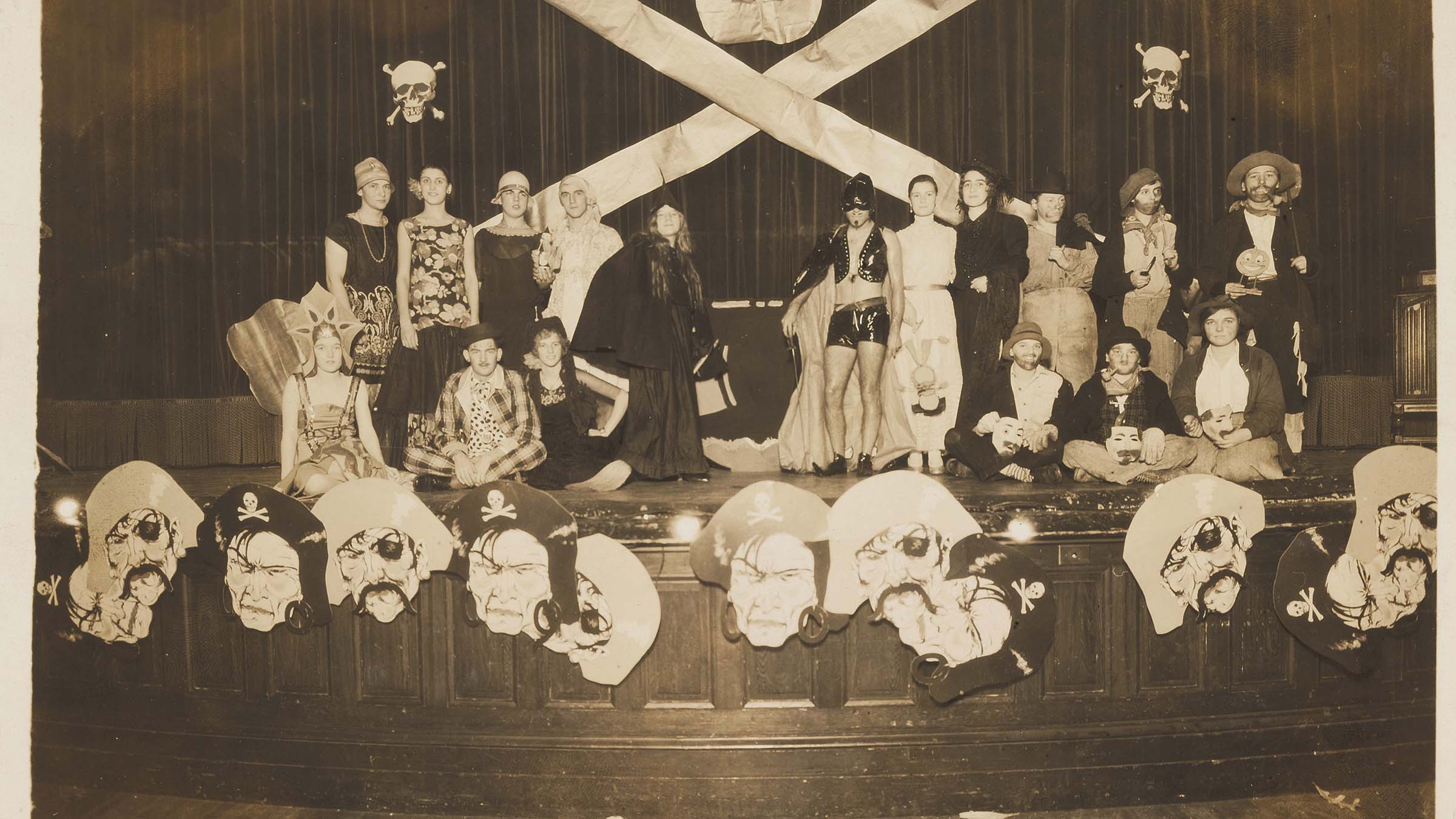
While those early fall Homecoming events did not present as formal dances, University
Archives holds photographs and scrapbooks that demonstrate a Halloween event was held most years, which often included dancing.
These celebrations were held in the auditorium of what we now know as Stephens Hall
until the construction of the first gymnasium in 1942. Dances had always been popular on the campus, even when there were unequal numbers
of men and women students. Because the school focused on teaching, which was to many
a women-dominated profession, most MSNS students were women.
1940s
Making it official
During World War II, the Homecoming tradition paused, but in 1949, it returned with
renewed vigor. That fall, the first formally named Annual Homecoming at the State Teachers College
at Towson was announced and a weekend of celebrations included:
a conference, in keeping with the tradition of passing along real-world knowledge
a lunch
a dinner
an “informal song”
a theater production by the Glen Players
a soccer game
Soccer might feel like an unusual choice now, but the school did not yet have a football
team.
1950s
Crowned heads
In 1952, after a school-wide nominating and voting process, Peggy Whiteleather was crowned
the very first Homecoming Queen.
A parade of student organizations and class representatives was added to the events
that year, and a dance, bearing the first Homecoming theme of “Olde Heidelberg,” was
added to the events schedule in 1953.
In 1954, “Melody Lane” was the theme, and it carried over the entire three-day celebration.
1960s
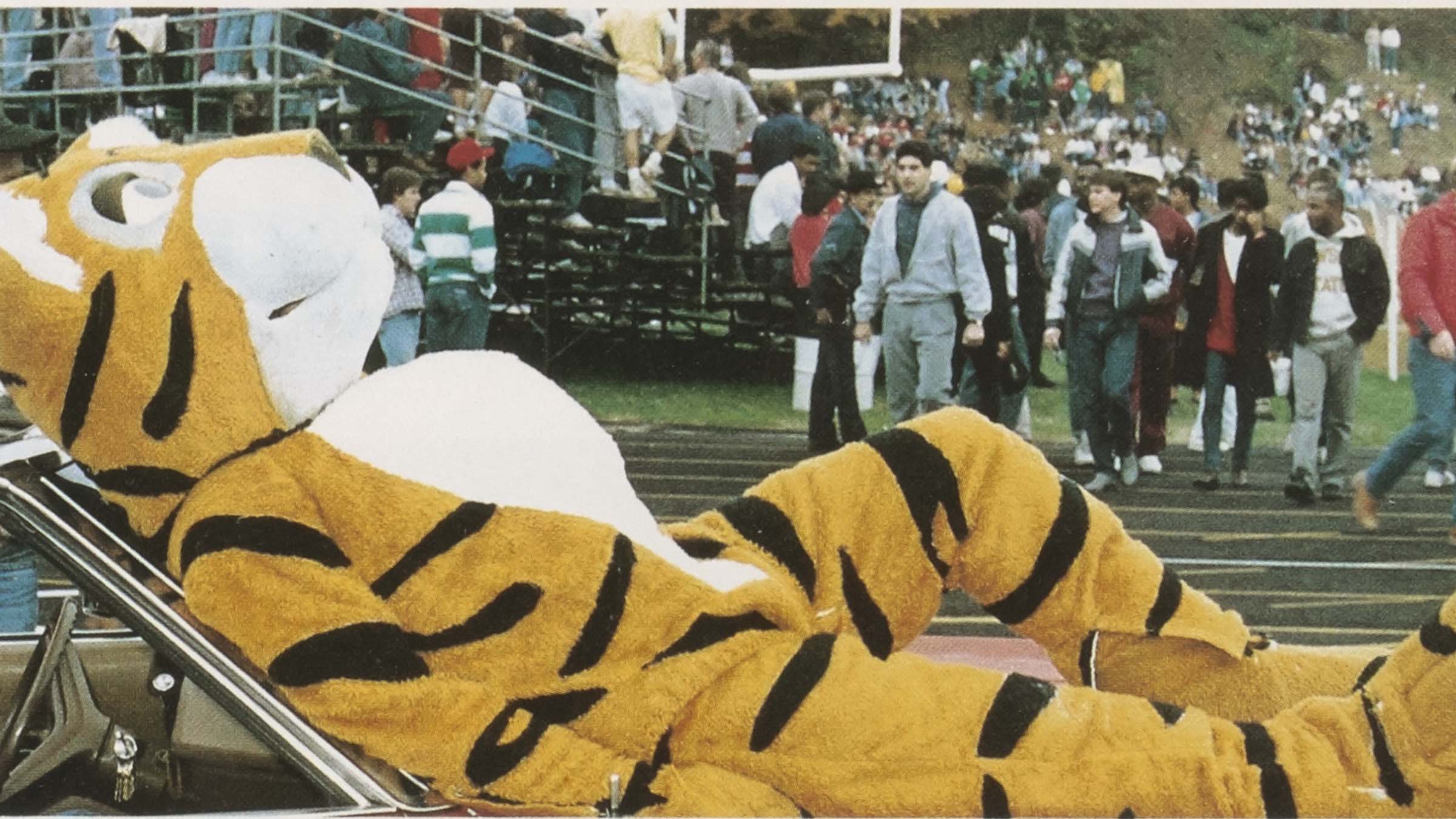
Although not yet named Doc, the Tiger mascot made his first appearance on campus in
the Homecoming parade in 1963.
By the late 1960s, the student enrollment had increased so significantly that the
dances had to be moved off-campus to accommodate attendees. This enrollment boom stemmed
from the switch from a teachers college to a liberal art school, which raised male
enrollment. That allowed the school to finally field a football team. The annual soccer match was replaced in 1969 by a football game, which continues today.
1970s
A matriarchy
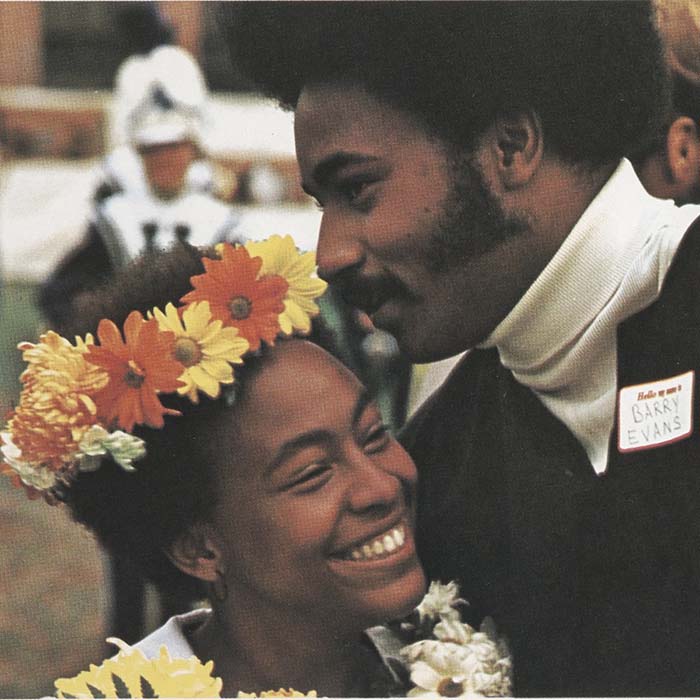
1972 saw the crowning of the first Black Homecoming queen, Sheila Jefferson.
There were also mostly tongue-in-cheek campaigns to elect a Homecoming king during
this decade, but that wouldn't occur until 1999.
1980s
In the 1980s, the school administration attempted to take Homecoming back to some
of its former roots. For 15 years, the school named an Outstanding Man and Woman, which usurped the crowning
of the queen. These individuals were recognized for their scholastic achievements,
not elected through a popular vote.
Another change made during this time proved somewhat controversial. Administrators
had grown frustrated that students focused on pre-game tailgating instead of attending
the game itself. Tailgating rules tightened until 1986 when the situation came to a head. Alcohol was banned from tailgate festivities for the next 10 years.
1990s
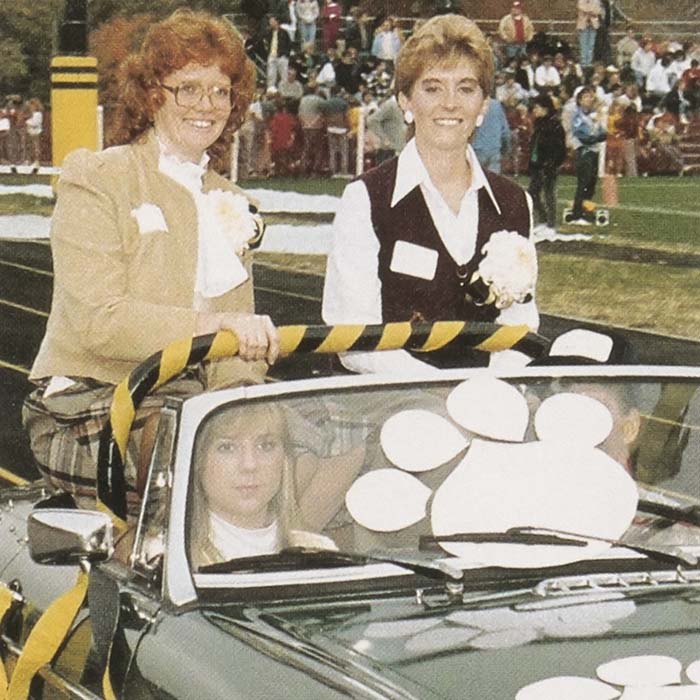
In 1996, alcohol was again permitted, and three years later, the return of the Homecoming
queen tradition was accompanied by the crowning of TU’s first Homecoming king, Bryan
Jablonski. He was also the Student Government Association president.
The traditions continue to change and evolve. Recently, Homecoming Week has evolved
to include ways to encourage groups on campus to participate in promoting school spirit
such as “Chalk the Walk” events to decorate campus walkways and department and office
decorating contests.
Regardless of whether Tigers near and far wear their black and gold, return to campus
for Homecoming Week events or join in through social media, this year, Homecoming
will be a treat.