A TU lab studying what’s in our water
Professor John Sivey’s Aqueous Environmental Chemistry Laboratory gives students a unique research opportunity.
When John Sivey, chair and professor in TU’s Department of Chemistry, starts working with students, he likes to share a small tidbit with them—he changed his major in college.
In fact, he changed it twice.
“I landed on chemistry because I realized that chemistry is our central science because it’s connected to so many other science and engineering disciplines,” Sivey says. “And as I was finishing my undergraduate degree, I realized I wanted to work in environmental chemistry.”
A Laboratory Where Students Examine the Chemistry of Drinking Water
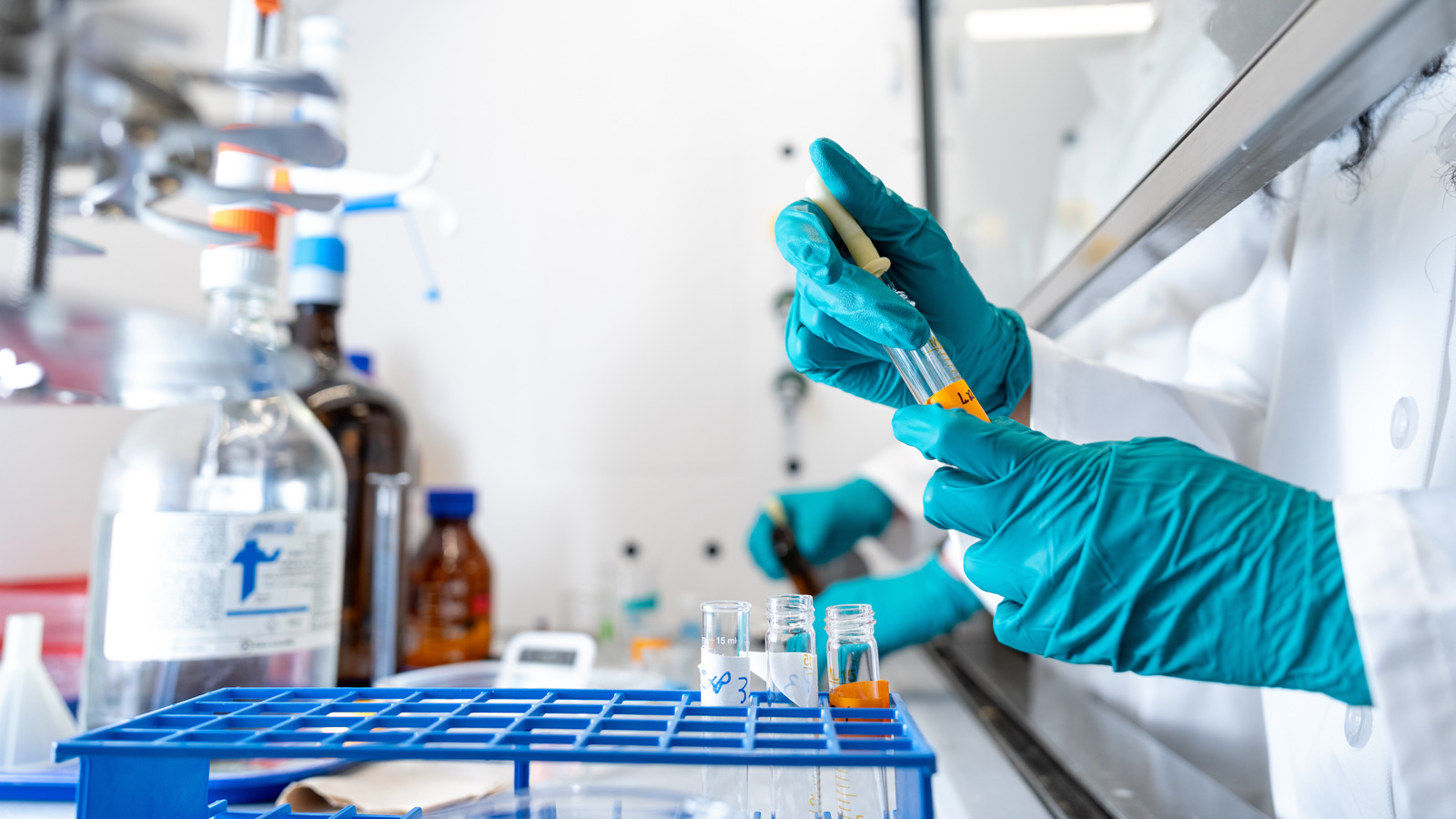
He has found his calling and is helping TU students find theirs. Along with teaching, Sivey also leads students in the Aqueous Environmental Chemistry Laboratory at TU.
This lab allows the professor and a select group of students to focus on environmental chemistry and the chemistry of drinking water from areas in the United States.
Drinking Water: More than Just H2O
Sivey’s research on drinking water began when he was a doctoral student at Johns Hopkins, where his adviser encouraged him to explore assumptions other researchers in the field were making about the chemistry of the drinking water.
More specifically, he started looking at how U.S. cities treat their drinking water with a little bleach to help kill pathogens that could make people sick. And while usually safe for humans, sometimes the bleach will react with other chemicals in the water and cause disinfection byproducts, which can be toxic.
Advancing Students’ Discoveries to the Forefront
He continues this research at TU, and along with integrating students into the research, he integrates the research into his teaching.
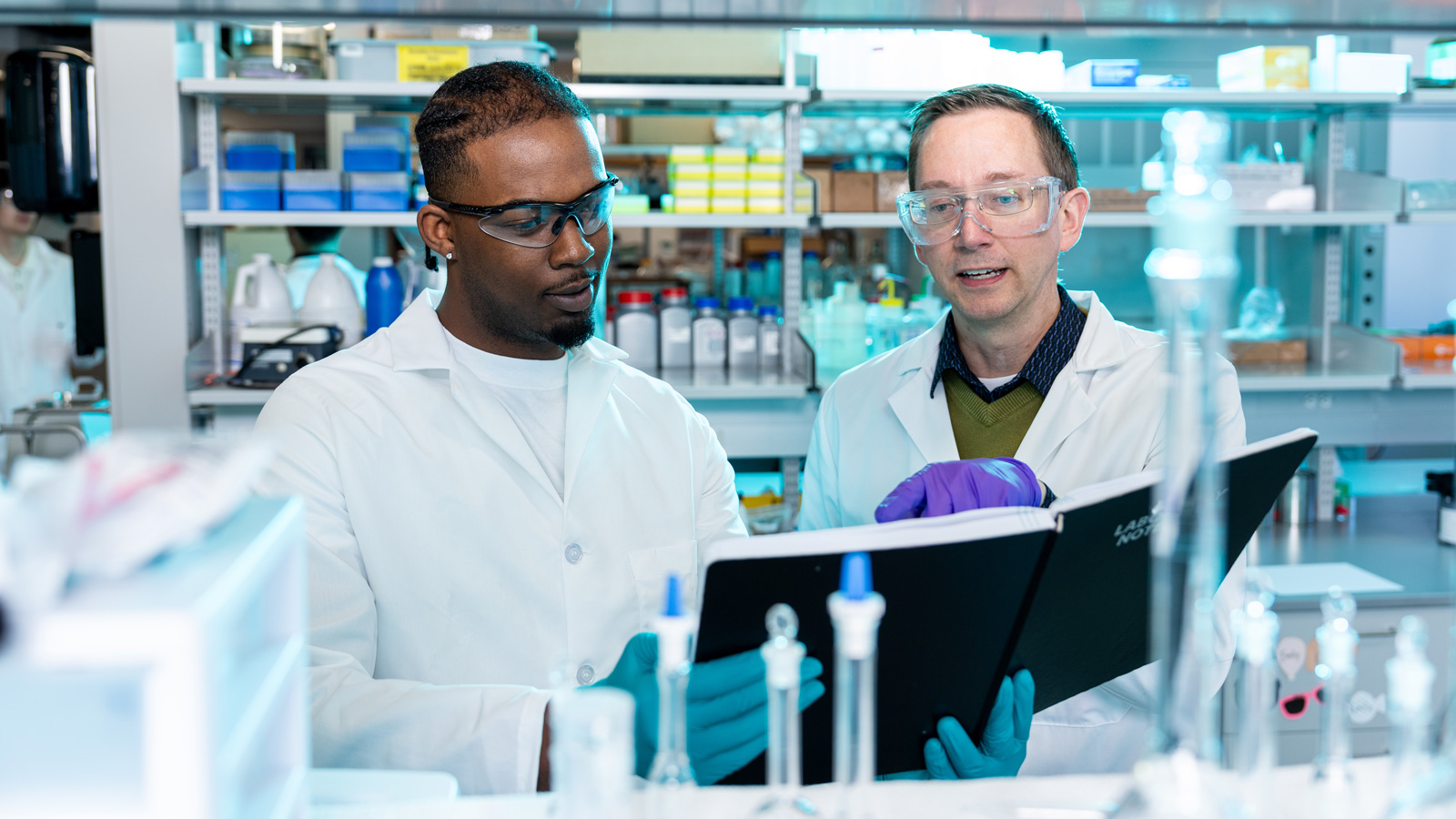
“One of the reasons I love being at TU is because my research is part of my teaching,” Sivey says. “Whenever possible, I’ll pull in examples of research that my team has done and show students that their undergraduate peers are the ones who are making these discoveries.
“One of the special things about TU is that undergraduates are at the forefront of research. Most of the research in my lab has been driven by undergraduates.”
Readying TU Students to Take On the World
And while Sivey’s research goals are ever expanding — he jokes he has a Word document with 80 years’ worth of research ideas — his goal for students has always been the same: to graduate ready to take on the world and be better than he was at their age.
“When I look back to where I was at the end of my undergraduate career, compared to where some of the students who I have worked with at TU, they're far above where I was,” Sivey says. “That’s my metric of success. I want students that I get a chance to mentor to really see that the sky’s the limit for them.”
One of the special things about TU is that undergraduates are at the forefront of research. Most of the research in my lab has been driven by undergraduates.
John Sivey
And while many in the university already take notice of the incredible work done by TU’s chemistry department, the outside world has noticed.
Collaboration and Publication: Gaining Notice
Sivey worked with associate professor Keith Reber and three TU student researchers to co-author a paper in the Nature Water scientific journal. The paper was also in collaboration with scientists at Johns Hopkins University and the University of Southern California.
It describes new mechanistic insights—that have evaded previous investigations for decades—into how organic compounds transform into toxic byproducts in chlorinated drinking water.
[Getting published] would never have happened without TU being an environment where there is interdisciplinary collaboration.
John Sivey
Sivey says research like this is just a small sample of what’s happening at TU. And for many in the Fisher College of Science and Mathematics, it’s a standard mode of operation.
“This paper wouldn’t have happened without Dr. Reber and the expertise of his team,” Sivey says. “It was really exciting to see our students published, and it would never have happened without TU being an environment where there is interdisciplinary collaboration.
“It’s exciting to be at the forefront of pushing students at Towson University to new frontiers of research.”
A Student Scientist Gets His Feet Wet
Zolani Grady graduated with bachelor’s degrees in general and forensic chemistry. But even before pursuing his master’s degree in environmental chemistry, Grady had the chance to contribute valuable research.
Grady got involved with Sivey’s lab after taking his analytical chemistry class. It was there the two developed a connection and where Grady got his first big research opportunity.
He likes to describe his professor as a welcoming face in the Science Complex, who meets students where they are and pushes them toward to their academic goals.
It’s sort of a feeling of belonging when I have somebody like Dr. Sivey reinforcing I have the skills and capabilities to contribute to what I think is very meaningful work.
Zolani Grady, Environmental Chemist
After spending a couple of years doing research as an undergrad, Grady took the reins as technical lead for a project, working with undergrads on research exploring the trade-offs between opportunistic pathogens and disinfection byproducts in drinking water.
“It’s hard to get your foot in the door sometimes, so having the privilege to do research at the undergraduate level was so valuable,” Grady says. “My work as an undergraduate has influenced how I do research now and makes me a more competitive chemist for future opportunities.”
Research at the Sivey Aqueous Environmental Chemistry Laboratory focuses on environmental chemistry in aqueous systems.
“Being part of this lab was a big deal for me, especially being a minority in the chemistry field,” Grady says. “It’s sort of a feeling of belonging when I have somebody like Dr. Sivey reinforcing I have the skills and capabilities to contribute to what I think is very meaningful work.”