Building community as a first-generation college student
Five Towson University students share their experiences, advice and what it means to be the first in their families to attend college
It’s not easy being the first.
Across the United States, 8.2 million undergraduate students are first-generation students, representing 54% of the undergraduate population, according to FirstGen Forward.
Being a first-generation college student generally means being the first in your immediate family to attend college. For many students, that also means navigating unfamiliar systems, learning where to find support and balancing personal goals with family expectations.
These outside-the-classroom struggles take a toll. National data show a gap in degree completion: 24% of first-generation students earn a bachelor’s degree within six years of starting college, compared to 59% of continuing-generation students, according to FirstGen Forward.
Their degree becomes a beacon, normalizing higher education for younger siblings, relatives, and future generations.
Charla Fowlkes
At Towson University, the estimated six-year graduation rate for first-generation students in 2025 was 64.8%, according to a report from the University System of Maryland.
“First-gen students rarely walk across the {commencement) stage alone; they carry the pride, hopes, and sacrifices of their families and communities with them,” says Charla Fowlkes, assistant director of Student Success Programs. Fowlkes also works extensively with TU’s first-generation population.
“Their degree becomes a beacon, normalizing higher education for younger siblings, relatives, and future generations."
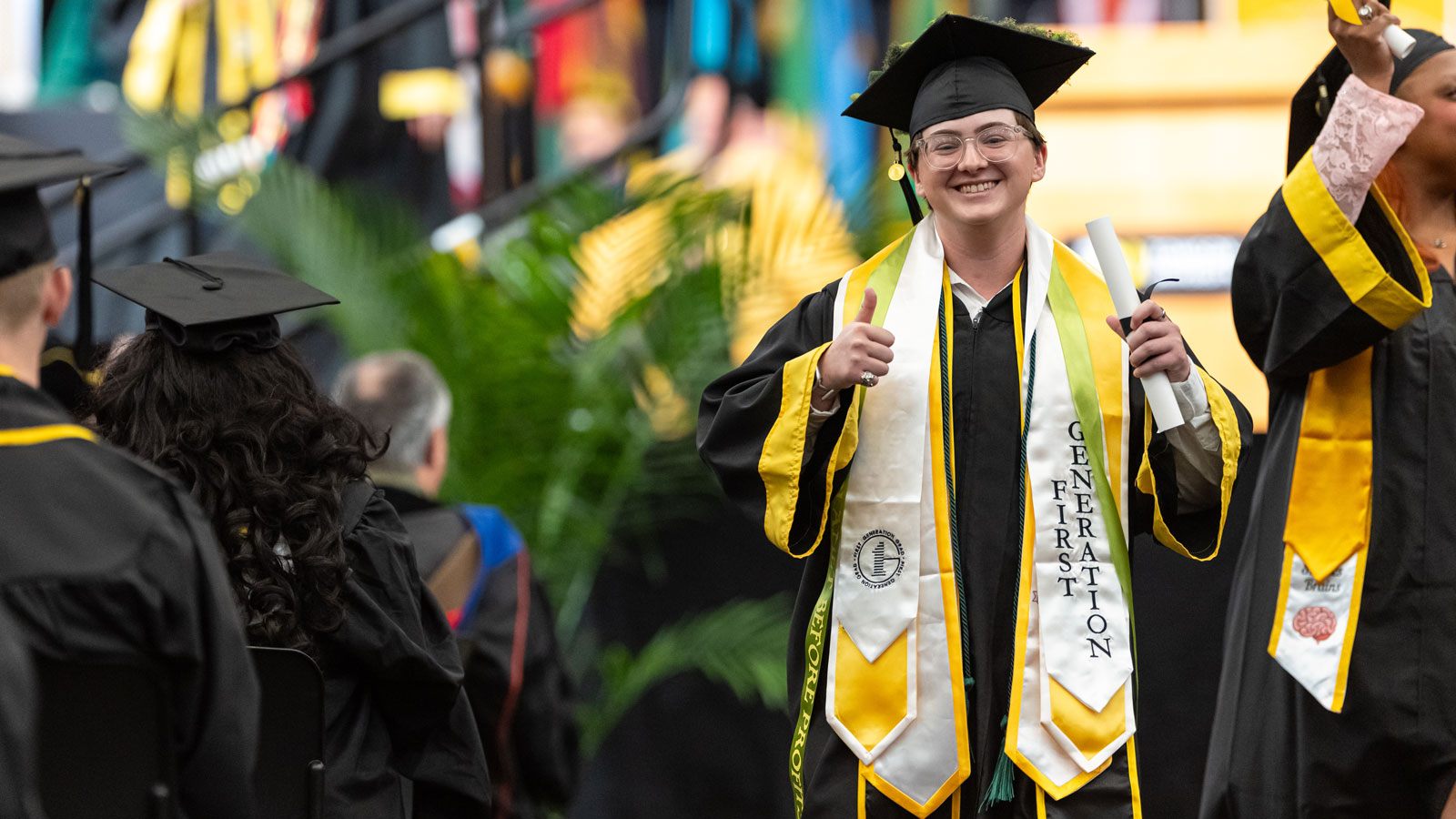
TU offers several programs to support first-generation students:
- First Gen Alliance: A student-run organization focused on growth, leadership development and advocacy
- Gen One programming: Developed by Student Success Programs, this initiative provides mentoring and guidance to support academic and personal success.
- Students Achieve Goals through Education (SAGE): A peer-mentoring and support program for new, first-generation, transfer and underrepresented students.
“At Towson University, supporting first-generation college students is woven directly into the institution's commitment to dispelling the myth of an achievement gap,” Fowlkes says. “TU approaches first-generation support through a mix of structured university programs, peer community networks, targeted financial assistance and dedicated student affairs guidance.
“In addition, TU offers financial aid support specifically designated for first-generation students through programs like the Gen One Futures scholarship, easing the financial strain that often accompanies being the first in a family to pursue a four-year degree,” Fowlkes adds.
Here, five first-generation Tigers share what their experiences have meant to them, what they have learned and how they are finding their own paths through college.
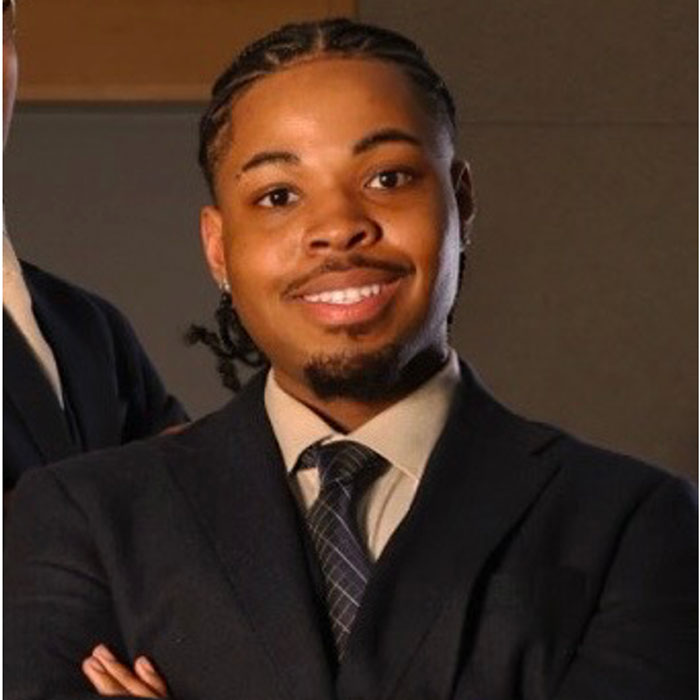
Political science | Indian Head, Maryland
Kevin Ferrell ’27
For me, being a first-generation college student is both an accomplishment and a responsibility. I carry with me the duty to pass the opportunities I’ve been given on to others who face the same challenges I did while navigating college without a roadmap.

MArketing | Upper Marlboro, Maryland
Celeste Terrazas-Dominguez ’28
Having a good support system has helped my college experience a lot. It’s nice to be able to turn off the chaos for a bit and feel a sense of grounding from the people around you. I’ve had the same roommate since freshman year and we’ve been through it all. The friendships I’ve been able to make here have helped me feel like [TU is] home away from home, my family—even if they’re further away—I know they’re rooting for me and that’s motivation, and the student success programs being able to introduce me to coworkers and staff who will genuinely help me is a feeling like no other.
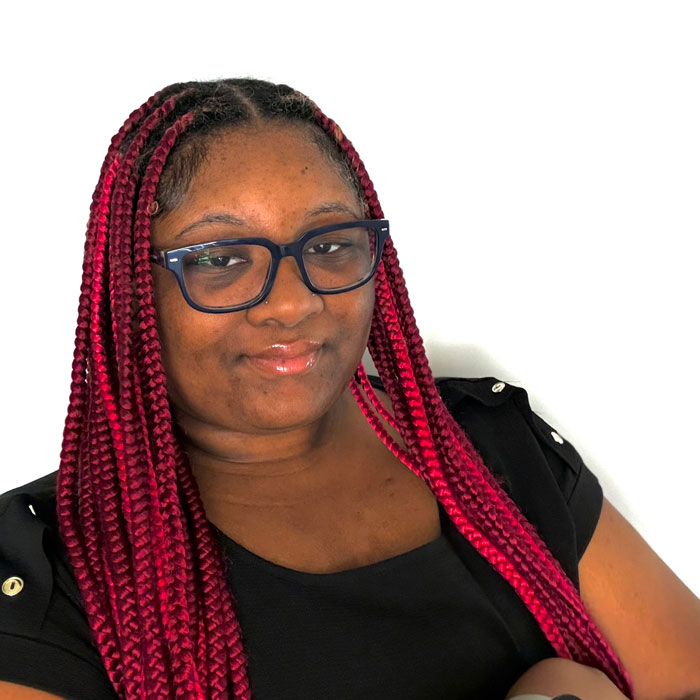
Early Childhood and Special Education | Parkville, Maryland
Morgan Tucker ’28
For my family, my degree represents more than just an academic achievement. It represents sacrifice, hope and the belief that hard work can create new opportunities. Knowing how much they believe in me motivates me to keep pushing forward and make their support worthwhile.
More about majoring in early childhood and special education
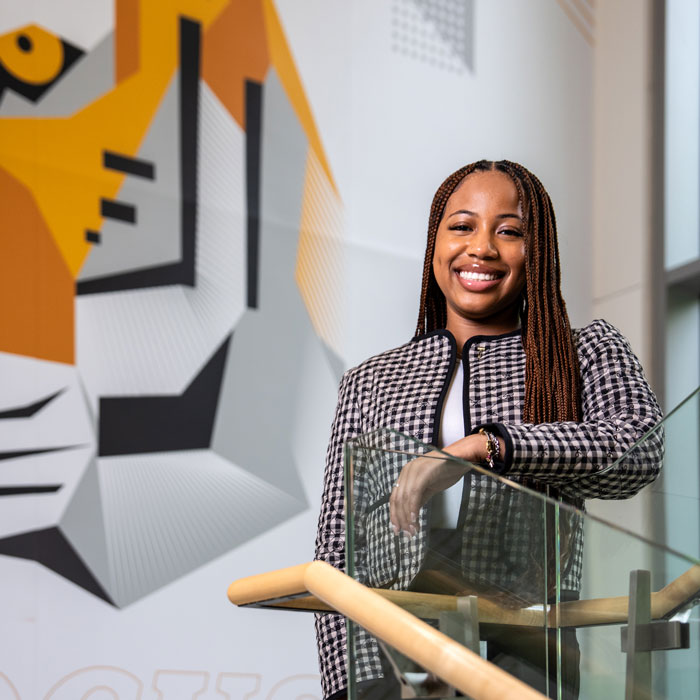
Law and American Civilizations and Political Science | Lantham, Maryland
Rayne Rivera-Forbes ’28
I wish I had known more about self-accountability. I was quite independent and on point in high school, so I assumed college would be similar. However, going from a fixed schedule to a very flexible one surprised me. Now, in my junior year, I have definitely learned how to manage it, but it was a learning curve. I also found it challenging to communicate with my family about my college journey, as they did not experience it themselves. Sometimes, it can feel isolating, but it’s essential to remember that you are not alone. There are communities we find and become a part of, which may not be our family at home.
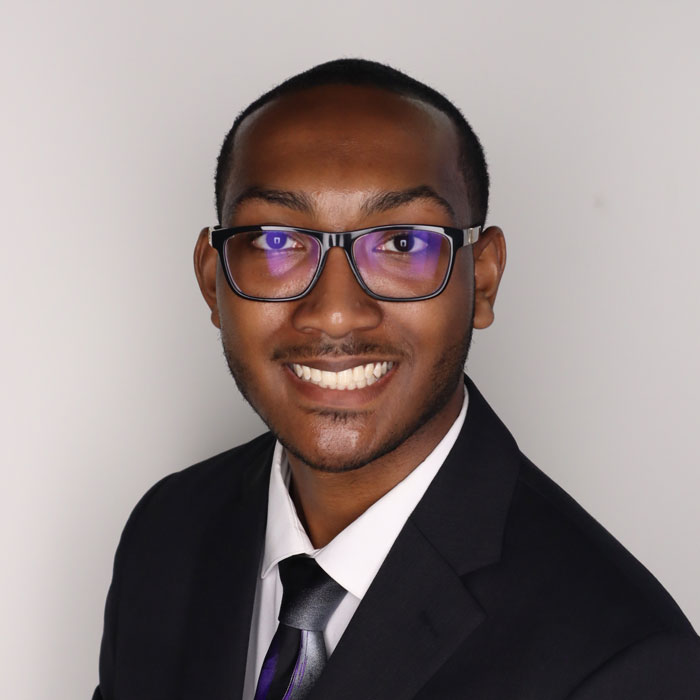
Mass Communications | Pikesville, Maryland
John Robert Woods ’27
Being a first-generation college student is being a pioneer among my family members. I'm actively achieving things that my parents didn't have the opportunity to do at my age. And I'm serving as an inspiration for my sister, who is just four years younger than I am. I'm helping her with the college admissions process right now, as I'm now much more informed than I was four years ago.