A degree 50 years in the making
After dual careers as a Marine, medical interpreter, 65-year-old Ricardo Batiz earns his degree in creative writing
It took Ricardo Batiz nearly five decades, a career in the Marine Corps and another at the National Institutes of Health to earn his bachelor's degree.
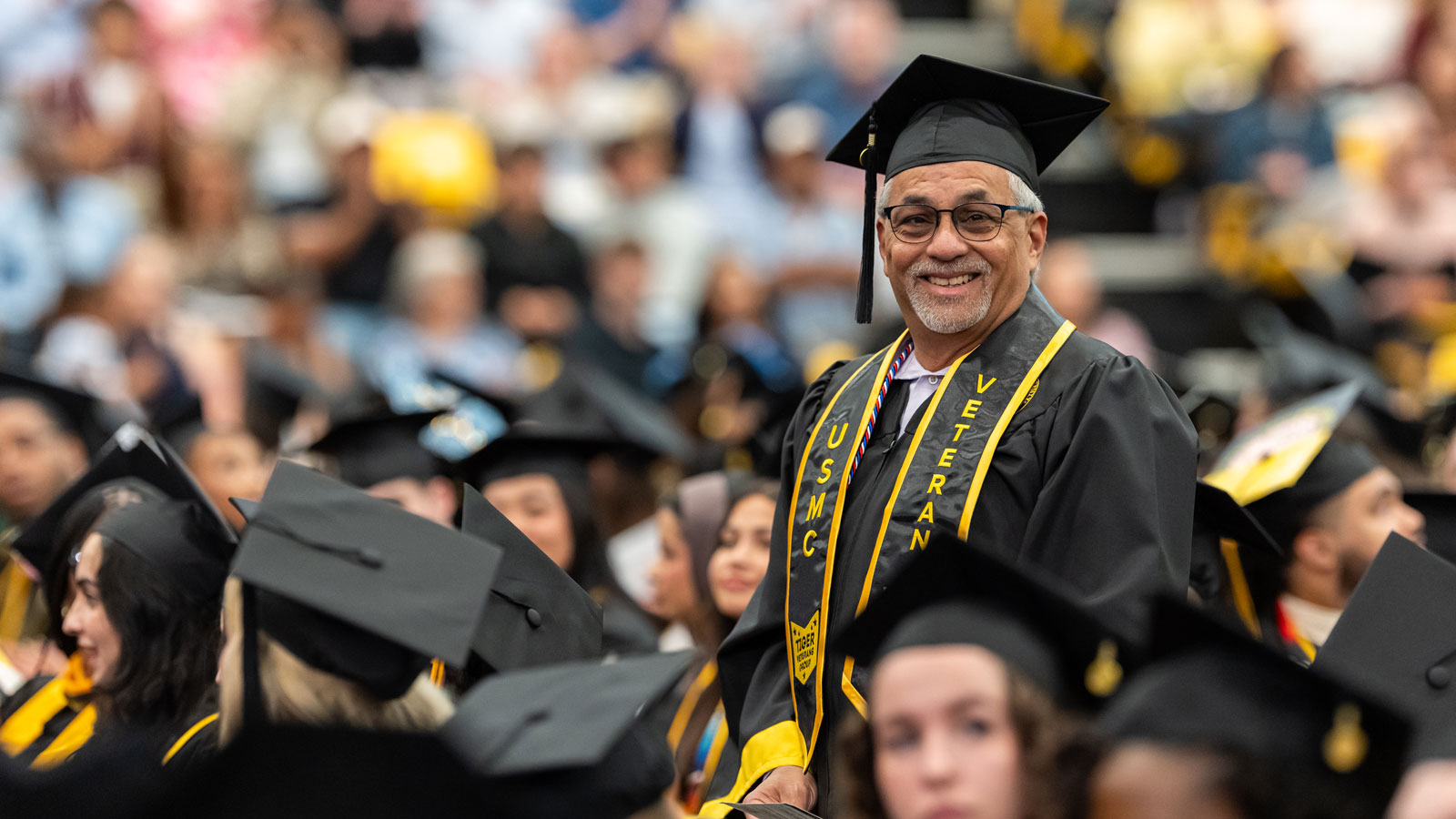
This spring, the 65-year-old Towson University graduate finally crossed the Commencement stage with a degree in English with a focus on creative writing.
Growing up in Puerto Rico, Batiz always planned to go to college. But like many others, life had other plans.
After taking college-level classes in Puerto Rico, he decided to join the Marine Corps in 1979. But college was still in the back of his mind.
Over his eight-year military career, Batiz took classes in the different cities he was stationed. But he quickly admits that throughout those early years, nothing really stuck.
“I was like a boat without a rudder,” Batiz likes to joke. “Where the waves were taking me, that’s where I was going. No one was really advising me, I was just taking classes that sounded interesting.”
Nowhere has treated me the way that Towson University has treated me.
Ricardo Batiz
After leaving the military, he moved to Columbia, Maryland, and began a career as a medical interpreter and translator for the National Institutes of Health (NIH). But the idea of earning a degree kept creeping back into his mind.
So, in fall 2024, after retiring from the NIH and with a little push from his wife Alisa, Batiz was ready to get back to his education. Thanks to the Department of Veterans Affairs’ Veteran Readiness and Employment Program, Batiz could attend a Maryland public university to continue his education for free.
And since he stepped foot on campus, he’s received nothing but respect and support.
“When I got here, I was incredibly surprised by how they treated students, especially their veteran students,” Batiz says. “It’s something I haven’t experienced anywhere else, and I went to colleges in Arizona, Florida and North Carolina.
“Nowhere has treated me the way that Towson University has treated me.”
A military support system
Batiz likes to joke that starting at TU was a little scary.
“I was terrified, because the last time I was in college, all the technological advancements were not available,” Batiz laughs. “But I visited the Military and Veterans Center (MVC), and that was just humongous for my experience.
“They worry about you and are always there to help you when you need it. That’s something I’ve never had before.”
MVC director Dario DiBattista wanted to get to know him, while assistant director Rebecca Cossaboom showed him how the MVC could help him adjust to his new campus.
During his first week, a fellow veteran showed him around campus, helped him buy textbooks and made sure he felt part of the MVC community.
“The MVC is like a refuge,” Batiz says. “There is going to be someone there that knows you or what you’ve gone through in your life. It’s very welcoming, and the people are fantastic.
(The Military and Veterans Center) worry about you and are always there to help you when you need it. That’s something I’ve never had before..
Ricardo Batiz
Cossaboom remembers when Batiz first came to the MVC. Over the past two years, she watched as Batiz went from someone just trying to make it through college to a key community member who mentors younger peers.
"As student affairs practitioners, we often talk about our ‘why,’ and for me, it is being able to champion students like Ricardo,” Cossaboom says. “As one of our older veteran students, he has been able to offer a unique perspective to our community space. Ricardo has been open about his experience both prior and after service, often providing counsel to our younger vets and family members, and welcoming new faces to the center.”
A passion for the written word
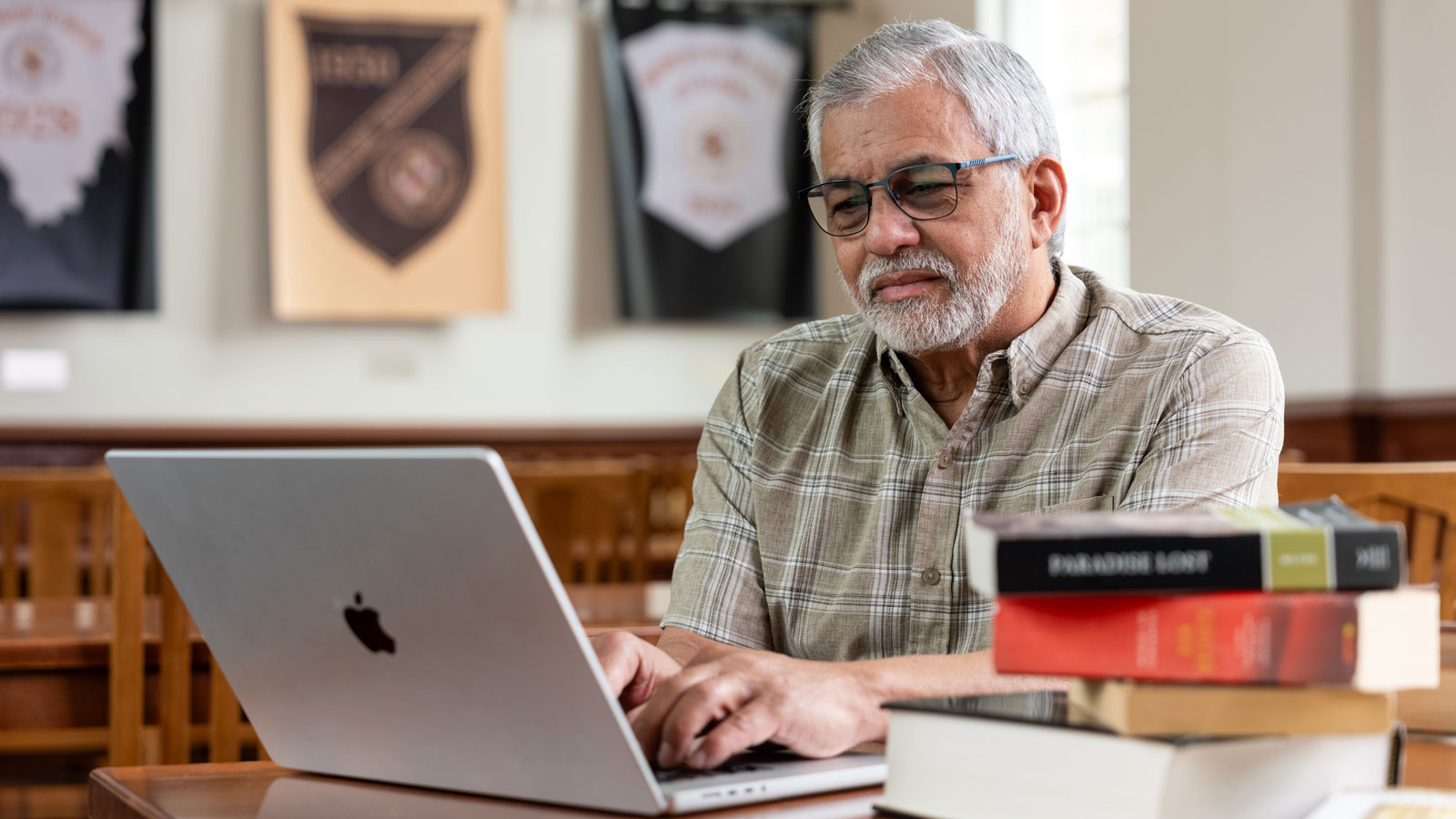
No matter where he was stationed or what career he had, one constant passion for Batiz has been writing.
“Writing is like breathing to me,” he laughs. “I’ve tried before to do other things, but I felt like I was a complete failure, so when I started at TU, I wanted to concentrate on what I really know and what I was really passionate about.”
Batiz’s passion was met with enthusiasm from TU’s English department. Not only did they help him hone his craft, but they also shared books and authors that influenced and inspired him.
“In my interactions with Ricardo, he is committed to deeply investing himself in our intellectual community,” says English Department Chair Erin Fehskens.
“He imbues his questions with a curiosity about the world and joy in its opportunities despite the true horrors that he has seen and experienced in his life prior to coming to TU. He has a serious talent. Having had the pleasure of reading a recent story he submitted to a literary magazine at Yale and a recent essay he submitted to a national writing contest, I am certain we'll hear more from this writer in the years to come.”
A master’s in horror
Fehskens was one of the first to meet with Batiz when he transferred. She inspired him to write about his experiences in the military and the medical field, and to pursue a genre he had always been passionate about: horror.
“I like to scare people,” Batiz laughs.
With graduation behind him, his goal is to publish a novel. He is working with faculty to review his manuscript before finding a publisher.
Having had the pleasure of reading a recent story (Batiz) submitted to a literary magazine at Yale and a recent essay he submitted to a national writing contest, I am certain we'll hear more from this writer in the years to come.
English Chair Erin Fehskens
In the fall, he’ll return to TU to begin a master’s degree in professional writing. He wants to continue his education, but he also jokes that he wants the credentials ready for the book jacket of future novels.
“When I get involved with something, I want to do it 100%,” Batiz says. “I have the opportunity to get a master’s degree, sponsored by the VA; I have to take advantage of that. And I want to do it in a place that I call home.”