SUPPORT
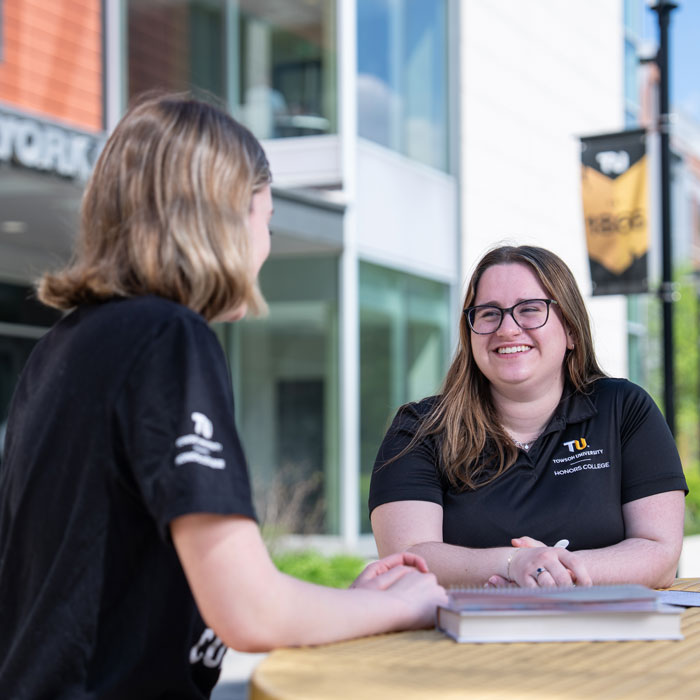
Mentorship cultivates confidence in TU's Honors College
Stephanie Duque ’26 on using her voice to advocate for first-generation college students
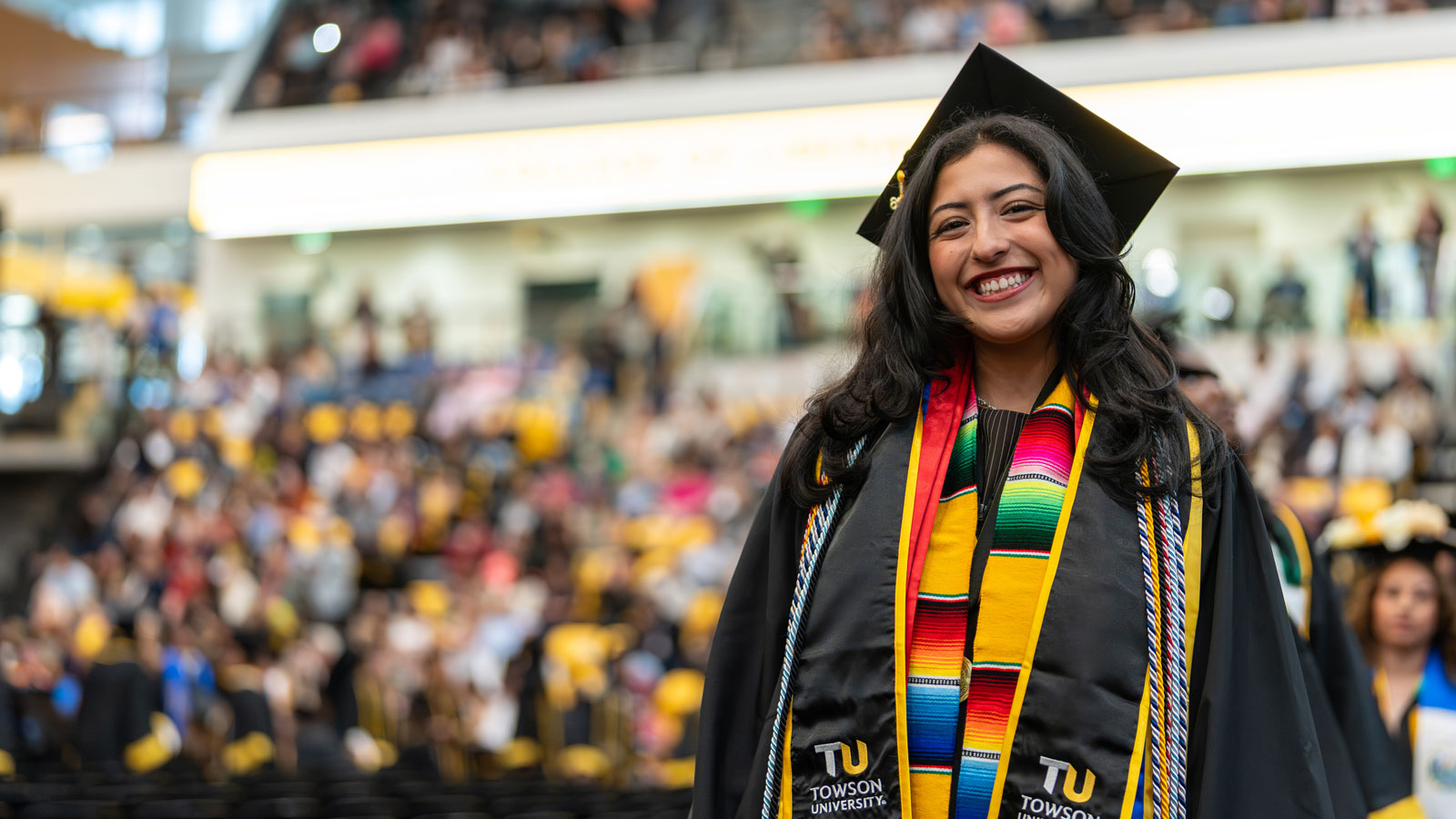
A lifetime of experiencing mentorship and serving as a mentor inspired Stephanie Duque to become a therapist.
Now, as she prepares to begin her master’s degree in clinical psychology, Duque reflects on what mentorship, success and well-being at TU truly means as a first-generation college student.
“Helping others brings me joy; that’s why I want to be a therapist and a professor,” Duque says. “Being able to lift others up and let them know that they're capable of achieving anything they want—that's how I was raised, and it means everything to me.”
Roots in resilience
Raised in an Ecuadorian American household, Duque grew up in a family that was unwavering in its encouragement of her academic and personal passions.
“I wouldn’t be the person I am without my parents,” Duque says. “I know they had big dreams. If they’d had the same support from their parents growing up, I know my dad would've been an amazing lawyer, and my mom would've been an amazing doctor.”
Her parents' support encouraged Duque to apply to TU. Knowing how hard they’d worked to help get her there, Duque took her journey to college a step further and applied for the Honors College.
Once she was accepted, she knew TU was the right fit, and she chose not to apply to other schools.
Mentorship in the Honors College
If there's one thing to know about Duque, it's that wherever she goes, she's going to get involved.
When she began her journey at TU's Honors College, Duque felt instantly at home. She very quickly applied to be a recruitment officer for the Honors College, briefly served as a Zumba instructor in Campus Recreation and joined the student mentorship program SAGE.
Her commitment to involvement at TU extended to her senior year when she applied for a Fulbright U.S. Student Program scholarship to teach English in Spain - the renowned organization that offers scholarships for international projects - of which she was a finalist.
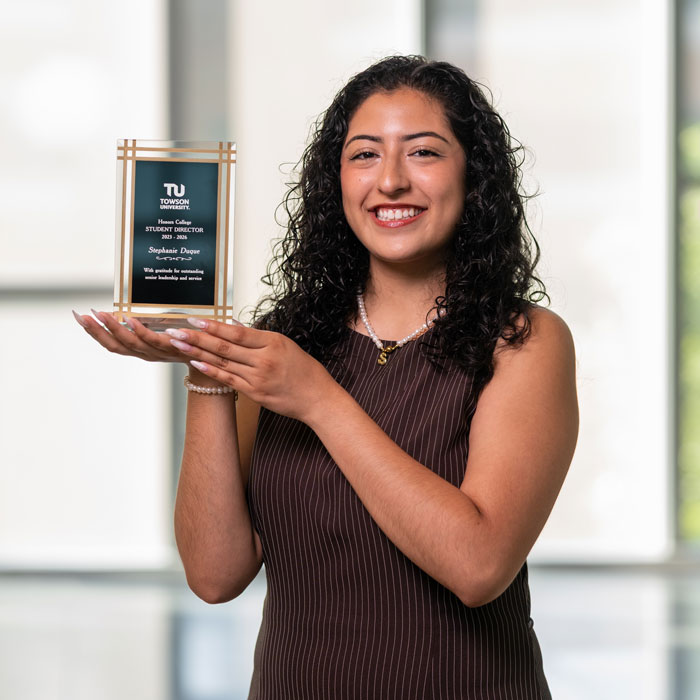
But it was her role as a recruitment officer for the Honors College that stuck—and from early in her sophomore year until she graduated this spring, Duque served as a student director there.
"I wanted to get the most out of my college experience. I am not the same person I was my freshman year at TU. I feel a lot more confident and self-assured, and the faculty in the Honors College let me have a voice," Duque says.
Continue working hard – even if no one notices. Do it for yourself without needing to be seen. Do it because you want to achieve the most for yourself.
STEPHANIE DUQUE
Her involvement on campus brought her close to Alison McCartney, Ph.D., dean of the Honors College, and staff and faculty members Gregory Brightbill, Ed.D., Adam Rudolphi, Ph.D. and Frances Botkin, Ph.D.
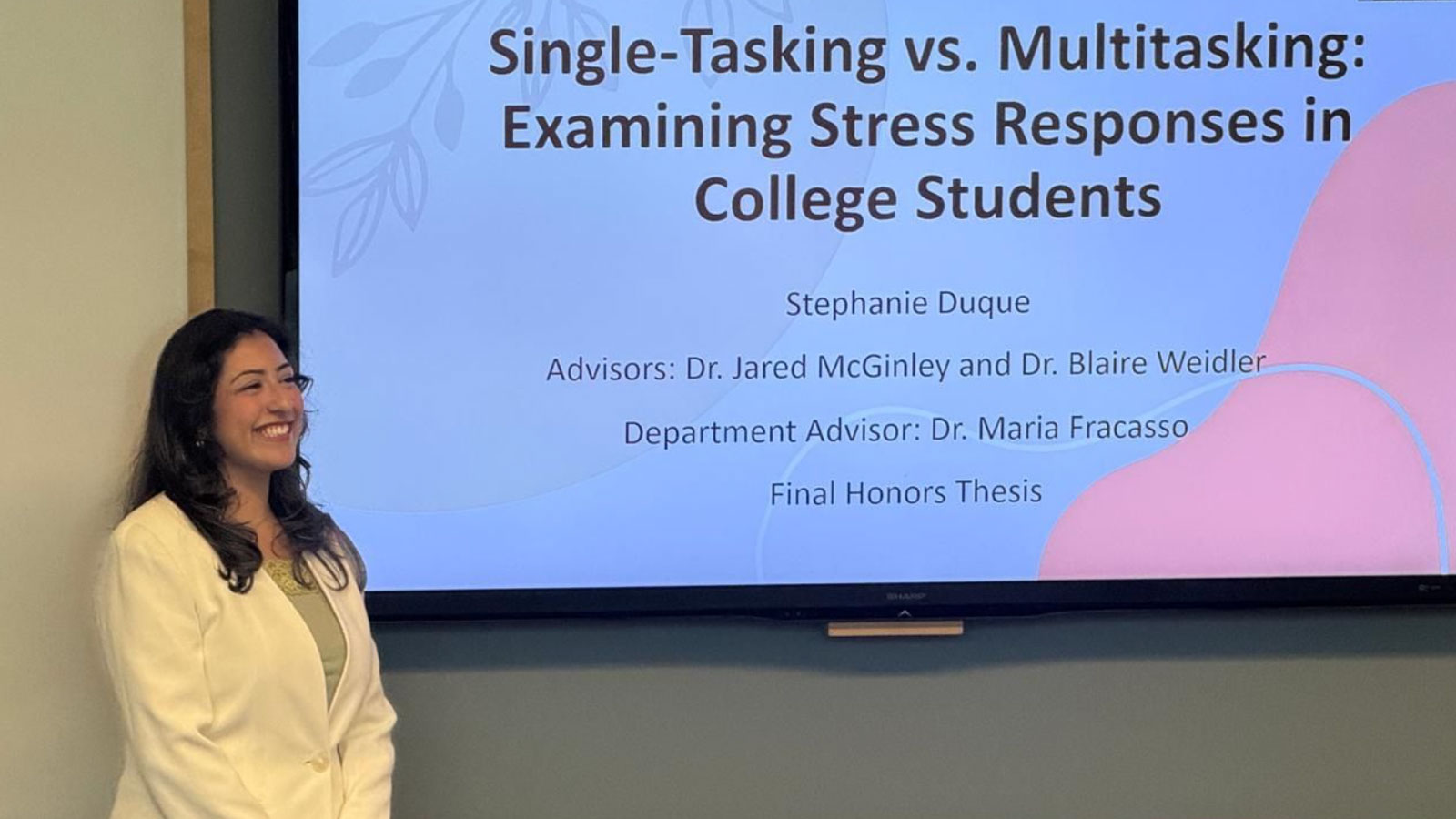
Their collective support opened her eyes to pursuing the Honors College's thesis program in psychology and the clinical area focus program—academic opportunities that inspired her final thesis—examining stress responses in college students through single-tasking versus multitasking experiments.
It was Duque's passion for her project that sparked McCartney's encouragement for Duque to present her thesis at TU's first Well-being Summit. Hosted by TU's Well-being Collective, the summit brought faculty, staff, students and university leadership together for a half-day experience focused on advancing well-being across campus.
"She is dedicated to her core to the success and happiness of others and works hard to pursue opportunities for others, be it a chance to decompress, an encouraging word before an exam or presentation or getting students together for a study group," McCartney says. "She exemplifies leadership not because she is the loudest person in the room—she is actually soft spoken—but because she gladly uses her skills and talents to make the world better for everyone around her."
Helping first-gen students find success
As the first person in her family to pursue an undergraduate degree and now a master’s degree, Duque is using her mentors' advice and her own mentorship skills to help her brother, cousins and other Latine students along their college search and application journeys.
"As a first-generation college student, I had a lot of trouble figuring out my fit for undergrad and grad,” she says. "I didn't run my admissions essays past anyone during my application process because I didn't know anyone to pave the way with."
I've grown up as a person from two worlds. It's like my education is here, and I live here - But my heart and my language is Spanish, and my love is Ecuador.
STEPHANIE DUQUE
To support fellow first-gen and Latine students, Duque proofreads essays, tutors in Spanish and English and is re-learning how to use Naviance to help others navigate the Common App.
“I don’t want my brother to have any limits. I want him to be free to explore and get to know who he is and who he wants to be. I’m happy that I can be the resource for him that I didn’t have when navigating college applications,” she says.
Maintaining her well-being
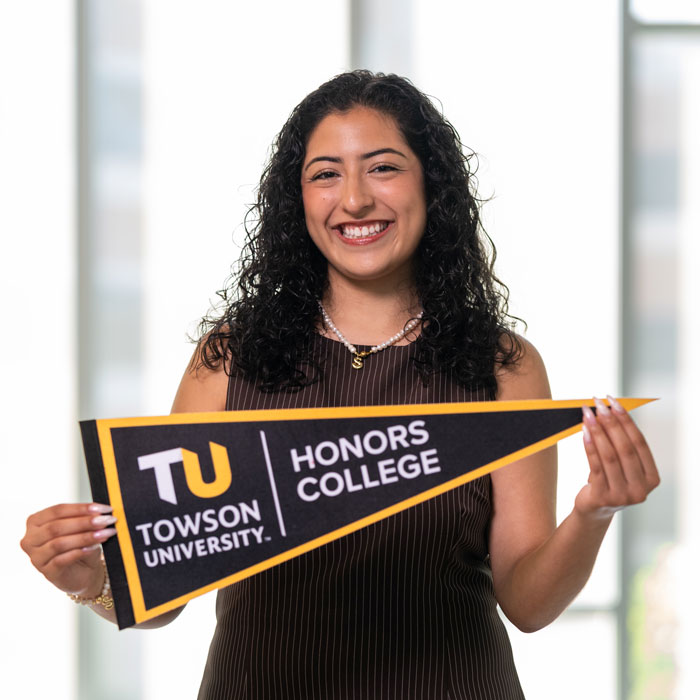
Amid her list of accomplishments, Duque admits that chasing success and overexerting herself can be overwhelming at times.
"Don’t interpret overload as productivity - not at the expense of your sanity, mental health, or happiness," Duque says. "I’ve been the type of person to put a lot on my plate. No one said I had to do all that – but I did it because I thought I needed to. It's about learning to find a balance."
Navigating rigorous workloads, on-campus jobs and additional research opportunities taught Duque to pour into her own cup too.
"Know that you deserve all of the accomplishments you've achieved," she says. "Your immune system declines from stress. So give yourself grace and be kind to yourself as you would be to your best friend."

Gen One
TU's Generation One Program provides avenues for first-generation college students with tailored mentoring and guidance to foster academic and personal accomplishment.
Learn more