EDUCATE
Students train Maryland leaders on cybersecurity
TU's Sec Ops research team share latest anti-phishing techniques, impacts future cyber professionals across state
With the advancement of AI, phishing attacks are becoming even harder to detect. Thankfully, Tigers in TU’s Security Operations (Sec Ops) Research Team are using their cyber skills to educate Maryland’s local and state leaders on the latest red flags.
While most companies and institutions train employees to identify standard phishing attacks, AI continues to learn to operate outside many of the typical phishing identifiers we’ve grown accustomed to.
That’s where the Sec Ops team comes in.
Going Phishing
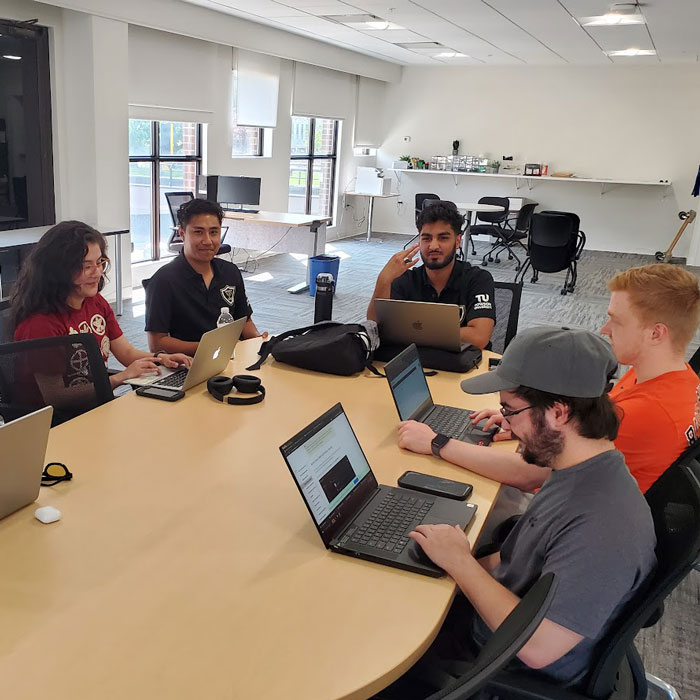
At the forefront of innovation in cybersecurity education and practice, the Sec Ops research team is comprised of undergraduate and graduate students—aspiring cybersecurity professionals—who work with faculty and industry leaders to tackle real-world security challenges.
They are trained in security operations, raise awareness on cybersecurity through community outreach and conduct academic research.
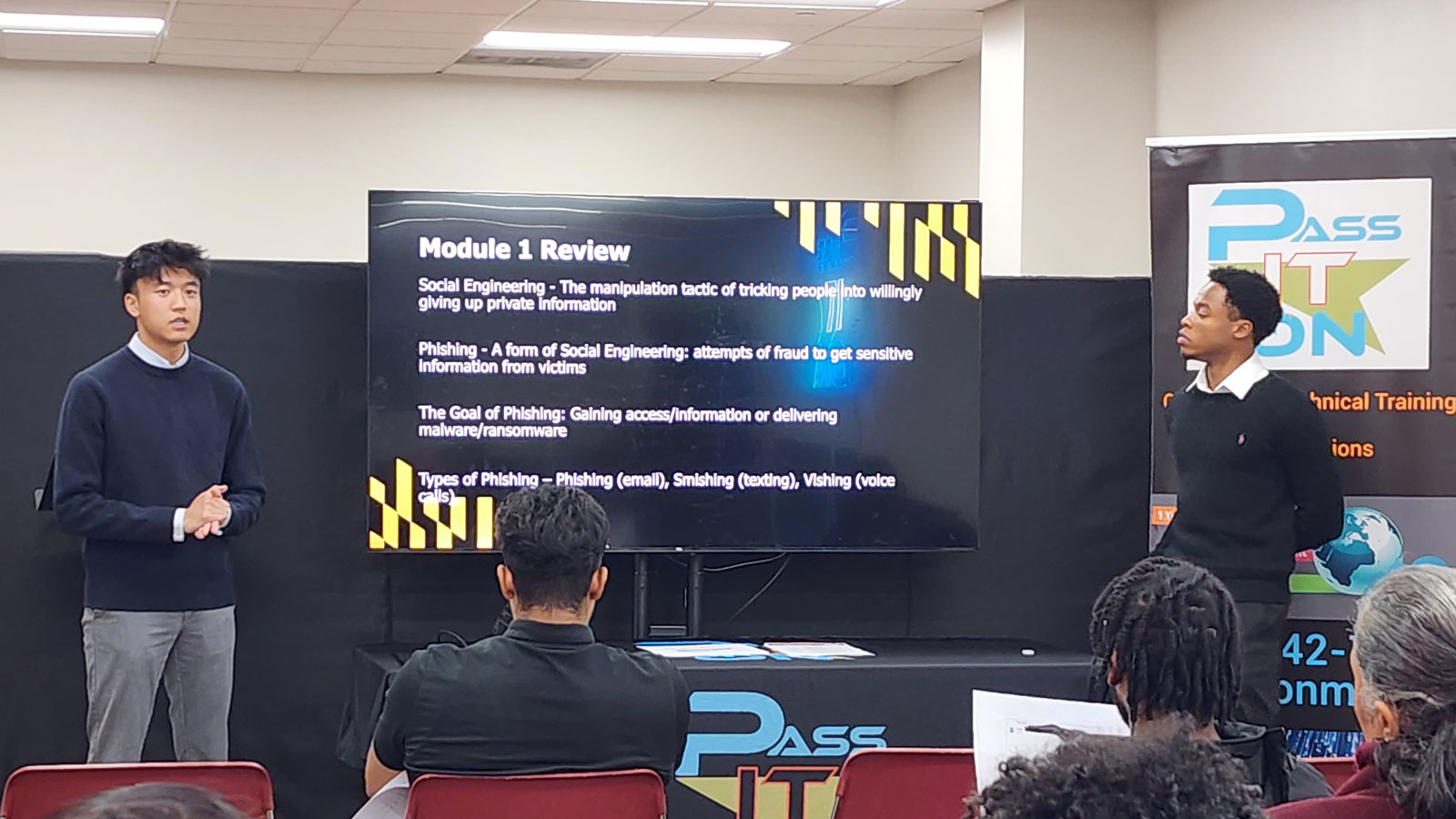
With support from TU Cyber4All Center associate director Willie Sanders, Ph.D., undergraduate students on the team developed a training workshop on advancements in AI-enabled phishing attacks—demonstrating what standard phishing attacks used to look like, what they now include and how to identify them before an accidental click puts your information at risk.
Sanders’ students took their training to the state level, where they shared the importance of cybersecurity education with directors and managers in Maryland Office of Statewide Broadband, Baltimore City’s Office of Information Technology and local nonprofit leaders.
Tristan Weakes '26, a cybersecurity graduate student in the Computer Science graduate program, was invited to join the Sec Ops team by Sanders. With an interest in giving back to his community and further developing his skills, Weakes welcomed the opportunity.
“Working on this project showed me that cybersecurity isn’t just about hardening software or hardware, it’s also about ensuring that users understand the risks of using these systems and how to protect themselves from exploitation,” Weakes says.
With advanced phishing attempts on the rise, particularly via text—“smishing”—and voice calls —“vishing”—student researchers with the Sec Ops team and the Cyber4All Center are learning not only how to identify these new methods of cyber-attacks but how to educate all ages on the importance of cybersecurity.

Cyber for all
In a world where information acquisition can be the key to a business or individual’s financial or personal security, Sanders encourages student researchers to approach cybersecurity education and application through a socially conscious lens.
Sec Ops researcher Dan Tran 25' joined the team out of genuine curiosity and overall interest in all things IT.
"Being part of the team has allowed me to expand on my previous work with the Career Center - to bring forward more ideas of what it means to be a cybersecurity professional," says Tran. "It's introducing cyber concepts to the community, while also being offered the platform to showcase the different types of career options available in the cyber field - it's not just being a cyber engineer!"
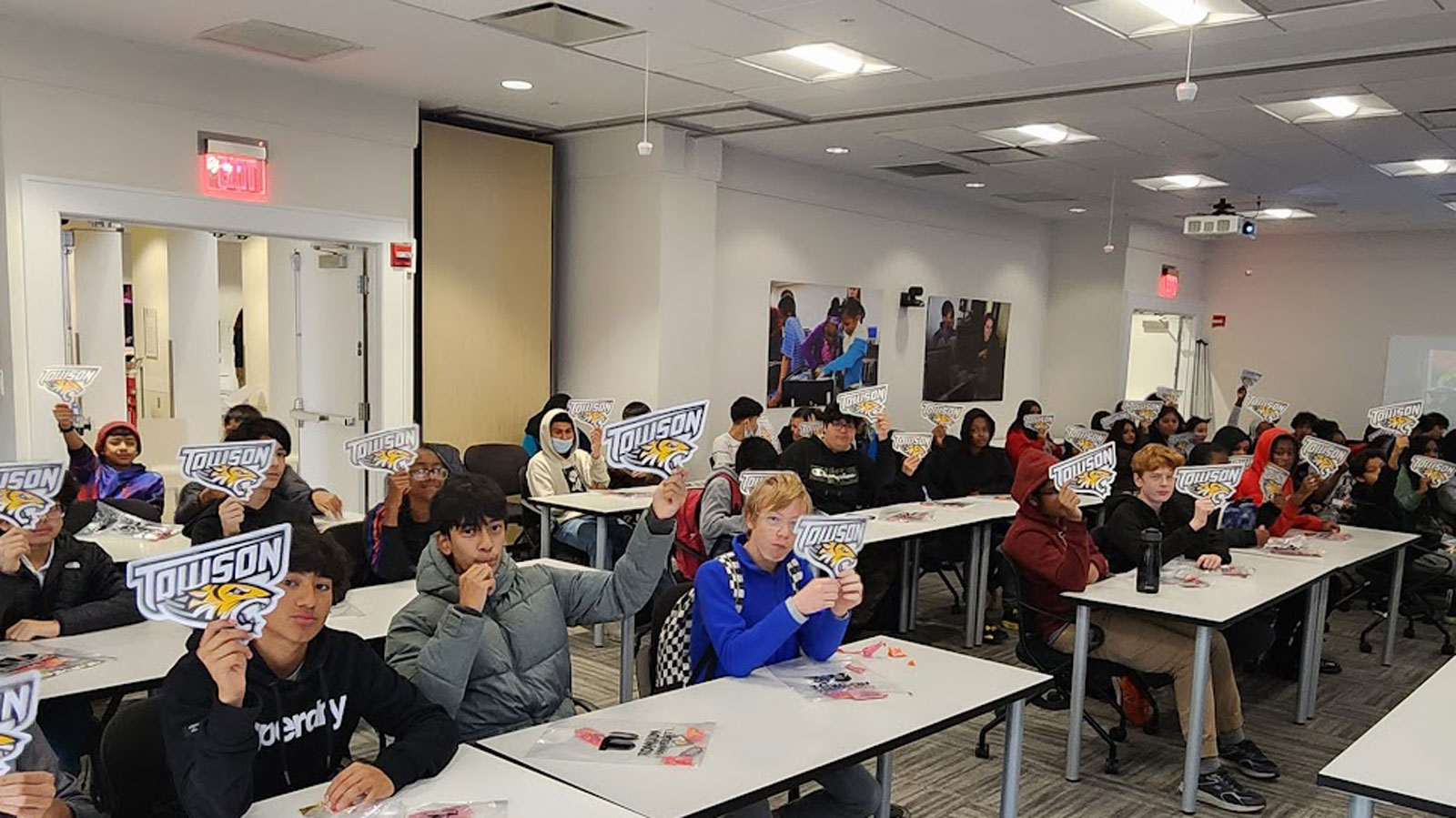
Beyond local state and government officials, the Sec Ops team is opening the eyes of K–12 students across Maryland to potential careers in cybersecurity and the ethics of the practice across industries.
“This work gives me a sense of purpose. You get to see how what you're contributing really impacts them career-wise,” Sanders says, “because our team has this element of outreach and giving back [to the community], it creates a group of practitioners who are more socially conscious.”