RESEARCH
Breaking barriers in accessibility and disability services
Degrees to Succeed senior researches how to make accommodations more accessible to university students
After suffering from the neurological aftereffects of a concussion midway through her senior year, Holly Staggers ’27 found herself navigating uncharted waters – the academic accommodations application process.
What began as a personal journey to acclimate to her new normal transformed into a year-long exploration into the student experience of seeking academic accommodations for disabilities and the stigma that often surrounds it. Accommodations are aids that provide access and support the well-being of students with physical, neurological and psychology disabilities – including extended test time, note-taking assistance, paratransit, assistive technology and more.
“I’m the first in my family to conduct research,” Staggers says. “It’s exciting that I can not only honor my family but also pave the way for future research that could help make accommodations more accessible to students.”
Resilience through research
According to the National Center for Education Statistics, 21% of undergraduate and 11% of postbaccalaureate students reported having a disability.
Despite this, the number of students who request and obtain accommodations drastically differs, and Staggers wanted to understand why.
I never really dreamed I would’ve gotten a shot at conducting research, let alone winning a grant for it. My pathway from CCBC to TU made that possible.
HOLLY STAGGERS
Recalling the aftereffects of her concussion and the toll they took on her learning, Staggers quickly learned just how much others shared her challenges.
“There are many students who need accommodations and don’t get them, or who struggle to get the kinds they need.” Staggers says.
“I really want to better understand how students navigate the process of getting accommodations. When they realize they’re in need of them, where do they go from there? How do they share their needs with their professors?”
Before learning of Accessibility & Disability Services (ADS) and accommodation resources at TU, Staggers often had to request professors send lecture notes and slide decks to her via email so that she could better process the concepts at home.
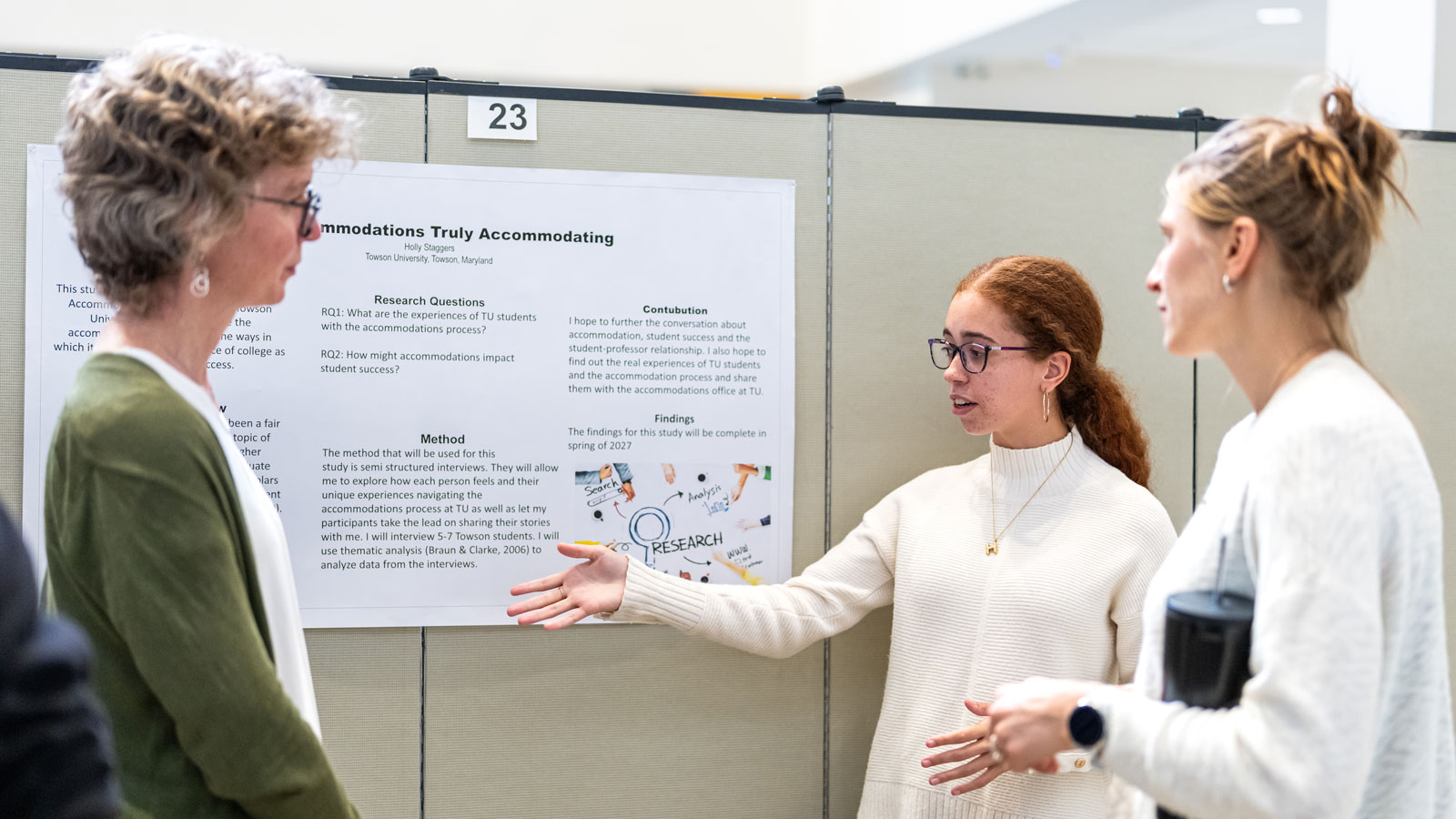
Holly Staggers shares her research design for her project, "Are Accommodations Truly Accommodating?" at the 2026 Student Summer Research Symposium.
With encouragement from Dr. Erjona Gashi, her research methods professor turned mentor, Staggers submitted a research proposal on the topic to the Summer Research Grant Program through the Office of Undergraduate Research & Creative Inquiry.
A Communication Studies major, Staggers spent the five-week program learning how to develop research questions, methods for collecting data and how to prepare a proposal for Institutional Review Board approval.
She will use the spring to interview fellow Tigers, learn about their experiences navigating the accommodations application process and share her findings with ADS staff members.
A match made in Maryland
Staggers wasn’t always a Tiger, but the Degrees to Succeed (D2S) partnership between TU and the Community College of Baltimore County (CCBC) paved the way for her to earn her stripes.
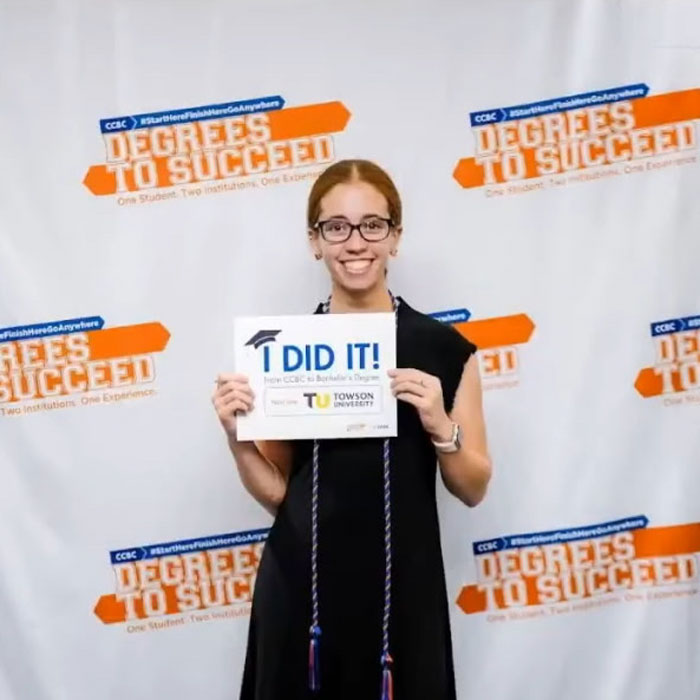
Through D2S, Staggers earned her associates degree from CCBC and transferred credits from her degree in CCBC’s communication studies program directly toward her bachelor’s degree at TU. The program enabled her to save on tuition with the comfort of knowing she was guaranteed a place at TU.
Growing up in Owings Mills, Staggers was homeschooled for the entirety of her K-12 education. But when it came time to explore higher education, she knew Degrees to Succeed was the right fit for her.
“I never really dreamed I would’ve gotten a shot at conducting research, let alone winning a grant for it,” Staggers says. “My pathway from CCBC to TU made that possible.”
Quick Links
More TU news

TU joins cohort to improve transfer, bachelor’s attainment outcomes for community college students across Maryland
Maryland Transfer Intensive seeks to strengthen community college pathways and boost statewide bachelor’s degree attainment
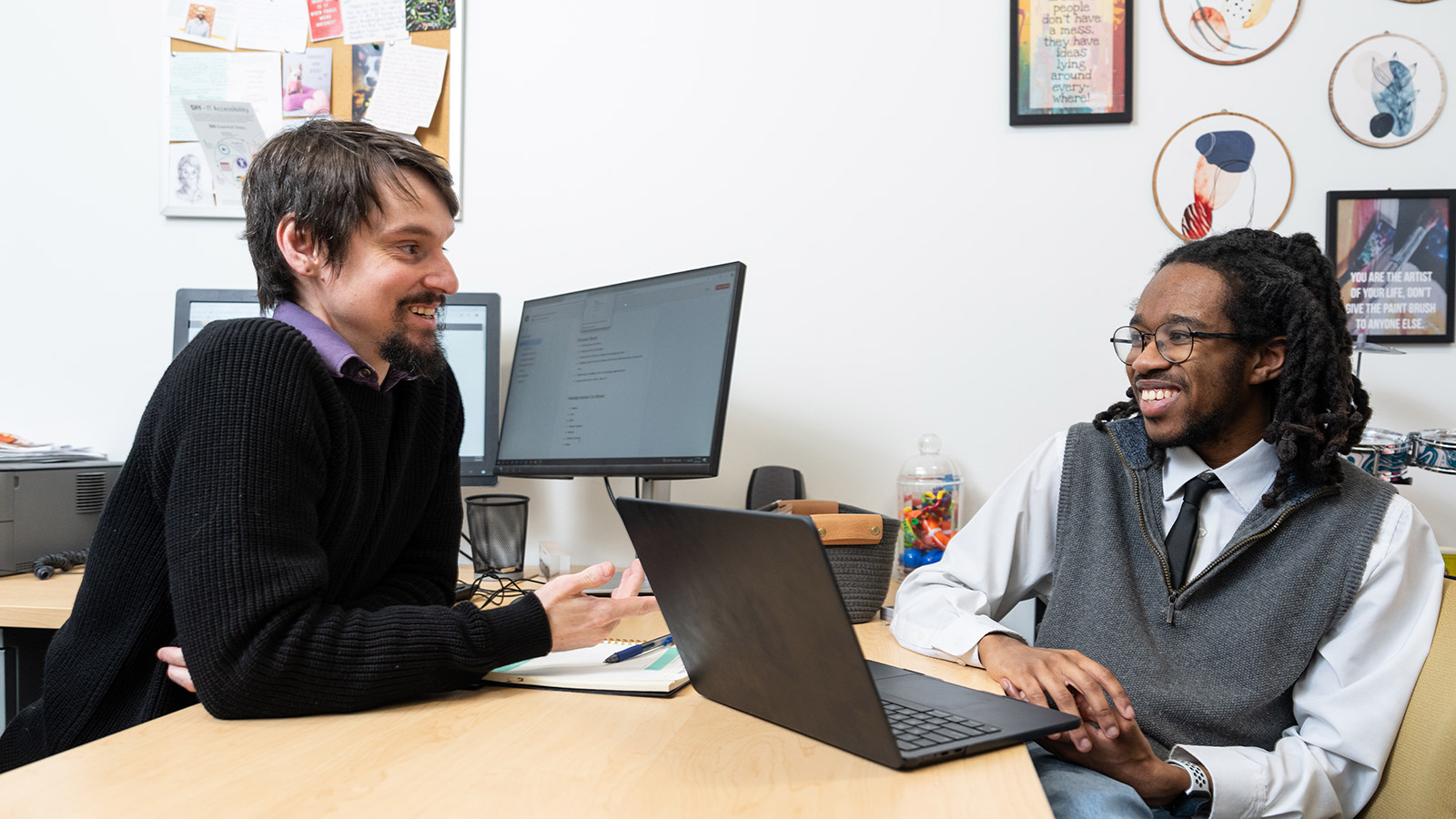
Hitting his stride
Connecting with Accessibility and Disability Services put Kaden Mont on the path to success at TU. Now he’s paying it forward.