Medical Billing Course

Become a medical biller and join one of the fastest growing allied health careers in the U.S., with our self-paced course.

Quick Details

Towson University’s Medical Billing course gives you the skills needed to be competitive in the healthcare field, including areas of diagnostic coding, procedural coding, Medicare, HIPAA and bill collection strategies. Upon completion of this course you will be prepared to sit for the Certified Professional Biller exam, offered by AAPC.

Course Format: Self-paced

Total Hours: 310 hours

Program Duration: Must be completed in 12 months

Tuition: $2,899

Materials: Tuition includes all AAPC course materials, AAPC student membership, PDF guide to course pacing, and certification exam voucher. 

This course is WIOA approved and is on the Maryland Eligible Training Provider List (ETPL). Students obtaining support through WIOA offices should contact Chunta Olaseha via email at to initiate the registration process.

Set up a 15 minute meeting to chat about this course.

Upcoming instructor-led courses

Important Dates Register
Course dates: May 16–November 16
Required meetings: 8:30–9:30 a.m. on May 16; 8:30–10 a.m. on June 13, August 22, October 24 (Zoom)

Ask us about payment plan options.

Connect with us

Have questions? We have answers.

Request Information

Medical billing course resources

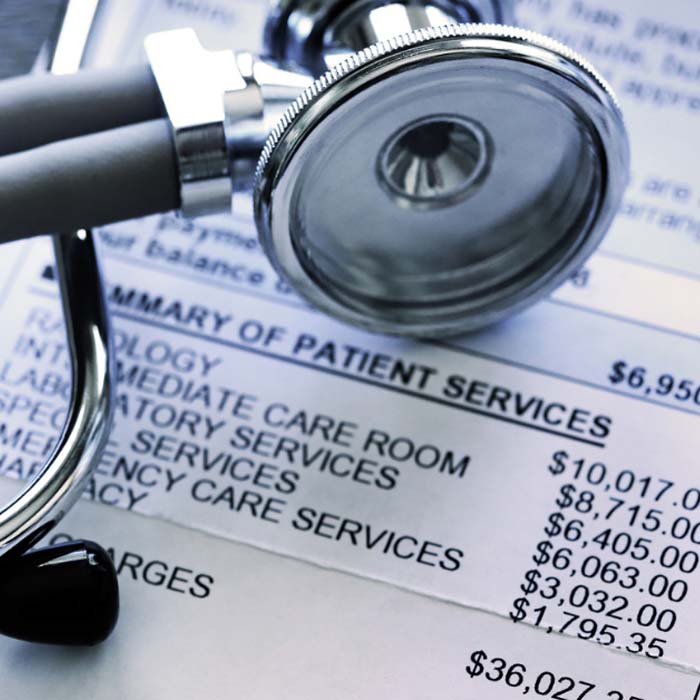
stethoscope laying on medical bill

Top five reasons to consider a career in medical billing

Medical billers work in hospitals or physician’s offices and enjoy long careers, competitive salaries, and flexible work environments.

Read On

medical biller working on a computer

Medical billing or coding: Which is right for your?

Medical billing and medical coding are often mistaken as interchangeable careers. The truth is they are different roles that require different training.

Learn More

mackenzie enderlain

Medical billing course sets student up for pivot

Mackenzie wanted a career change and saw the healthcare industry as the perfect pivot. Learn why she chose Towson University.

Read Mackenzie's Story


Learn More: Medical Billing Course 

Medical billing is the process of submitting health insurance claims on behalf of a patient to various health insurance payers to acquire payment for services provided by a medical facility. Many medical billers work in hospitals or physician’s offices. Becoming certified shows you have obtained the proper training and skillset employers look for in a medical biller.

The medical billing profession has a high projected growth rate, as this role is vital to making sure that all healthcare providers receive payment for the services and supplies they provide. Physicians depend on medical billers for reimbursements that provide the cash flow used to pay their expenses, keep the medical facilities open, assure compliance with payer guidelines and deal with government red tape.

According to the BLS, the job outlook for medical billers is expected to grow by 8% (faster than average) through 2032, with 194,300 jobs opening annually. AAPC reports (in 2022) the median pay for a medical biller with a CPB (Certified Professional Biller) credential was $56,981.

Our Medical Billing Specialist course offers valuable training in legal, ethical, and regulatory concepts that are central to this field, including HIPAA compliance, fraud and abuse in medical billing, and third-party payer guidelines. You will also understand all phases of the revenue cycle, including patient registration, charge capture, medical coding, claim submission, data analytics, payer reimbursement, patient billing, and collection practices.

The medical terminology portion introduces key concepts of medical language and human anatomy, emphasizing the interconnectedness of body systems in health and disease. The curriculum covers topics such as the musculoskeletal, cardiovascular, respiratory, nervous, and immune systems, along with mental health and special senses, with exams at the midterm and final stages. Students with prior knowledge can optionally test out by achieving a minimum score of 80%, replacing course content if desired.

Upon completion of this course, you should be well prepared to find your place in this rewarding healthcare career.

You will learn to:

  • Describe the different stages of the revenue cycle
  • Recognize federal laws that affect healthcare
  • Define health insurance and medical terminology
  • Use the ICD-10-CM, CPT, and HCPCS Level II codebooks to assign medical codes accurately
  • Explain the data entry requirements of a medical insurance claim form
  • Identify the billing guidelines of government and private payers
  • Recount the structures, functions, and disorders of the different body systems

You will benefit:

  • Be able to manage the revenue cycle to maximize reimbursement effectively
  • Recognize fraud and abuse in medical billing
  • Assign medical codes from different types of clinical documentation
  • Complete medical claims according to payer guidelines
  • Access to the Land the Job resource to assist in taking your job preparation to the next level
  • Gain confidence in your exam-taking abilities through repeated practice with the mock exam, ensuring you are well-prepared to pass the certification exam
  • Receive a Certificate of Completion that will show a prospective employer that you received comprehensive, up-to-date training in medical billing that may set you apart from other candidates
  • Receive a voucher for the Certified Professional Biller (CPB) exam offered by the American Academy of Professional Coders (AAPC) that will bolster your resume and authenticate your skillset

Medical Terminology

  • Getting Started
  • How to Take This Course
  • Test-Out Exam 1: Lessons 1–Midterm Exam
  • Introduction to Medical Terminology and the Human Body in Health and
  • Disease
  • The Musculoskeletal System
  • The Cardiovascular System
  • The Lymphatic and Immune Systems
  • The Respiratory System
  • The Digestive System
  • The Urinary System
  • Midterm
  • Test-Out Exam 2: Lessons 8–Final Exam
  • The Nervous System
  • Special Senses: The Eyes and Ears
  • The Integumentary System
  • The Endocrine System
  • Mental Health
  • Male and Female Reproductive Systems
  • Diagnostic Procedures, Nuclear Medicine, and Complementary Medicine
  • Final Exam

Medical Billing Specialist

  • Introduction to Medical Billing
    • Career Opportunities
    • Personal and Technical Qualifications
    • Employment Settings
    • Telecommunications
  • Professional Certifications
    • Introduction to Health Insurance
    • Health Insurance Terminology
    • Commercial and Government Payers
    • Healthcare Documentation
    • Electronic Health Record
  • Managed Healthcare
    • Types of Reimbursement
    • Managed Care Providers
    • Managed Care Models
    • Consumer-Directed Health Plans
  • Revenue Cycle Management
    • Phases of Revenue Cycle Management
    • Encounter Form, Chargemaster
    • Insurance Claim Cycle
    • New Patient Registration
    • Collection Practices
  • Legal Aspects of Health Insurance and Reimbursement
    • Laws Affecting Healthcare
    • Protected Health Information (PHI)
    • Health Insurance Portability and Accountability Act (HIPAA)
    • Fraud and Abuse in Medical Billing
    • Release of Information (ROI)
  • ICD-10-CM Coding
    • Overview of ICD-10-CM
    • Key Features
    • Organization of the Codebook
    • Index to Diseases and Injuries
    • Tabular List of Diseases and Injuries
    • Coding Conventions
    • Official Guidelines
  • CPT Coding
    • Overview of Healthcare Common Procedure Coding System (HCPCS)
    • Category I, Category II, and Category III Codes
    • Organization of the Codebook
    • Main CPT Sections
    • Evaluation and Management
    • Anesthesia
    • Surgery
    • Radiology
    • Pathology and Laboratory
    • Medicine
    • Code Modifiers
  • HCPCS Level II Coding
    • Overview of HCPCS Level II
    • Organization of the Codebook
    • Durable Medical Equipment
  • Maximizing Reimbursement
    • Price Transparency
    • Data Analytics
    • Billing Audits
  • Pharmacology for Medical Billers
    • Pharmacodynamics and Pharmacokinetics
    • Routes of Administration
    • Drug Classifications
    • Prescription Drugs and Over-the-Counter Drugs
    • Controlled Substances
    • Medication Lists and the Electronic Health Record
  • Midterm
  • Clinical Documentation Improvement (CDI)
    • Deficiencies in Documentation
    • Medical Necessity
    • Coding Audits
    • Types of Clinical Documentation
  • Insurance Claims
    • National Uniform Claim Committee
    • CMS-1500 Claim Form
    • Patient and Insured Information
    • Physician or Supplier Information
    • UB-04 Claim Form
  • Commercial Insurance
    • Individual/Group Health Insurance, Automobile, Disability, Liability, Workers' Compensation
    • Completing Commercial Health Insurance Claims
  • Blue Cross Blue Shield
    • History of BCBS
    • Types of BCBS Plans
    • Participating/Nonparticipating Providers
    • BCBS Billing and Payment Guidelines
  • Medicare
    • Medicare Eligibility
    • Medicare Part A, B, C, and D
    • National Coverage Determinations/Local Coverage Determinations
    • Participating/Nonparticipating Providers
    • Physician Fee Schedule
    • Medicare Billing and Payment Guidelines/NCCI
  • Medicaid, CHIP, TRICARE, Workers' Compensation
    • Medicaid
    • Children's Health Insurance Program (CHIP)
    • TRICARE
    • Workers' Compensation
  • Certification
    • Importance of Certification
    • Study Strategies for the Certification Exam
    • Prior to the Exam
    • Morning of the Exam
    • During the Exam
  • How to Find a Job in Medical Billing (Optional)
    • Formulating Your Career Goals
    • What Employers Want
    • Showcasing Your Skills
    • Resume Tips
    • Cover Letter Tips
    • Interview Questions
  • Final

To sit for national certification exams, candidates must have a high school diploma or equivalent. Therefore, it is recommended you have this before enrolling for this course. Certification exams offered by AAPC are only available online to candidates located in the US.

Upon successful completion of our Medical Billing course, students will be prepared for an entry-level position doing medical billing in a medical office setting and will be prepared to sit for the AAPC certification exam to become a Certified Professional Biller (CPB).

Internet Connection

  • Broadband or High-Speed - DSL, Cable, and Wireless Connections
  • Dial-Up internet connections will result in a diminished online experience. Classroom pages may load slowly and viewing large audio and video files may not be possible.

Hardware Requirements

  • This course can be taken on a PC or Mac.

Software Requirements

  • PC: Windows 8 or later.
  • Mac: macOS 12 or later.
  • Browser: The latest version of Google Chrome or Mozilla Firefox is preferred. Microsoft Edge and Safari are also compatible.
  • Microsoft Word or an equivalent word-processing program.
  • Adobe Acrobat Reader.
  • Software must be installed and fully operational before the course begins.

Other

  • Email capabilities and access to a personal email account.

This self-paced course is designed to be user-friendly and independent, minimizing the need for external support. In courses with instructors, our direct platform support feature includes opportunities for questions, discussions, and remediation, with email and phone support available for select courses. Our student advising team is available to guide you on program requirements and administrative requests, but they do not provide assistance with course content. Our goal is to provide you with the necessary support for success, whether it's through self-paced exploration, direct communication, or guidance from our advising team.

*NOTE: WIOA and other tuition assistance programs are not eligible for course discounts.