

Answering queries about social justice issues
Center for Student Diversity to host Queering Justice series
By Kyle Hobstetter on October 15, 2020

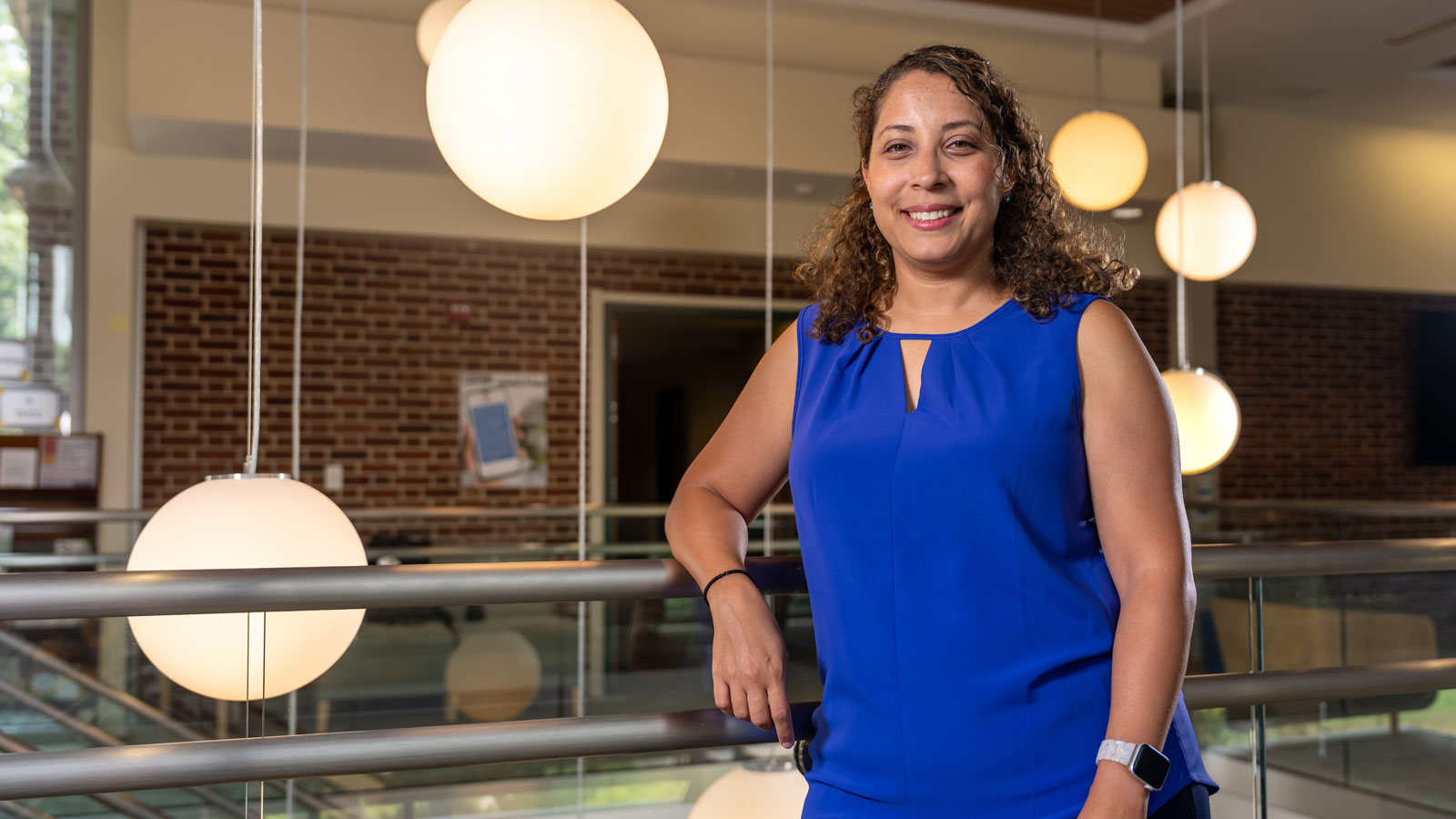
As they were looking at the social justice movements that flourished over the summer, Erin Rook, assistant director of the Towson University Center for Student Diversity, kept thinking about accessibility.
Specifically, they were thinking about the protests and marches, and the inaccessibility of those who weren’t able to physically attend.
After talking with student intern Edmund Savage, their conversation focused on other aspects of social justice that aren’t normally talked about.
“And the whole conversation over the summer was about how can we get folks involved in a conversation, but also educated a bit,” Rook says. “So we came up with this idea for a series where students, faculty and staff can feel comfortable talking about these topics.”
That series is called Queering Justice, which will be three sessions over the next two months that looks at different social justice issues.
The Center of Student Diversity, who is hosting the series, is using the word “Queering” as a verb in this context, and does not necessarily mean to look at something related to an LGBTQIA+ identity, but rather to look at something in a new light and challenge pervious assumptions about it.
“So, through our Queering Justice series we will be “Queering” the conversation as we take a deeper dive into various aspects of social justice topics,” Rook says.
The first session of Queering Justice will take place on Wednesday, Oct. 21 at noon. Those wishing to attend are asked to RSVP, and they will be given a special Zoom link that will allow them to participate.
The first topic covered will focus on Disability Justice. Unlike the Disability Rights Movement, Disability Justice pushes to go further in supporting all disabled people — including those that have been historically left behind from the Disability Rights Movement.
This means centering experiences and needs of disabled people of color, queer and trans folks, immigrants, people that are experiencing homelessness or are incarcerated, mentally ill, those whose ancestral lands have been stolen and many others.
This session will be led by staff, students, and alumni with lived experience as disabled and neurodivergent people, and two of the facilitators are students interested in restarting the Disability Student Union on campus.
“There's a lot of good work that's happened in Disability Rights, but like most things, it was very white, cis-gendered centered,” Rook says. “So, part of Disability Justice is including everyone else that got left out of those conversations, and looking at like intersecting oppressions, basically for folks with disabilities.”
Once an attendee RSVPs for the event, they will be sent a short YouTube video, and an article they can read ahead of time, that provides them education on the session’s discussion.
The Oct. 21 session on Queer Disability justice will cover topics such as:
- The basics of Disability Justice
- How ableism is inherent in all other forms of oppression
- Inaccessibility in modern social justice movements
- Advocacy steps to incorporate disability justice into all social justice and anti-oppression work
- A community discussion on these topics
Rook also says the timing of this first session is perfect, because it also coincides with the 30th anniversary of the Americans with Disabilities Act (ADA). And while ADA has been important, it suffers from the same issues the Disability Rights Movement suffered from.
“ADA is undoubtedly a key component in the fight for civil rights for disabled people,” Rook says. “It is critical that we continue push for more inclusive and comprehensive civil rights and justice for all disabled people. Disabled people still do not have full civil rights in this country.”
After the first session, Queering Justice will return on Oct. 28 with a session that takes a deeper look at reproductive justice. Titled Queering Reproductive Justice, the session will be part of Queer Wellness Week (Oct. 26-30).
Queering Reproductive Justice will be a collaboration between the Center for Student Diversity, the Office of Inclusion and Institutional Equity and University Health Services.
The last Queering Justice session will take place on Nov. 18, and will look at student activism and student justice in the United States.
And while this series has been a lot of work, Rook says its these types of events, that both educate and connect the TU Community, are their favorite part of the job.
“What I like most about working in a university is the idea of this massive community that you're like automatically a part of,” Rook says. “When you're doing a program and it can involve all the different types of people from that community, that just makes me very happy. It makes me want to do the work.”
This story is one of several related to President Kim Schatzel’s priorities for Towson University: Diverse and Inclusive Campus.