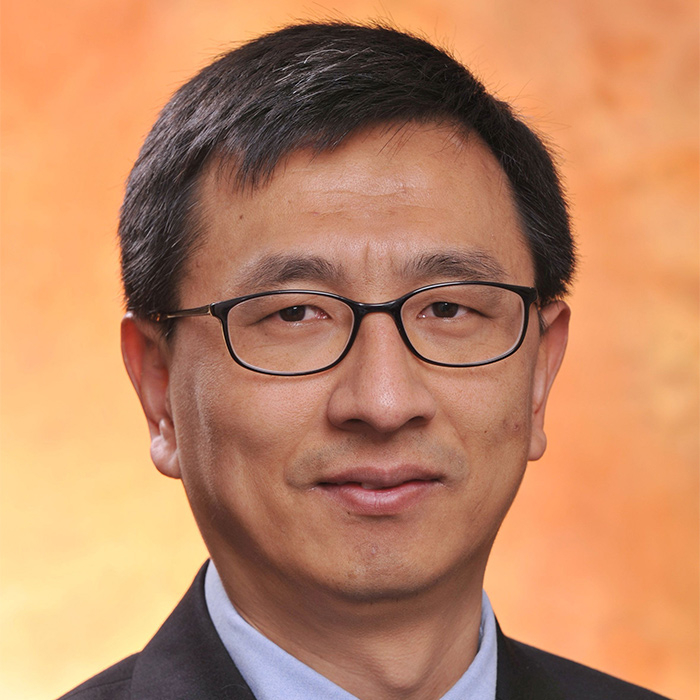
Hua Chang
Hua Chang, PhD, is a Professor in the Marketing Department and Program Director of
the M.S. in Marketing Intelligence program in the College of Business and Economics.
His research examines consumer and marketing applications of artificial intelligence
(AI), with a particular focus on human-AI collaboration in customer service, AI-driven
personalization, and consumer responses to AI-generated content. Current projects
include experimental investigations of how consumers evaluate and trust human-only,
AI-only, and hybrid human-AI service configurations, as well as studies on perceived
authenticity in AI-generated advertising and AI-personalized social media communication.
At the Towson AI Institute (TAI), he will build cross-disciplinary research collaborations
on human-AI interaction in consumer and organizational contexts, including joint grant
proposals, co-authored empirical work, and a cross-college workshop series connecting
marketing, computer science, and information systems researchers on applied AI and
consumer behavior.
Feng Cheng
Feng Cheng, PhD, is an Assistant Professor in the Department of Business Analytics
and Technology Management in the College of Business and Economics, with expertise
in supply chain and operations management and long-standing regional industry relationships.
She has led the full cycle of industry-engaged projects, from developing partnerships
to supervising student teams tackling real-world supply chain and operations challenges.
Her TAI work will support a student team engaging with a regional business, and she
will help develop and field-test a structured AI-readiness assessment for small and
mid-sized businesses for the Institute's AI Clinic.
Yifan Guo
Yifan Guo, PhD, is an Assistant Professor in the Department of Computer and Information
Sciences in the Fisher College of Science and Mathematics and the thirteenth holder
of the Jess and Mildred Fisher Endowed Chair in the Mathematical and Computing Sciences.
His research lies at the intersection of cybersecurity, AI, and edge computing, with
particular interests in edge AI, federated learning, smart sensing, AI-enabled cyber
defense, and their applications to the Internet of Things and cyber-physical systems.
His research is supported by an NSF Computer and Information Science and Engineering
Research Initiation Initiative (CRII) award, and he also serves as a co-PI on an NSF
Improving Undergraduate STEM Education (IUSE) grant focused on edge-AI curriculum
designs. Through his work with the TAI, he aims to expand edge-AI research and educational
capacity beyond computer science and foster cross-college collaborations, from biomedical
edge AI to sensor-data-driven edge AI research.
Ali Gurbuz
Ali Gurbuz, PhD, is a Postdoctoral Assistant Professor in the Department of Mathematics
in the Fisher College of Science and Mathematics, where he works at the intersection
of applied mathematics and AI. His expertise and interests include shared research
infrastructure and emerging agentic-AI methods. With the TAI, he will build faculty
capacity to use AI-assisted research workflows, assist with NAIRR-allocated computing,
running pilot projects that demonstrate what is possible and documenting repeatable
patterns colleagues can follow.
Mariana Lebron
Mariana J. Lebrón, PhD, Professor of Leadership & Management in the College of Business
and Economics, designs gamification and game-based, AI-enhanced learning, training,
and leadership systems to navigate power, strengthen influence, and amplify voice.
As a Towson AI Institute Faculty Lead, she develops a gamified, AI-supported learning
model strengthening cross-disciplinary student engagement, gamification workshops,
and a university-wide gAImification community with research and teaching-innovation
groups advancing game-based, AI-enhanced learning. Innovations: Cooperative Leadership
Strategy Games 2.0, seven-year experiential learning model engaging ~300 students
designing and presenting 58 original games to game-industry leaders, evaluating workforce-development
potential; AI-designed simulations; and Pioneer 1.0, student-faculty co-designed AI
interviewer-agent. Awards: 2024 Best Teaching & Learning Paper Award, Organization
Management Journal game-design article; 2023 University of Maryland Board of Regents
Faculty Teaching Excellence Award; 2026 MAACBA Teaching Innovation Award. Lebrón’s
30+ years consulting span leadership and workforce development, including gamifying
employee training; her Human-First Power-to-Influence Method uses target-needs analysis
and AI-enhanced linguistic mirroring to navigate power, transforming voice into influence.
Weixian Liao
Weixian Liao, PhD, is an Associate Professor in the Department of Computer and Information
Sciences in the Fisher College of Science and Mathematics. He held the Jess and Mildred
Fisher Endowed Chair in the Mathematical and Computing Sciences from 2021 to 2024.
His research addresses trustworthy and privacy-preserving AI, adversarial and federated
learning, and large language and multi-agent systems. He received the Best Paper Award
at the 18th IEEE International Conference on Dependable, Autonomic & Secure Computing
(DASC) in 2020, the Best Journal Paper Award, the Big Data Technical Committee, IEEE
Communications Society in 2020, and the Excellence in Scholarship Award, Fisher College
of Science and Mathematics in 2022-2023. With the TAI, he will advance AI-security
research and form interdisciplinary collaborations on model reliability and privacy,
including a cross-disciplinary seminar on trustworthy-AI methods.
Anik Mallik
Anik Mallik, PhD, is an Assistant Professor in the Department of Computer and Information
Sciences in the Fisher College of Science and Mathematics. As the principal investigator
of an NSF Computer and Information Science and Engineering Research Initiation Initiative
(CRII) award with prior industry experience in energy and power systems, he works
in robotics, edge AI, and cyber-physical systems. His TAI work will build technical
industry partnerships around robotics and cyber-physical systems and turn them into
student-facing projects, including a Research Experiences for Undergraduates (REU)
cohort. He is also a member of the special interest group on quantum computing at
the School of Emerging Technologies. He has been named the Jess and Mildred Fisher
Endowed Professor of Computing Science at Towson University for his contributions
to AI and quantum systems.
Mahnaz Moallem
Mahnaz Moallem, Ph.D., is the Chair and Professor in the Department of Learning Technologies,
Design, and School Library Media, College of Education, and a Faculty Lead at the
Towson AI Institute. Her scholarship focuses on the design, development, and evaluation
of innovative learning environments that integrate artificial intelligence, immersive
technologies, learning analytics, and data science to enhance teaching and learning
across K-12, higher education, and professional settings. She has led numerous federally
funded and international projects examining the impact of emerging technologies on
learning, STEM workforce development, and educational equity. Dr. Moallem's research
emphasizes human-centered and culturally responsive approaches to AI integration,
with particular attention to preparing educators and learners for an AI-enabled future.
Through interdisciplinary collaborations, she advances research and practice at the
intersection of learning sciences, instructional design, and educational innovation,
supporting evidence-based transformation in education and workforce systems.
Elia Powers
Elia Powers, Ph.D., is a professor in the Department of Mass Communication within
the College of Fine Arts & Communication. A former journalist, he is a sports, features,
and podcast editor at the faculty-led Baltimore Watchdog, and an independent podcast
reporter, producer, and host. His research examines the evolving relationship between
audiences and news sources, focusing specifically on self-presentation and perceptions
of broadcast journalists; the appeal of podcasters and other media personalities;
the civic impact of local and nonprofit journalism; and efforts to engage marginalized
communities and (re)build trust. Recent studies have explored views on AI use in the
workplace and classroom. His work as a Faculty Lead at the Towson AI Institute will
focus on the ethical use of AI in writing-intensive fields, leading to the development
of a course and/or program in Writing and Editing with AI.
Jia-An Yan
Jia-An Yan, PhD, is a Professor in the Department of Physics, Astronomy and Geosciences
in the Fisher College of Science and Mathematics. His research focuses on computationally
studying the electronic, optical, and magnetic properties of low-dimensional quantum
materials using first-principles methods based on density functional theory. His recent
research interests extend to the computational design of quantum sensors and the computational
study of quantum circuits for quantum computing. Within the TAI, he will study agentic
AI discovery of novel materials, explore applications of physics-informed neural networks
(PINNs), connect physics with other disciplines such as chemistry, biology, mathematics,
and computing, and identify cross-departmental projects. He has committed to student
AI workforce development by developing a graduate-level course and will continue to
develop an AI-focused CURE course for undergraduate students.
Lei Zhang
Lei Zhang, PhD, is an Assistant Professor in the Department of Computer and Information
Sciences in the Fisher College of Science and Mathematics. His research focuses on
applied AI, computer vision, and medical image analysis. Before joining Towson, he
worked at the University of Maryland School of Medicine, conducting research and development
in medical image analysis, machine learning, and computer vision. He serves as faculty
lead on the Institute’s AI Clinic medical imaging and computer vision project and
as a key faculty connection for health-related AI. His TAI work also supports applied
AI collaborations across colleges, including an emerging digital-humanities project
exploring AI-based analysis and restoration of digitized historical manuscripts.
Luciana Zuest
Luciana Zuest is an Associate Professor in the Department of Kinesiology within Towson
University’s College of Health Professions and a Faculty Lead in the Towson AI Institute.
An educator for 22 years, including 12 as a university faculty member, she coordinates
the Health and Physical Education teacher preparation program and brings expertise
in curriculum, instruction, and assessment. Her research examines AI adoption in higher
education and includes a grant-funded national study of kinesiology faculty and one
of the first published empirical studies of AI adoption among kinesiology students.
She also holds an Artificial Intelligence Foundations Certificate from the University
of Maryland Global Campus. Zuest is a 2026–2027 Senior Fellow for Assessment and Evaluation
at the University System of Maryland’s Kirwan Center for Academic Innovation and a
2026 EDSAFE AI Alliance Women in AI Fellow. Previously, she served as an inaugural
TTU AI Hub Research Fellow.