Heather Chung, Owner of Brown Rice Korean Grill
Spring 2016
When Heather Chung moved to the U.S. from Korea, she launched Brown Rice Korean Grill with the help of her sister. In this interview, she describes her early days running Brown Rice Korean Grill in Baltimore, lessons learned from customers, and her hopes for the future.
This interview with Heather Chung was conducted by Towson University alumnus Kiara “Olive” Oliver in 2016 while enrolled in a special topics seminar, Asia in Maryland (AIM) Cultural History Project. The AIM course combined ethnography and oral history to explore, understand and document Asian arts and culture in Maryland. While researching several eateries in Baltimore, Olive conducted an oral history with Heather Chung, owner of Brown Rice. The text below represents a transcript of Olive’s interview, which has been edited for clarity.
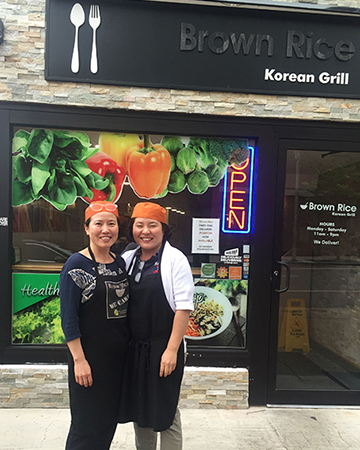
KO: Please introduce yourself.
HC: My name is Heather Chung. That’s my American name. My real name is Haechong Kim. I came here in 1998, when I was 30. I had to learn English first, and I had to learn a different culture, different food. I worked for money because we had to pay bills. I wasn’t happy. So me and my sister talked about what we would like to do. We really wanted something that makes us happy. That was food.
When we opened, we had a tasting from 12 to 2 o’clock. People walked in and had a full menu. No charge. So that was a very different experience from people believing nothing’s free in this country, which is true. Then people asked about the food, and we explained the meaning. Bibimbap: “bibim” is a Korean word for “mix.” “Bap” is rice. Mixed rice bowl. Our bibimbap is not Korean traditional food. Some Korean, some American, some Japanese and some Chinese. But we still have some traditional sauces: gochujang sauce and bulgogi. And we have a mango sauce. We don’t have mango sauce in Korea.
KO: How did you get started? You said you started working with your sister.
HC: I live with my sister and my sister’s family. I don’t have my own children, so I just want to do something right. When I get really old — 80 or 90 — and I need to think about my life and ask “What have I done?,” this is a good way. If there’s something I can help people with, I’m really happy to do that.
This is a great country. My sister came here in 2008, which is ten years later than me. I had many employees and just kept telling everybody, “This is the food your kids eat. What are you gonna do? You don’t want it messed up.” This is a kind of big family. We understand each other. If something’s bad, we gotta throw it away and make another one. If customers complain about the food, we have to make it again or give them credit. We need to make customers happy, because if we don’t have customers, we don’t have a business. We’re not able to pay rent. So we always try to listen to the people, what they like. It’s not what I wanna sell, it’s that we need to provide what they like.
KO: How did you come up with the name Brown Rice?
HC: Right now, we use a lot of brown rice. The reason why is that brown rice has more nutrition.
KO: What about your menu? Did you decide what would go into your menu?
HC: Yes, when we opened. At first I thought our decisions would be good, but a few months later, I learned people want something else. Then I switched the menu. I think I switched the menu five, six different times. I’m still listening to people, to what they want. My food is bibimbap. Not beef and broccoli. Not pasta. Not pizza. This is balanced food: a little bit of rice, a little portion of protein, and different kinds of vegetables. I believe that this is the kind of food that people need.
KO: How do you connect with your audience? How do you learn what people like?
HC: I always talk to my customers when there's a chance. Another thing I do is provide food donations to events, like a school event at MICA or John Hopkins. I always send them a little 8-ounce bowl. They can try it and read the menu. When they try it, they like to know what it is. I try to talk to them here. You need to know more? Come to me, I’m ready to explain.
And also parents, they bring their kids here. They’re happy when the kids eat their vegetables — edamame, broccoli, spinach. Because at home, the parents are busy. Too busy working. So they don’t have time to steam vegetables or make some food.
KO: How about the restaurants down the street? Do you ever talk to them? What do you know about them?
HC: I really love to talk to other business people. And community people. This community, we call it Old Goucher, part of Charles Village. I know the priest in the community at Catholic Cross. He’s a very nice guy. And local people . . . we talk and we go out sometime. Sometimes I’ll call someone I know who’s old and say, “Hey, are you at home? I can bring some food.”
KO: What do you think brings people to your restaurant?
HC: My restaurant is a little different. We care about food. A customer says, “This is soul food.” How do you know? If you go to the restaurant, you need to look at the cook and people. They’re not happy at all. Do you want to eat your food when unhappy people cook your meals? We can do it in a better way instead of food coming from a big company that’s pre-made and frozen. You call that food? That’s why I don’t want to do that. People know that. I don’t know how. So that’s why I’m happy.
KO: Do you think your food is a form of art?
HC: I don’t know. When we make bibimbap, I really like different colors in a circle. Carrots have the orange color. Kale salad, spinach and edamame are green. Bean sprouts, kind of yellow-ish. It looks pretty. I don’t know if you call that art. . . [laughter].
KO: Where do you get your food? Do you go to H-mart?
HC: When I opened here, I was looking for local farms. But there are too many regulations. I’m not supposed to buy farmer’s market produce. Not many farmers follow certain kinds of regulations. So right now, I go to H-mart, restaurant companies, Cisco, and a Japanese company. I have so many vendors.
KO: What’s your favorite food? What do you make at home?
HC: I like soup — a kimchi soup base with pork belly, sour kimchi (fermented cabbage). This is really good. I love that with tofu in it. That’s my favorite. I can eat kimchi soup everyday. I make very simple food, as in kale, just a little bit of olive oil, a little bit of sea salt, and grilled zucchini. Just very simple. We steam bean sprouts and add a little bit of salt. That’s it.
I love to share food, so me and my sister order different foods, and we share. Yummy, yummy, yummy yummy! My boyfriend and I. . . it’s the same thing. We order different foods, then we share. Sometimes if we go out for dinner and he orders the same thing I order, that means when I go home, I need to talk. “Hey, we need to talk. You don’t wanna share your food with me? That means we have a problem” [laughter]. I want to share my food with you. Sometimes I go get pizza, a hamburger, or a cheesesteak sub. And I love Indian food. I love all kinds of food.
KO: What is a regular day in your life?
HC: When I first opened, me and my sister used to run this business from 11-9. Before 11, we’d go grocery shopping or some other stop. We’d finish at 9 o’clock, clean up, go home at 10 o’clock. It was too much work. So we decided that I come to work a little early, and I leave a little early. And she comes to work a little late, and she closes the store. And also, I hire more people.
But the restaurant business is hard. I feel like I work 48 hours a day. I have to think about food quality all the time. If a customer just left lots of food, that means something is wrong. I talk to them and ask, ”Is there anything I can do?” And I’m doing great. I opened a second location a few months ago, I think it was on March 10th, at 520 Park Avenue, near the University of Maryland and the Peabody School. And I’m opening another location at R House, on Remington Avenue and 29th Street. We’ll be there in September. I’m so excited and I’m so happy people like the food.
KO: What do you look for in an employee when you’re hiring?
HC: Someone willing to learn. Because this is different. When people are working, I tell them this is Korean food. This is not American food; and you need to learn and eat. Are you ready? And they accept the job. Here you see all different people. I have Korean employees, Black American employees, White American employees, and Hispanic employees.
KO: When did you first begin cooking? Tell me about the history of cooking in your family.
HC: I was very little. I grew up with a single mother. My father died a long time ago. And she raised seven kids on her own. We had a small farm, and she had to work hard. Farming is very, very hard work. So we just learned from her. We had to cook because Mommy’s still working in the field. We didn’t have any government helping. Not at all. We had to struggle, but we had to make it. And we did. We appreciated what we had no matter what, even if we just had just rice and kimchi. We don’t waste food. I love to make food — just enough, not too much. If you go to the buffet, there’s too much food. That makes me feel really, really bad. We are wasting everything and destroying our bodies. So I said, “This is not right.”
KO: What’s your inspiration when you make food? You mentioned your mom.
HC: Yeah, my mom. My mom cooked food, and we liked it. But when I try other food, like restaurant food, it tastes better. But I didn’t know why. Some restaurants use MSG a lot. MSG tastes so much better, but feels uncomfortable and sometimes upsets your stomach. So that’s why I try to make food my mom’s way. I try to use less sugar, less oil, less salt, less MSG. Too much is not good at all. So when I make gochujang sauce, it’s very light. Not too sweet, not too heavy. I add applesauce instead of sugar. That’s not the Korean traditional way, but I believe that it is the right way. If you go to a Korean barbecue place, it’s so tasty. Afterwards you realize there’s too much sodium, too much sugar, and you feel a little [groans]. So you’re not able to go there every day. But my food can be an everyday meal.
KO: What do you like about Baltimore? What keeps you here?
HC: I love Baltimore city. I came here in 2012. We started a bar business. Friends of the family wanted me to run the business, and me and my ex husband, we did that for a while. I wasn’t happy at all. I worked everywhere: a carryout, gas station, cashier, deli store, airport. I sold liquor to the people. Most people were alcoholics and drug addicts, and a lot were in gambling trouble. For five years, I had run that liquor store and five years later, I said, “This is killing me. Killing people is killing me.” So I just left there.
I really like Baltimore. We have different kinds of people mixed in here. We have two sizes of bowls. The medium size is called B-bowl, Baltimore bowl. I just decided I wanted to call it something fun and make people laugh. I just keep telling people, “Do you know what the B-bowl means?” [laughter]. And I explain it. A large sized bowl, I call the Super Bowl. If you’re really really hungry, you can have the Super Bowl.
KO: What would you like to change about Baltimore?
HC: Korean culture is all about sharing. But in American culture, and in Baltimore, they don’t. American people might order what they like, because they’re not going to share. If they feel full, they might take half of it home or throw it away. And people like to take. I just decided for myself that instead of taking, just give. And I believe people change. Do you think that there are only white folks in here? No way. People try different foods and they like it. They say, “Okay, this food makes me feel good.” They feel full but they don’t feel bad. That’s why they keep coming here. We have all kinds of customers. I’m so happy with that.
KO: Do you see a lot of Koreans or a lot of other Asian people? Because only about 2% of the Baltimore community are Asian.
HC: Not really. Most Korean people in the older generation came here fifty or forty years ago. They came here and they had to make money instead of learning English. So, there are misunderstandings between groups. No English, No Korean. There’s no communication. And somehow Korean people have hurt poor American people. And poor American people have hurt Korean people. That’s really really sad. So, my vision is that we need to do things together. I came here when I was thirty, totally Korean. But I just opened my mind, so I’m more American. I’m Korean and I can say I’m Korean American, but mostly I’m American. And that’s why I got the citizenship, and I’m happy to be here.
KO: So, you came here when you were 30. What were the first things that made it difficult for you to transition into American culture? What was the biggest difference between Korea and America?
HC: Not really a lot. Everybody is just busy busy busy. They don’t have time. But they are very nice. When I need directions, they tell me how to get there. They’re very very kind, but too busy. I just keep thinking, “why?” This is a great country. Why is everybody too busy and they work, work, work, work, work for money, money, money, money? But they never, ever, ever, ever have enough money. I just keep thinking about that. I think the cost of living is too much. Housing is too expensive. Property tax, cars, insurance. And people want bigger houses, expensive cars. I don’t know why. I don’t go shopping often. People just work, work, work for money because they have so many bills. That’s not the right way to live. No way, not me. That doesn’t make me happy. What makes me happy? Running this kind of business made me happy. And talking to people made me happy.
KO: What does success mean to you? Would you say you’re successful?
HC: I listen to my customers. I talk and I listen and I try something else. I don’t need luxuries at home. I don’t have a Mercedes Benz and expensive stuff. No way. I just want to live simple and easy. In the morning, me and my sister go hiking. We live near the Patapsco Park. We adopted a big dog, mostly Labrador. He’s amazing. I love him. We take him to the park and we walk for an hour, come home, take a shower, go to work. Same thing.
I don’t know if I’m successful or not. I’m happy I’m able to do it. I’m happy to support all my employees and everybody. I don’t have the standard of success right now. But I’m not failing. I keep doing it. I really don’t care how much I make. People ask me and I have no idea. I still pay my bills, so that’s good, isn’t it? I just go out when I need to. This is what I wear. This is who I am [laughter]. I don’t need a Lexus or BMW to show people who I am. But the thing is, I’m happy. People keep asking me, “Why are you so happy today?” I’m always happy [laughter]. This is great country.
KO: Where do you see Brown Rice in about five years?
HC: I’m opening locations as much as possible. So people can run this location. I teach them how to do it, how to talk to people, how to serve food. My goal is a hundred locations. Why not? I’m looking for a location in DC. It’s a different energy, a very good energy: young people, professionals. DC is changing in a good way.
KO: What about Baltimore? Where do you see Baltimore in five years?
HC: It’s gonna be much, much better. I believe people are coming from outside, and coming because traffic is really bad. I don’t want to spend one hour one way, another hour one way, so two hours driving. People are coming back from the county to live here, but still we have problems. Here you can see many abandoned properties. It looks ugly, right? So we put a little tree in front of the spot. It’s getting better, but still people throw away trash outside, never clean up, and plastic bags are everywhere. It’s really sad, isn’t it? So we try not to use plastic bags a lot. And public school . . . if we can fix it, we have a good future. We have many good universities around here: Johns Hopkins, University of Baltimore, Towson, UMBC. My nephew goes to UMBC. My niece was in Towson University for one year and she transferred to a Korean school. We have a future, I believe.
KO: What about the Korean community in Baltimore? If you were to give a message out to the community, speaking from Brown Rice, and from you, Heather Chung or Haechung Kim, what would you say?
HC: If you go to some Korean restaurants, they don’t have an American menu and sometimes they’re not able to explain what the food is. We need to change that. Brown Rice has its own website, but many Korean business people don’t have a website. We do a lot of online ordering. It’s very pricey. They take a chunk of money, but it’ll help. People just love to click-click-click-click and then order. So we have to do that. I wish I could talk to the Korean community, but they don’t want to listen to me. The first generation, they came here with no English, no money. They started a grocery store, liquor store, carryout, deli, and that’s that. I mean, those are good businesses but we need to work together with the local people. We need to hire people who live here. But right now they don’t.
If we work together, it’ll be better. We had a riot — was it last year? It was bad. I had a break-in four times in a year [laughter]. So every time, I fixed it. And during the riots…same thing, every time I fixed it. I got texts from the people that live here. One person texted me and wanted to give me some money because she heard about people breaking in. She asked me to put in a bar [for security]. And I texted back, “It’s gonna be awful if I put in the bar.” People wouldn’t feel good if they eat lunch and dinner with the bar outside. I don’t think so.
If someone damages me and if I damage them back and hurt them back, we start a war. So just stop doing it, okay? And it’s not the Korean community. Indian people, Black people, African people, people who came here and speak broken English. . . We need to work together. We are not different. We are just born in different countries. We were raised by different parents, that’s all. Basically we are the same. That’s what I believe.
About the Research and Researcher: Kiara (Olive) Oliver
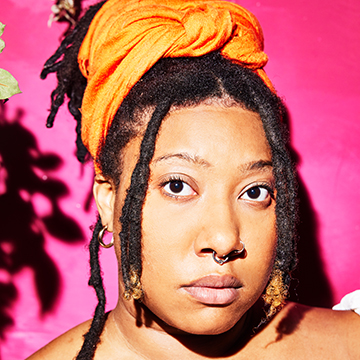
Kiara “Olive” Oliver is a writer, musician, educator and Towson alumnus from Severn, Maryland. In addition to writing prose on a personal blog, Olive has developed and performed in a one-woman show inspired by beauty pageants and sexuality titled “Miss L.E.S.” Olive currently resides in New York City.
In Spring 2016, Olive was enrolled in a Towson University special topics seminar, Asia in Maryland (AIM) Cultural History Project, which was team-taught by Joanna Pecore, Director of Asian Arts and Culture Center, and Stacy Spaulding, Associate Professor of Journalism and New Media. Olive’s research was driven by a desire to better understand the relationship between traditional recipes and adapting those recipes for the local market for commercial success. She investigated several eateries in Baltimore, including Ejji Ramen, Mekong Delta, Crown, and Brown Rice.
Note: The author's bio was added in May 2026.