Journey from Korea into the United States by Ara Ko
While an MFA candidate in MICA’s Hoffberger School of Painting in 2023, Ara Ko interviewed Angela, a Korean American elder in Baltimore, and created Journey from Korea into the United States to share Angela’s story. The work explores four phases of Angela's journey: New Land, Fraud, Safe, and Happiness.
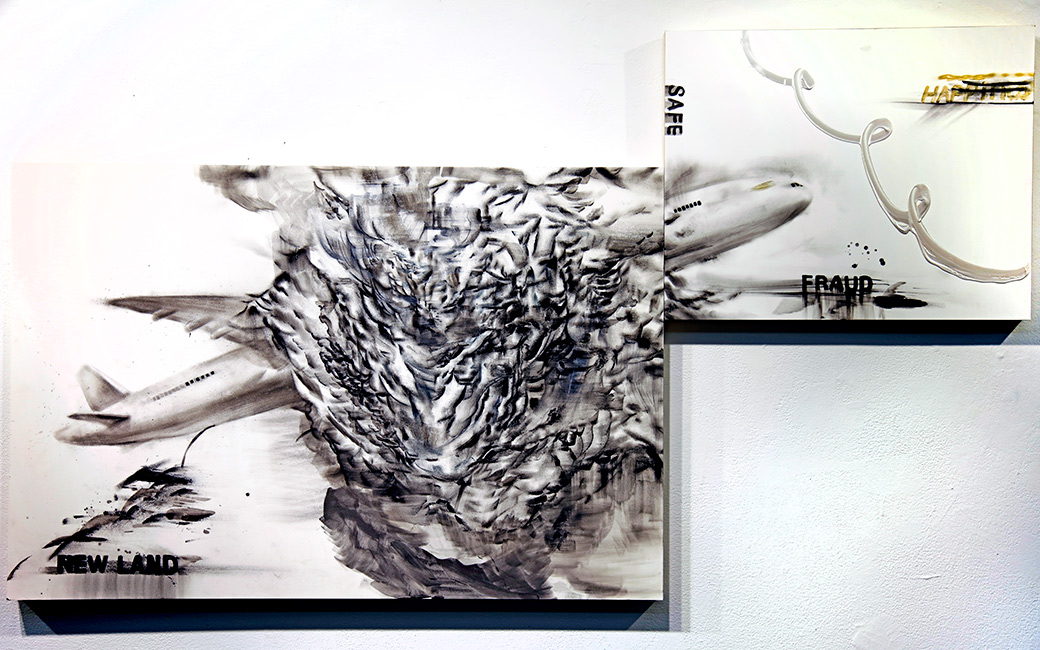
New Land
When Angela came to the United States on May 25, 1975, she and her husband were about to start a new life with new jobs. Before that time, when they were living in Korea, her husband didn’t want to continue his job because he was demoted to the local area from the capital city. She was hesitant to start a new life in the new land, but she had no choice but to follow her husband’s decision to go to the United States.
Fraud
When she first came, Angela and her husband couldn't get a job because the United States was in recession. They waited for a few months and tried to run a gas station, but there was a risk of getting scammed. They lost some of their money and stopped. After a few months, they ran a wig shop, but it failed. So next they bought and ran a grocery store for 8 years and then a liquor store for 18 years.
Safe
Now Angela is satisfied with her life in the United States. Although her husband passed away a few years ago, she feels safe in the United States. Also, she is concerned about Korean politics and continues to care about her primary homeland. Because she suffered during the 6.25 War (also known as the Korean War), and Korea is still a divided nation, she considers the United States to be a safer place. She said it was a good decision to come to the United States.
Happiness
Angela feels that the happiest thing she experienced in the United States was raising her eldest son here. He was a really good child who cared for his family from a young age. Here are some things she said about her son during our interview.
“I have two sons. Our second son has an intellectual disability, so he went to a special school. When I brought him from Korea, he was fine. But when he went to kindergarten, he couldn't speak English and played alone.”
“When I visited that school for the first time, I saw that the children there had special needs. They were different from my son. My son was fine, but he went there in the end.”
“Later, I thought I was getting stomach cancer, because I was so concerned about him. I couldn't digest food, got sick, and went to a Korean hospital.”
“That’s why my eldest son actively takes care of his younger brother. Whenever they meet, he donates money and buys chicken for him. He brings my younger son to his house on his birthdays. My eldest son cares for his brother more than his own children.”
“My eldest son didn't go out even once during his summer break from school. Instead, he told me, “Mom, take a break.” And he covered for me at work. Even after he got married, he came [to] the store on weekends to help me.”
“Moreover, I didn't pay anything for his college, just books, because he got a scholarship. He originally wanted to major in law. But when he entered his junior year, he switched his major to accounting. I was concerned that he was underachieving, so I said, ‘Son, study again before you regret it.’ He told me that his guidance counselor recommended a better school out of town, but he didn’t want to spend money … so he went to law school close to home. Until he got his own car in his junior year, I dropped him off on my way to the store in the morning and picked him up at the library in the evening.”
“He didn’t leave town. He didn’t do drugs. He was sincere. Out of all his friends who took the accounting exam, only he passed. Even if he’s my own son, I can't help but really praise him. He is so nice.”
About the Researcher: Ara Ko
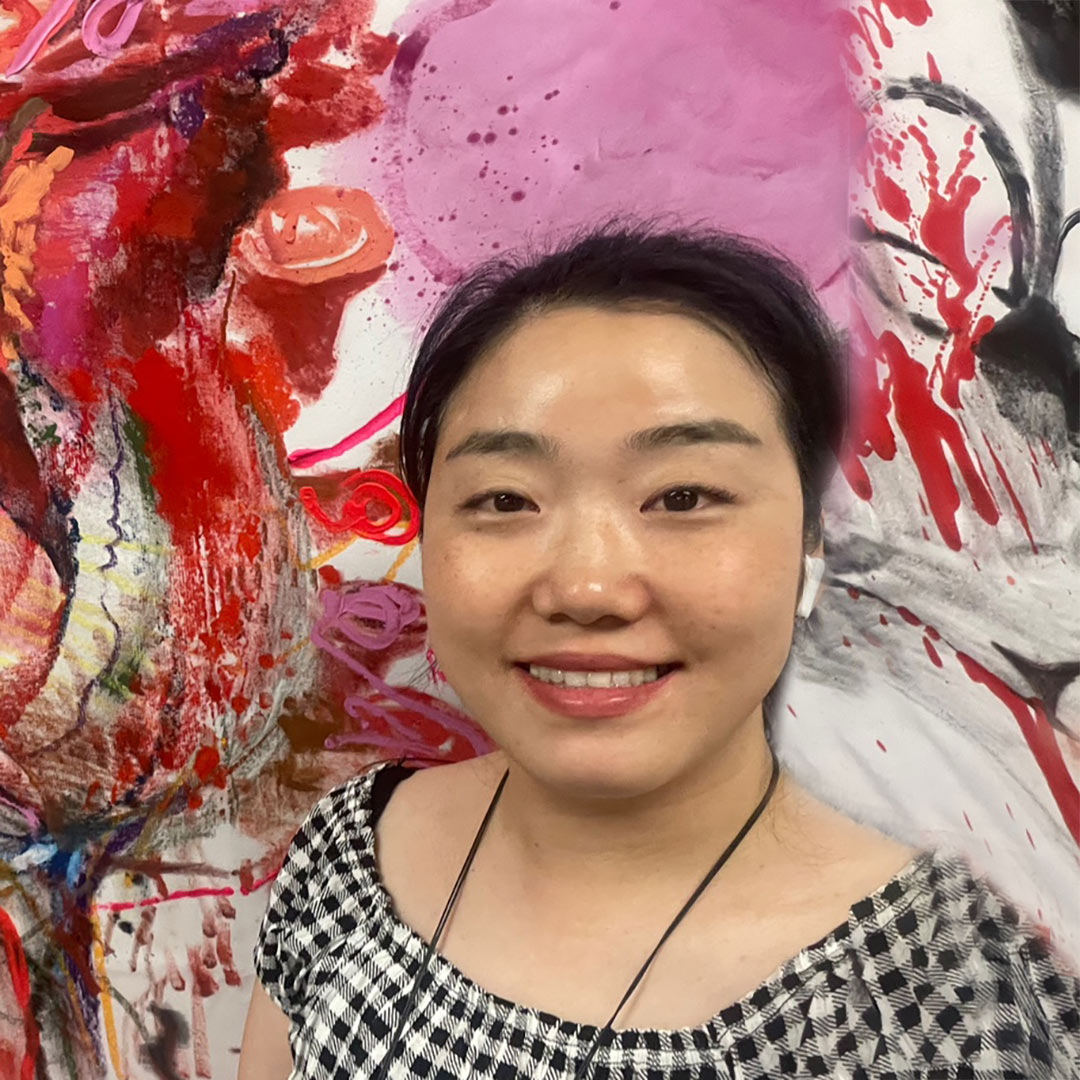
Ara Ko (b. 1988, Hongseong, Korea) received a BFA from Ewha Womans University (Seoul, Korea) and received her MFA in MICA’s Hoffberger School of Painting (Baltimore, MD). She has exhibited at the CICA Museum (Seoul, Korea), Gallery We (Seoul, Korea), Washington Square Park (New York, NY), Miboo Art Center (Busan, Korea), and Sung Nam Art Center (Seongnam-si, Korea). Ko has received numerous awards during her graduate studies including the Leslie King Hammond Graduate Fellowship (MICA) and a CCC Community Art Grant (MICA).